Rajasthan’s Pachpadra refinery will be inaugurated by Prime Minister Narendra Modi on July 4 and officials and local residents say it will give a major boost to jobs, infrastructure and energy self-reliance. The giant integrated refinery-cum-petrochemical complex is already changing the life in neighbouring villages where new roads, schools, hospitals and steady employment are visible signs of development.
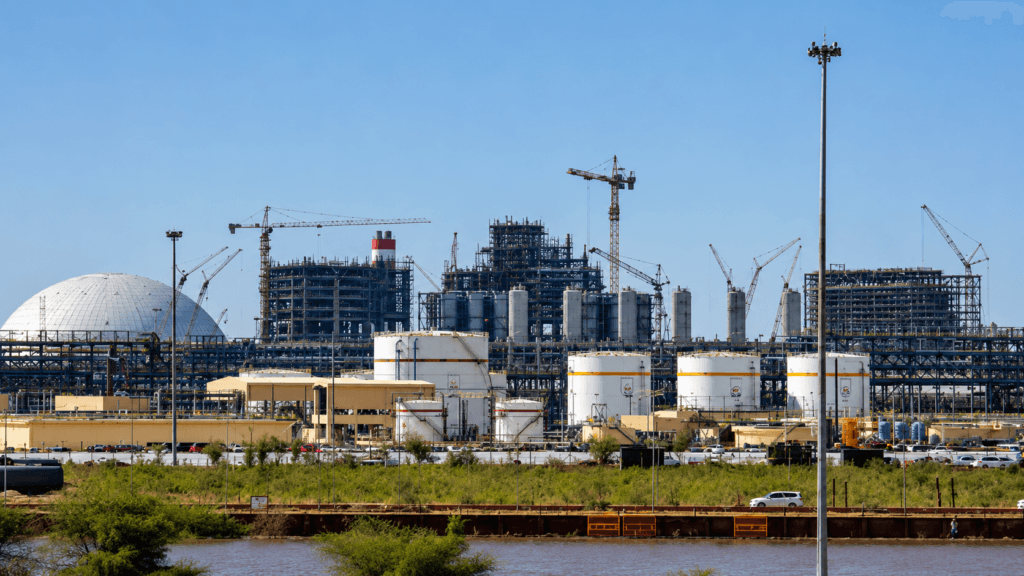
The Pachpadra refinery complex is situated near Sambhara village in Rajasthan, with nearby development work showing the wider economic impact of the project.
Prime Minister Narendra Modi will inaugurate the HRRL refinery at Pachpadra on July 4, a major boon to the industrial growth of Rajasthan and the energy sector of India. The project is being billed as India’s first grassroots integrated refinery-cum-petrochemical complex and when it is launched, it is expected to boost domestic fuel production and create new economic opportunities in the region.
The refinery is already a huge industrial presence near Pachpadra and a village called Sambhara, and the surrounding area shows signs of rapid change. Roads have been upgraded, schools and a hospital are being built, water pipelines have been laid and a township for engineers and officials has come up. For many locals, this is no longer a project on paper—it is a real source of jobs and hope. Yeh development kafi important hai kyunki yeh industrial growth ko local livelihood gains ke saath milata hai.
What The Project Includes
The Pachpadra refinery is a 9 million metric ton per year capacity complex and is designed to process both domestic and imported crude oil. With the available data, it will process 1.5 million tonnes of crude oil from the Mangala terminal in Rajasthan and 7.5 million tonnes of imported oil.
The project can produce other products such as bitumen and naphtha so it is more than a fuel refinery. This is important because petrochemical production can feed the construction, transport, manufacturing and other downstream industries.” But a plant of this scale is not just about diesel and petrol. It is about building a larger ecosystem of industry around it. For more latest news from rajasthan visit my Rajasthan Page.
Why It Matters For India
It is being projected as a move towards India’s energy self-sufficiency. In other words, more domestic refining capacity means less reliance on outside supply chains for fuel and petroleum products. It will also help India to export more petroleum products and strengthen its position in the energy market.
Logistics also adds to the strategic value of the project. The refinery is directly linked to Mundra Port through a pipeline of 487 km, enabling crude oil from places like Russia and the Gulf countries to be efficiently transported and refined. Infrastructure of that kind makes the project of national value, not regional.
Economic Impact On Rajasthan
The Rajasthan government can get an annual revenue of Rs 5,000 crore from the refinery, officials say. That’s a big number for a state that’s always looking for big, stable sources of industrial income.
But the biggest change might be coming from the ground in nearby villages. The project is already benefiting new roads, schools, a hospital under construction, water supply pipelines and local businesses. The refinery isn’t just churning out industrial output. It’s remaking the local economy around it.
Voices From The Ground
The most telling element of the story comes from the people living near the project. Dharmendra, a security guard at the refinery school, is from Osian in Jodhpur. “The refinery has given me continuous work, prompt salary payments and an upgrade in facilities like schools and health care,” he says.
Rana lives in the village of Sambhua and is employed in the refinery’s water supply system. The change has been life-changing, he says. He used to work in a salt mine for Rs 120 to Rs 150 a day but now earns around Rs 18,000 a month. He has even managed to buy a motorcycle. His sister Parvati also works in food services at the refinery.
“Earlier we used to depend on costly tanker water,” said another villager, Rajaram. Now, clean drinking water is piped to homes. It is a major step forward in quality of life in a region where water scarcity has long determined how people live. These are not abstract development claims – these are visible changes in everyday living.
Women And Local Employment
The story is also about the opportunities that the project has given women. Pali’s Garhwada native Raveena came to the refinery township with her sister Pooja to work after their family lost its main source of income. “We’d probably still be unemployed if it weren’t for the refinery,” she says.
Here is where the story of development becomes so human. The refinery is creating not just technical and industrial jobs but also incomes for families that had very few options before. Such employment can make a huge difference in dry areas where agriculture and livestock are limited by a lack of water.
Background And Context
The Pachpadra and the belt surrounding it in Rajasthan have been under severe economic stress for a long time owing to the dry climate and limited scope of farming. Many people lived on low-wage manual labor, salt mines or casual work. So the coming of a refinery of this size has changed the economic mood as well as the physical landscape.
The growth around the refinery also signifies a broader shift in industrial policy. Big projects like this tend to have a multiplier effect: better roads, more housing, better transport links and more business for small shops and service providers. Here, the refinery seems to have been a catalyst for a whole local development corridor.
Refinery Development Timeline in Pachpadra
Over recent years: The Pachpadra refinery project has been under construction and local development work has expanded around it.
Before inauguration: Nearby villages report improved roads, water pipelines, school construction, and health infrastructure.
July 4: Prime Minister Narendra Modi is set to inaugurate the HRRL refinery.
After inauguration: The refinery will be in full gear and will contribute to energy and economic activity. often bring visible change even before they are formally launched. By the time the inauguration takes place, much of the surrounding ecosystem is already in motion.
Why Pachpadra Refinery Is a Big Boost for Rajasthan
This matters because it brings together three things that are often discussed separately: energy security, local development and industrial growth. It could be a long-term source of revenue and employment for Rajasthan. It adds to refining capacity for India and supports the push for self-reliance in critical sectors. My source is NDTV which covered this story.
This is also important for people living in arid and resource-poor regions. Small benefits are steady jobs, clean water, schools and healthcare. They have the power to change a community’s outlook on its future. Yeh issue kaafi important hai kyunki development tabhi meaningful hai jab wo everyday life ko improve kare, sirf headlines hi nahi.
Pachpadra Refinery’s Impact on Rajasthan’s Local Economy
This refinery is a huge icon of industrial change for the state of Rajasthan. “People think of the state as a tourist, desert and heritage destination, but projects like this indicate that the state is also becoming a serious energy and manufacturing hub,” he said.
For families in Pachpadra and nearby, the change is personal. People who previously labored long hours in difficult jobs now have legal employment, a steady income and improved access to services. Workers and officials are seeking accommodation, and there is also increased demand for local shops and rental housing. This is how big projects reverberate through a local economy.
Economic Boost and Development Impact in Rajasthan
The Pachpadra refinery’s significance lies not just in its size but in its integration. It has more long-term industrial value than a simple fuel plant because it combines refining and petrochemical capacity. This gives it strategic importance both for domestic demand and for export potential.
The project also seems to have political significance as it bolsters the development narrative ahead of the PM’s inauguration. But beyond politics, the real test is how well the refinery serves local jobs, environmental safeguards and industrial efficiency over time.
Only if the gains are sustained can such a massive project change a region. The refinery could become one of Rajasthan’s most important industrial assets if local hiring continues, infrastructure is maintained and associated businesses grow. Otherwise, the benefits may be concentrated in a narrow zone. The early signs are of real local impact for now.
What Lies Ahead for Pachpadra Refinery and Rajasthan’s Growth
The next immediate step is an inauguration on July 4, after which the project will probably move into a more operational phase. When full refining and petrochemical activity are in progress, the focus will then switch to production, logistics, hiring and downstream industrial use.
Over time the project could also attract more businesses, contractors, transport providers and support services to the region. If that occurs, Pachpadra and nearby villages might witness a wider economic transformation. The challenge will be to make sure that the growth is balanced, inclusive and environmentally responsible.
Conclusion
The Pachpadra refinery is turning out to be much more than a mammoth industrial complex. It is already changing the economy, infrastructure and daily life of nearby communities while enhancing India’s refining capacity and energy security.
The refinery is projected as a symbol of development and self-reliance and Prime Minister Narendra Modi is scheduled to inaugurate the project on July 4. But the most important story is on the ground—in the villages where people now have jobs, water, roads, schools, and a stronger sense that the future may be better than the past.
–Written by A. Aisha–