
Pune Juvenile Justice Board rules 17-year-old accused in Porsche crash case will not be tried as an adult The decision, based on findings about his mental maturity, has sparked strong public anger and revived debate about juvenile justice in India.
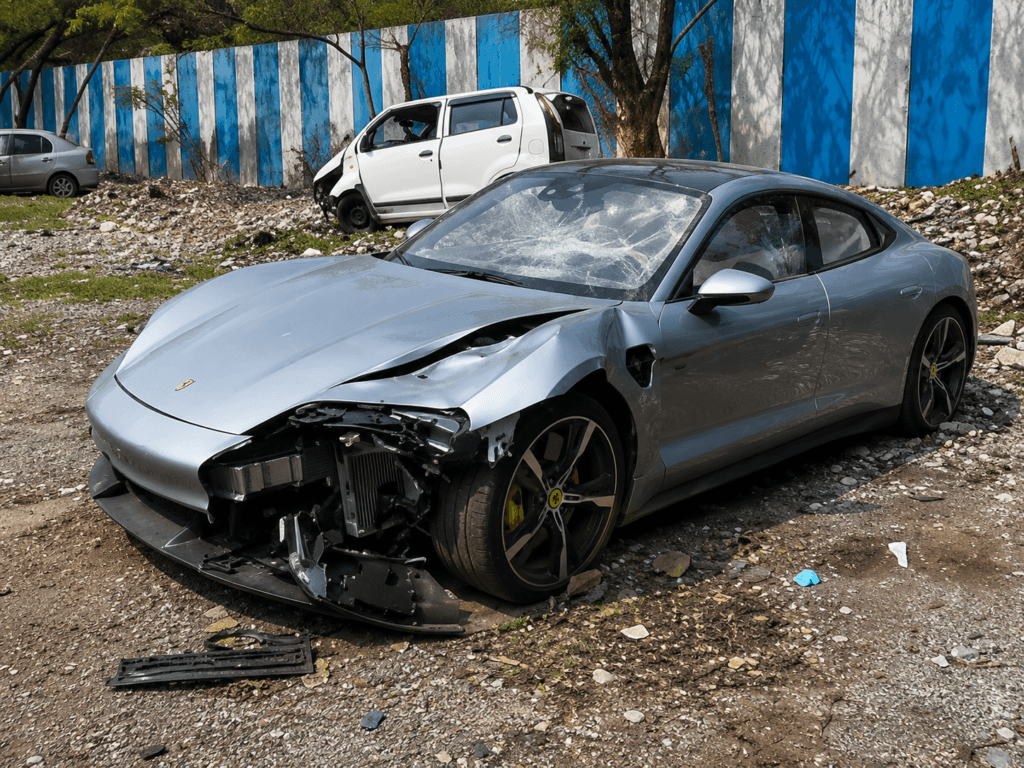
The Pune Juvenile Justice Board verdict in the Porsche crash case has sparked an outrage and debate across the country over juvenile accountability.
In a ruling that has once again pushed the Pune Porsche crash case into the national spotlight, the Juvenile Justice Board decided that the 17-year-old accused will not face trial as an adult. The board held that the teenager lacked sufficient mental maturity to fully understand the consequences of his actions, and therefore the case will continue under the Juvenile Justice Act.
The decision came nearly two months after the horrific high-speed crash in Kalyani Nagar, Pune, where a Porsche allegedly driven by the teenager while intoxicated and without a valid license hit a bike carrying two young engineers, killing both on the spot. The verdict has triggered anger across social media, legal circles, and victim families, with many calling it a case that exposes the tension between reformative justice and public demand for accountability. Yeh matter kaafi serious hai because it has become bigger than one crash—it is now about how India treats juvenile offenders in grave crimes.
What the Court Decided
The Juvenile Justice Board reviewed the Social Investigation Report and mental health assessment before reaching its conclusion. According to the ruling, the teen did not possess the level of mental maturity required to be tried as an adult. The board said juvenile justice is designed to reform, not to punish in the same way adult criminal law does. NDTV has covered the full story.
That means the accused will not face a regular criminal sentence even if convicted. Instead, he may be sent to a rehabilitation or correctional facility until the age of 21. This is a major legal distinction. In adult trial cases, punishment can be much harsher and more prolonged, but under juvenile law, the emphasis is on correction, supervision, and reintegration.
The decision is legally significant because it places the accused inside a system meant for minors, not adult offenders. At the same time, it has led to widespread frustration among those who believe the alleged actions were too serious to be treated leniently.
Why the Board Reached This Conclusion
The board’s reasoning appears to rest on the principle that age alone is not enough to send a child into the adult criminal system. Under the Juvenile Justice framework, courts and boards are expected to consider mental capacity, understanding, and the nature of the offense before making such a decision.
In this case, the board found that the teenager did not have the required mental maturity to fully grasp the consequences of the act. That assessment likely came from the Social Investigation Report, psychological evaluation, and related findings. The legal logic here is that a young person, even in a grave case, may still be better handled through a reform-oriented process unless the board is convinced otherwise.
But this is also where public emotion clashes with legal procedure. Many people look at the crash—a drunk driving case, an expensive car, two deaths, and an alleged lack of responsibility—and feel that the outcome should have been much harsher. The court, however, is applying a different standard: not what feels fair in the public eye, but what the law allows based on the juvenile’s age and mental assessment.
Victims’ Families and Public Response
The families of the victims, Anisha Bhosale and Rohit Verma, have expressed deep disappointment with the ruling. Rohit’s brother reportedly asked what message is being sent when a wealthy, drunk teenager who takes two lives is treated like a child in need of counseling. That reaction captures the central public anger around this case.
Social media has amplified that frustration, with many users arguing that wealth and influence may be shielding the accused from full accountability. The case has become a symbol in the public mind of a deeper inequality problem: do laws apply equally when the accused comes from a privileged background? That question is driving much of the public outrage.
The criticism is not only emotional. It also reflects a broader social fear that if a case like this does not attract the toughest possible response, it may weaken trust in the justice system. In India, where road crashes already claim thousands of lives every year, a case involving alleged drunken reckless driving and multiple deaths naturally becomes a flashpoint.
Legal Context
The Pune Porsche crash happened in Kalyani Nagar, where the luxury car allegedly struck a motorcycle and killed two young engineers instantly. The incident quickly drew nationwide attention because of the age of the accused, the seriousness of the allegations, and the public perception that the case involved privilege and influence.
The legal framework governing this matter is the Juvenile Justice Act. After the 2012 Nirbhaya case and the public debate that followed, the law was amended in 2015 to allow adolescents aged 16 to 18 to be tried as adults for serious offenses if the board believes the crime and the minor’s mental maturity justify it. That amendment was designed to address precisely the kind of concern being raised now: can a teenager involved in a heinous offense be dealt with only through juvenile law?
This is why the Pune ruling has felt surprising to many observers. The law does allow for adult trial in serious cases, but the board still has to be satisfied on the issue of mental maturity and circumstances. In this case, it appears the board has chosen the reformative route rather than the punitive one.
Timeline
May 2024: The Pune Porsche crash occurs in Kalyani Nagar, killing two young engineers.
After the crash: The case gains national attention, and allegations of negligence and privilege emerge.
Following weeks: Legal proceedings begin under juvenile justice provisions.
July 15, 2025: The Juvenile Justice Board rules that the 17-year-old will not be tried as an adult.
After the verdict: Public outrage grows, with families, legal commentators, and citizens demanding accountability.
Also Read: Maharashtra MLC Poll Deal Faces Tussle as Congress and Uddhav Sena Clash Over Two Key Seats
Why This Matters
This matters because the ruling goes to the heart of India’s juvenile justice system. The law is supposed to balance two goals: protecting children and ensuring accountability for serious crimes. When a case is this grave, that balance becomes extremely difficult.
It also matters because public trust is at stake. If people believe the system protects the wealthy more than ordinary citizens, confidence in justice weakens. Yeh issue kaafi important hai because it affects how society sees fairness, especially in cases involving road safety, youth behavior, and privilege.
The judgment may also influence future juvenile cases. Courts and boards will likely face more scrutiny whenever they decide whether a teen should be tried as an adult. The Pune case is now likely to be cited in debates, legal discussions, and policy circles across India.
India Angle
The India angle here is obvious and powerful. This is not just a Pune story; it is a national story about the limits of juvenile law, the emotions around fatal road accidents, and the gap between legal reasoning and public expectation. In a country where road safety remains a major crisis, the idea of a drunk-driving-related death case ending up under juvenile treatment is bound to trigger debate.
In Hinglish, seedhi baat yeh hai: log samajhna chahte hain ki jab do lives chalī gaīn, toh justice itni soft kyun lag rahi hai. That is why this case resonates so strongly across India. It connects to everyday concerns about reckless driving, the behavior of wealthy youth, and whether laws are strict enough when serious harm is caused.
Analysis
My opinion is that the judgment may be legally defensible, but it will continue to face moral criticism because the facts of the case are so emotionally loaded. The law can focus on age and maturity, but the public sees two deaths, alleged intoxication, and a luxury car—and that combination naturally creates anger. The board’s reasoning may fit the letter of juvenile law, but it does not solve the larger problem of how society responds to grave crimes committed by minors. This case also shows why the juvenile justice system remains one of the most difficult parts of Indian criminal law: it must protect reformative ideals without appearing disconnected from public conscience.
What Next
The next phase will depend on the procedural path of the case and any further legal challenges. If the matter proceeds under the Juvenile Justice Act, the accused may eventually face rehabilitation-focused consequences rather than adult criminal punishment. That will keep the case under intense public scrutiny.
Victims’ families may continue pressing for stricter accountability, and legal experts are likely to debate whether the board applied the law correctly. The ruling could also be examined in higher courts if there is a challenge. Beyond this case, policymakers may be pushed to revisit whether the current juvenile framework is adequate for extremely serious road-crash cases involving older minors.
Conclusion
The Pune Porsche case ruling has delivered a legal answer, but not an emotional one. The Juvenile Justice Board has decided the 17-year-old accused will not face trial as an adult because he was not found to have sufficient mental maturity, but that decision has left many people unconvinced.
At its core, this case is about the difficult line between reform and retribution. The law may treat the accused as a minor, but the public continues to judge the consequences as devastating and life-changing. As the case moves forward, the bigger question remains whether juvenile justice in India can satisfy both legal principles and the public’s demand for fairness.
Written By A. Jack