
Pune, An 18-year-old NEET-UG candidate identified as Anushka Chaugule allegedly committed suicide in Pune after the results were declared, police said on Thursday. The incident has prompted a police probe and raised fresh concerns about the mental health pressures confronting medical aspirants in India.
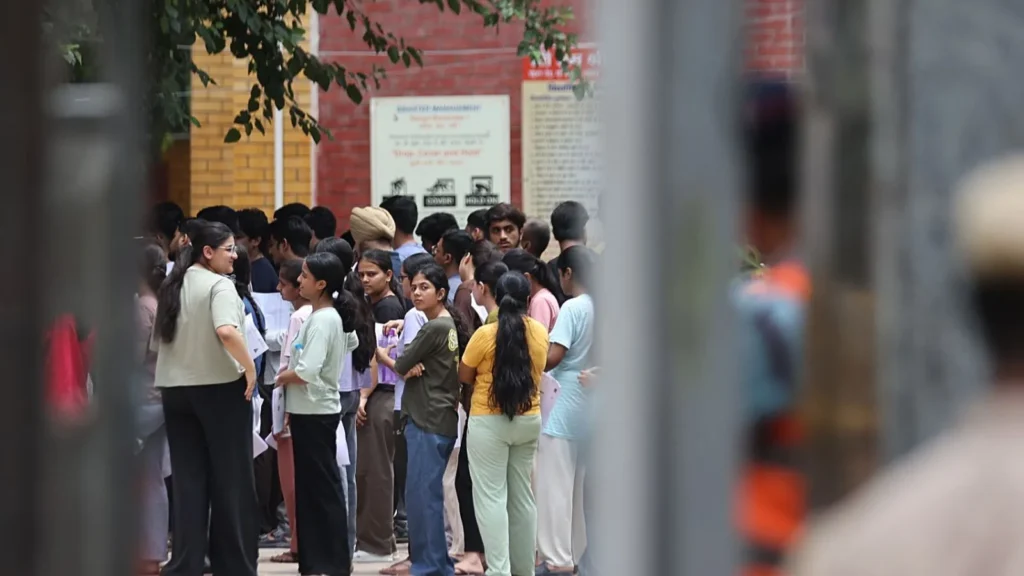
Police investigate after the death of 18-year-old NEET-UG candidate Anushka Chaugule in Pune’s Mohammadwadi area. Image Credit: IndianExpress
A tragic case from Pune has once again brought the mental health burden on competitive exam aspirants into sharp focus. An 18-year-old girl, identified as Anushka Chaugule, died by suicide sometime after the NEET-UG results were declared, police said. She was a resident of a housing society in the Mohammadwadi area of Hadapsar.
Deputy Commissioner of Police Jivan Benival confirmed that Anushka had appeared for the examination. Police also said there was no suicide note and that the exact reason behind her death is still unconfirmed. The incident came to light on Friday morning when the teenager did not open the door of her room, prompting repeated knocks from her mother. When the door was opened using an extra key, her body was found inside. Yeh incident kaafi important hai because it highlights how exam pressure can become overwhelming for young students and their families.
What Police Said
According to DCP Jivan Benival, the deceased was a NEET-UG candidate, but investigators have not yet established what led to the death. The absence of a suicide note means police will have to rely on family statements, digital evidence, possible conversations and other circumstantial details to understand what happened in the hours and days before the incident.
Police said Anushka did not respond when her mother knocked on the room door on Friday morning. After repeated calls went unanswered, the family used an extra key to open the room and discovered her body. That moment would have been devastating for the family, and it also underscores how quickly a private crisis can turn into a tragic emergency. This story was also covered by The IndianExpress.
At this stage, police have not said whether the NEET result alone was the trigger, and caution is important. It would be wrong to assume a single cause without evidence. In many such cases, the final outcome is usually linked to a combination of emotional stress, academic pressure, fear of failure, and sometimes personal struggles that remain hidden from others. Seedhi baat yeh hai: the investigation must establish facts before conclusions are drawn.
The Pressure Around NEET-UG
The NEET-UG examination is one of India’s most competitive entrance tests, with lakhs of students vying for limited medical seats every year. For many families, it becomes a life-defining event. The stakes are high, the competition is intense and the preparation period is emotionally draining. That pressure can weigh heavily on teenagers who are still coping with adolescence, identity and future expectations all at once.
In India, exam results often carry enormous social and family expectations. A student’s score can affect not just college admissions but also perceptions of worth, success and future security. That creates a dangerous emotional environment when results do not match expectations. Even when students perform reasonably well, they may feel they have fallen short if the benchmark around them is too high. Yeh bhi important hai because the pressure is not only academic; it is social, emotional and sometimes deeply personal.
This is why every such incident becomes part of a larger public conversation about student mental health. Competitive exams are not a problem in themselves, but the ecosystem around them can become harmful if students are not supported emotionally. Families, schools and coaching systems often focus heavily on outcomes and less on well-being. That imbalance needs attention.
Background and Context
India has seen repeated concerns about the mental health of exam aspirants, especially students preparing for engineering and medical entrance tests. The pressure intensifies when children spend months or years in coaching environments that reward constant performance and comparison. In many homes, a single exam is seen as the gateway to a stable and respected future, which can turn normal anxiety into emotional distress.
Pune, as a major education city, sees a large number of students preparing for competitive exams. That makes this case especially resonant for the city and for Maharashtra more broadly. The story is not just about one family’s loss; it is a reminder of how close academic pressure sits to mental health risk in urban India. Parents often invest enormous hope in these exams, while students may silently carry the burden of not wanting to disappoint anyone.
The tragedy also comes at a time when discussions around student well-being, exam fairness and result anxiety are already prominent in India. Each such incident becomes a painful reminder that scorecards do not tell the full story of a young person’s emotional state. The human being behind the marks may be struggling in silence. That is why schools, colleges and families need to look beyond results and pay more attention to signs of withdrawal, hopelessness or distress.
Timeline
Thursday: NEET-UG results are declared.
Sometime after the results: Anushka Chaugule, 18, dies by suicide in Pune.
Friday morning: Her mother repeatedly knocks on her room door after she does not respond.
Soon after: The room is opened with an extra key and her body is found.
Following the discovery: Police identify the deceased and begin an investigation.
Now: Authorities say no suicide note was found and the cause is still under investigation.
Why This Matters
This matters because it is another painful signal that academic pressure can have devastating real-world consequences. When a teenager dies after an exam result, it forces society to confront how much emotional weight we place on competitive tests. The issue is not limited to one student or one city. It speaks to a wider national pattern where academic success is often treated as a measure of personal value. Yeh issue kaafi important hai because no exam result should ever be so overwhelming that a young life is lost.
It also matters because it highlights the importance of mental health awareness in families. Many parents support their children deeply, but they may not always notice the early signs of stress, anxiety or emotional collapse. Students often hide these feelings to avoid worrying their families. That makes early conversation and emotional openness very important.
There is also a societal impact. If every major exam season is followed by similar tragedies, then the education system, coaching culture and family expectations all need serious review. Support systems cannot remain an afterthought. Schools, colleges and communities must treat mental health as part of academic success, not separate from it.
Also Read: Mumbai Shivaji Park Protest Grows Over Delhi Police Action Against Sonam Wangchuk
India Angle
For Indian readers, this case will feel especially close to home because NEET is one of the country’s most discussed and stressful exams. Millions of students and parents follow its results closely, and the pressure around it is intense in every state. In Hinglish, seedhi baat yeh hai: NEET sirf ek exam nahi, bahut se gharon mein ek emotional battle becomes.
The story will resonate strongly with families in Maharashtra, especially in Pune, where education-related competition is part of daily life. It may also prompt conversations in other cities where students prepare for medical entrances under similar stress. The incident is a reminder that support systems must be local, practical and immediate, not just theoretical.
India’s competitive exam culture has given many students opportunities, but it has also created huge mental strain. That is why this is not only a police case or a family tragedy. It is a national education and mental health issue. The country must ask whether enough is being done to help teenagers cope when life plans feel uncertain.
Analysis
My opinion is that the most responsible way to report this is to avoid speculation and keep the focus on verified facts while still recognising the broader social pattern. The police have said the cause is not yet confirmed, and that matters. At the same time, it is also fair to say that the timing after results points to the intense emotional burden many students experience. The story should therefore be handled with empathy, not sensationalism.
I also think this case will reopen the larger debate around student mental health in India. Too often, the system only reacts after a tragedy. But prevention needs to start earlier — with school counsellors, parent awareness, peer support and better conversations about failure and uncertainty. A student’s worth should not be tied only to one result. That message needs to be louder, clearer and repeated often.
From an editorial perspective, this story has high sensitivity and high relevance. It should not just inform readers; it should also prompt reflection. The most useful coverage in cases like this is coverage that is factual, human and constructive. That is what this moment calls for.
What Next
The next step will be the police investigation into Anushka’s death. Officers are likely to speak with family members, review her recent behaviour and examine any digital or personal clues that may help them understand what she was going through. Since there is no suicide note, the inquiry may take time.
The family may also need emotional and possibly counselling support in the days ahead. In cases like this, grieving families often face a painful mix of shock, guilt and unanswered questions. Support from close relatives and mental health professionals can be crucial.
For the wider public, this tragedy may lead to renewed calls for better mental health support for competitive exam aspirants. Schools, coaching centres and parents may again be urged to speak more openly about stress, setbacks and coping mechanisms. If that conversation gains traction, it could help prevent future tragedies.
Conclusion
The death of 18-year-old NEET-UG candidate Anushka Chaugule in Pune is a heartbreaking reminder of the emotional pressure that competitive exams can place on young students. Police say the exact cause is still under investigation and no suicide note was found, so it is important not to jump to conclusions.
But the timing of the tragedy, just after the results, once again raises urgent questions about student mental health, family support and exam culture in India. If there is one lesson here, it is that academic success should never come at the cost of a young life.
Written By A. Jack