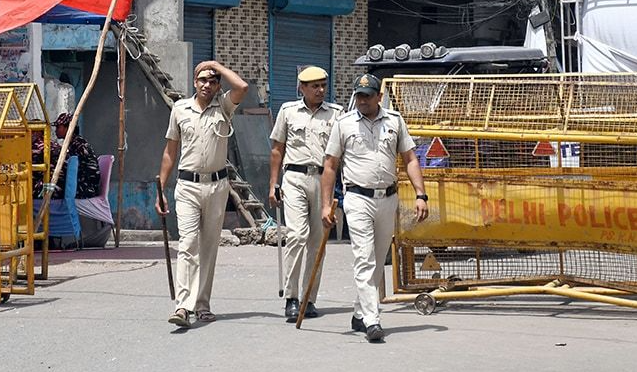
Hundreds of college students, civil society members and political workers assembled near Shivaji Park in Dadar on Sunday evening to protest the Delhi Police’s action against activist Sonam Wangchuk. The demonstration was shifted from Azad Maidan after permission was denied and it gained further traction after Shiv Sena (UBT) chief Uddhav Thackeray joined the gathering.
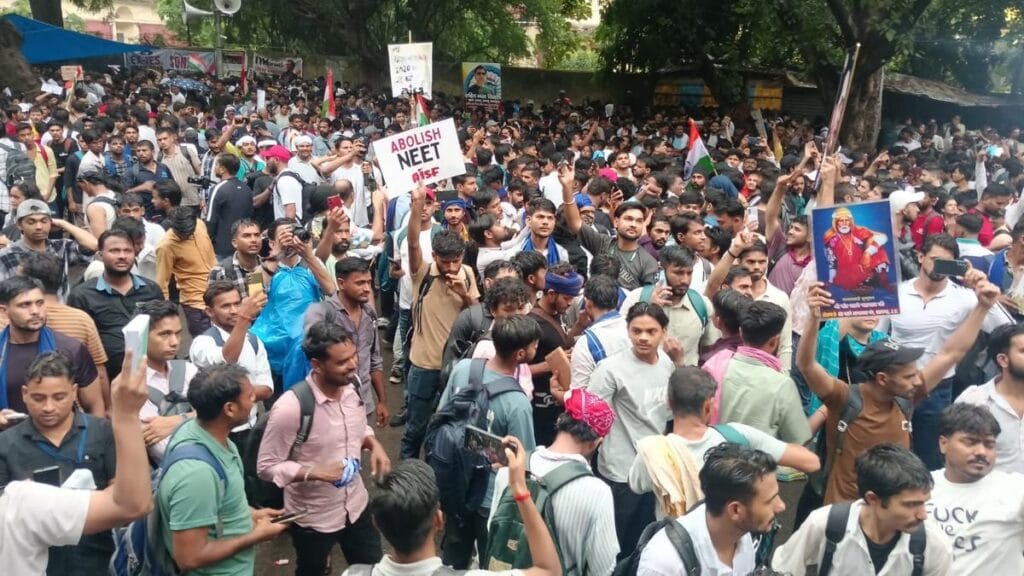
Protesters gather near Shivaji Park in Mumbai to show solidarity with Sonam Wangchuk after his forcible removal from Jantar Mantar in Delhi. Image Credit: The Hindu
Mumbai’s Shivaji Park became a focal point of solidarity politics on Sunday evening as hundreds of college students, civil society members and political workers assembled outside the ground to protest the Delhi Police’s action against Sonam Wangchuk. Wangchuk was forcibly taken to a hospital from Jantar Mantar in the early hours of Saturday, and the Mumbai gathering turned into a public show of support for him.
The demonstration had originally been planned for Azad Maidan, but organisers were denied permission to protest there or at another location in South Mumbai. With rain leaving Shivaji Park waterlogged, the gathering was shifted outside the park area. The presence of Uddhav Thackeray, who had already extended support to the Cockroach Janata Party’s protests in Delhi, gave the protest added political weight. Yeh issue kaafi important hai because it shows how a Delhi protest can quickly become a national political flashpoint, reaching all the way to Mumbai.
Why the Protest Happened
The protest in Mumbai was triggered by the Delhi Police’s handling of Wangchuk’s situation. According to the information available, Wangchuk was taken from Jantar Mantar to a hospital in the early hours of Saturday, and that action sparked anger among his supporters and allied groups. For many of them, the issue is not only about his health but also about how authorities responded to a hunger strike that had already become highly visible. This story was also covered by The IndianExpress.
Supporters argue that Wangchuk’s protest represents a larger concern about youth, education and democratic expression. When an activist becomes a symbol of a cause, police intervention is rarely seen as just a logistical step. It gets interpreted politically. That appears to be what happened here. The Mumbai demonstration became a way to say that Wangchuk should be heard, not silenced. Seedhi baat yeh hai: the protest was about solidarity but also about resisting what supporters see as heavy-handed state action.
The rain and waterlogging added a practical twist to the event. Since the ground at Shivaji Park was not usable, the gathering took place outside the park. That may sound minor, but it reflects the flexibility and determination of protesters who wanted the event to go ahead regardless of weather or venue constraints. In Indian protest culture, location matters a lot, and Shivaji Park carries its own political history, so even an adjacent gathering still had symbolic value.
Who Joined the Demonstration
The crowd reportedly included college students, civil society members and political workers. That mix is important because it shows the protest was not limited to one organisation or one ideological group. Student participation in particular gives the event a youthful edge, while civil society members add a broader democratic framing.
Uddhav Thackeray’s participation was the most politically notable element. As Shiv Sena (UBT) chief, his presence signalled that the issue had crossed beyond a narrow activist space and entered mainstream political conversation. Thackeray had earlier extended support to the Cockroach Janata Party’s protests in Delhi, so his appearance in Mumbai was consistent with that stance. It also likely helped draw more attention to the gathering.
When a senior political figure joins a protest, it changes the message. The event becomes bigger than a local demonstration; it becomes a statement about alignment, dissent and public pressure. That does not necessarily mean the protest loses its original purpose, but it does mean the story gets more layers. For journalists and readers alike, that makes it more newsworthy. Yeh bhi important hai because political support can amplify a protest’s reach, but it can also sharpen the debate around it.
Also Read: Sonam Wangchuk Shifted to Safdarjung Hospital on 21st Day of Hunger Strike in Delhi
Background and Context
Sonam Wangchuk’s hunger strike and subsequent hospitalisation have triggered a wider wave of reactions across India. His health situation, the police action at Jantar Mantar and the legal questions around where he should be treated have all fed into a larger public discussion. In that atmosphere, protests in other cities are almost inevitable.
Mumbai has a long history of political gatherings, student movements and symbolic demonstrations at places like Shivaji Park and Azad Maidan. These are not just empty spaces; they are part of the city’s political memory. So when protesters choose one of these locations, the venue itself becomes part of the message. In this case, Shivaji Park stood in as a place of public dissent after permission was denied elsewhere.
The Delhi developments also mattered in a legal sense. The protest over Wangchuk was not just a street issue; it had become tied to the courts, the hospital, and the rights of the patient. That made the Mumbai response more than just emotional solidarity. It became a show of support for a cause that had now entered the national conversation. When one city’s protest crosses into another city, you know the issue has widened.
Timeline
Earlier in the week: Sonam Wangchuk’s hunger strike continues to draw public attention.
Early hours of Saturday: Delhi Police forcibly takes Wangchuk from Jantar Mantar to a hospital.
Saturday: Mumbai Police registers two FIRs related to earlier demonstrations in support of Wangchuk.
Sunday afternoon/evening: Organisers in Mumbai plan a protest at Azad Maidan.
Before the protest: Permission is denied for Azad Maidan or another South Mumbai site.
Sunday evening: Protesters gather near Shivaji Park instead.
During the gathering: Rain and waterlogging force the event to be held outside the park.
At the protest: Uddhav Thackeray joins the demonstration.
Also Read: Delhi HC to Hear Sonam Wangchuk’s Wife’s Plea Over Hospital Transfer Row
Why This Matters
This matters because protests like this show how quickly a single national issue can ripple across cities and communities. When students, civil society groups and political leaders all respond to one action, it means the matter is resonating beyond its original location. That is significant in a democracy, where public response often shapes the next stage of political debate. Yeh issue kaafi important hai because public support can influence how institutions respond to dissent.
It also matters because the case touches on the rights of protest, the role of police and the boundaries of state intervention. Supporters of Wangchuk clearly believe his removal from Jantar Mantar was too forceful. Whether or not one agrees with that view, the reaction shows that many people are sensitive to how authorities handle peaceful movements. The optics of the event matter just as much as the legal details.
There is also a broader impact on student and civic politics in India. When young people and civil society groups gather around an issue like this, they are not just reacting to a single incident; they are expressing a wider concern about how dissent is managed. That can shape political language for months. It may also encourage more cross-city solidarity protests if the issue stays in the headlines.
India Angle
For Indian readers, this is a very recognisable pattern. A protest starts in Delhi, gains legal and political weight, and then spreads to other urban centres like Mumbai. In Hinglish, seedhi baat yeh hai: jab Delhi mein koi issue bigadta hai, uska echo Mumbai, Pune, Kolkata aur dusre shehron tak pahunch sakta hai. That national spread is what makes the story especially relevant.
Mumbai has always been a city where political and social movements find a strong voice. Shivaji Park, in particular, has symbolic value because it has long been associated with public speeches and mass gatherings. So the location itself added meaning to the protest. Even though rain pushed the crowd outside the park, the message remained visible.
The student presence also matters in an Indian context because youth participation often signals future political mobilisation. Whether it is education, rights or institutional accountability, young people usually bring energy and visibility to such protests. That makes this development more than a one-day event; it may become part of a larger pattern of youth activism.
Analysis
My opinion is that this protest matters more for its symbolism than its size. Hundreds gathering in Mumbai is not just a number; it is a signal that Wangchuk’s case has become emotionally and politically transferable. When people who were not at Jantar Mantar still feel compelled to protest, the issue has clearly expanded in public imagination. That kind of momentum can shape future coverage and political responses.
I also think the denial of permission at Azad Maidan or elsewhere in South Mumbai is part of the story, not just a logistical footnote. In India, where public protests often depend on permissions, venue decisions can influence visibility and political tone. Moving the protest to Shivaji Park still allowed it to happen, but it also shows how organisers must adapt when official permissions are not granted. That adaptability often becomes part of the protest’s identity.
From an editorial perspective, the story has strong relevance because it connects activism, politics and public space. It is not only about one man being shifted to a hospital. It is about how that act ricochets through a city like Mumbai and turns into a visible expression of support. That makes the event much bigger than a local gathering.
What Next
The next step will depend on how Wangchuk’s situation develops in Delhi and whether more cities stage similar solidarity protests. If the legal and medical dispute continues, supporters may increase pressure through public gatherings, statements and political outreach. Mumbai could see more follow-up meetings or smaller support actions if the momentum remains strong.
There may also be further political commentary from Shiv Sena (UBT) and other leaders who want to align themselves with the protest’s message. That could broaden the issue further. On the other hand, if the courts or doctors bring some resolution, the street mobilisation may slow down. For now, the issue is still live, and that means public gatherings like the one at Shivaji Park may not be the last.
The most likely immediate outcome is continued public discussion and more media attention. That is what protest politics often does: it forces a national issue into local spaces. If Wangchuk’s case stays in the headlines, Mumbai’s response may be remembered as an important show of solidarity.
Conclusion
The gathering near Shivaji Park shows that Sonam Wangchuk’s case has become a national protest issue, not just a Delhi story. Hundreds of students, civil society members and political workers turned up despite rain and venue hurdles, and Uddhav Thackeray’s presence gave the demonstration added political weight. The protest reflects wider concerns about police action, protest rights and the handling of Wangchuk’s hunger strike. In the end, the Mumbai rally underlines one clear point: the debate around Wangchuk is now firmly part of India’s larger public conversation.
Written By A. Jack