
A woman in Pune has sparked a police inquiry after claiming a bedsheet she bought at a religious fair carried a ‘Made in Pakistan’ label, which she noticed only after washing it. The incident raises questions about the origin of the product, vendor verification and the circulation of mislabelled goods at local fairs.
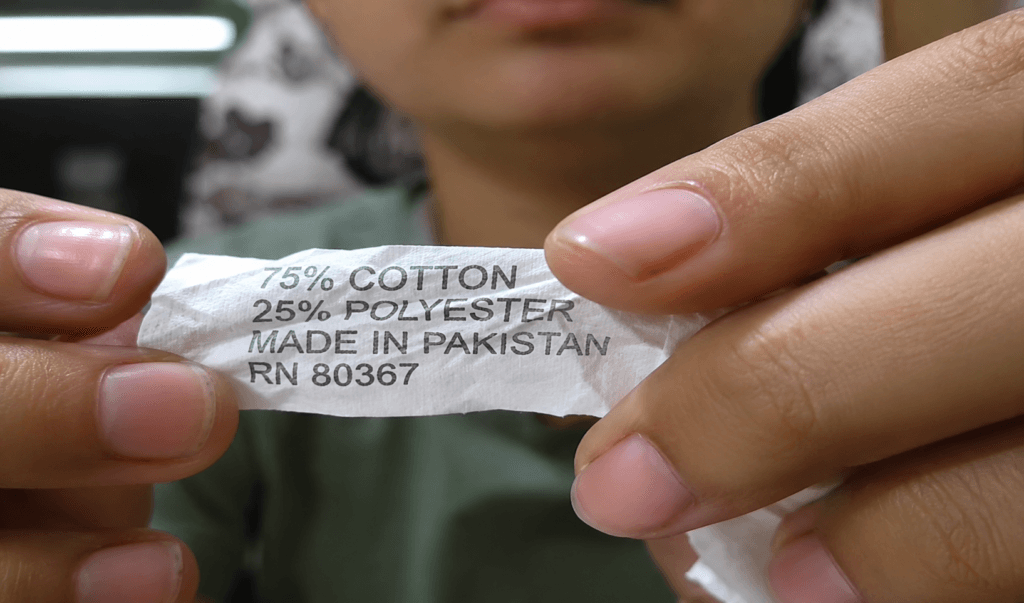
A bedsheet purchased at a Sankashti Chaturthi fair in Pune allegedly revealed a “Made in Pakistan” tag only after washing, prompting a police probe.
A bedsheet purchased at a religious fair in Pune has become the center of a police investigation after a woman claimed it carried a “Made in Pakistan” label that appeared only after washing. The incident was reported from the Chinchwad area of Pimpri-Chinchwad, where the woman had bought the item from a vendor during the Sankashti Chaturthi fair near the Morya Gosavi Temple complex.
According to the complaint, the woman did not notice anything unusual at the time of purchase. But after washing the bedsheet at home, she allegedly found a tag with the words “Made in Pakistan.” She then posted a video on social media, and the clip quickly went viral, prompting authorities to step in. This case has now become more than a consumer complaint; it has turned into a wider question about supply chains, fairground selling, and how such items reach local markets in India.
What Happened
The sequence, as reported, is straightforward but sensitive. The woman bought the bedsheet on Wednesday during the Sankashti Chaturthi celebrations, when large numbers of devotees had gathered at the temple premises. Religious fairs often draw a mix of pilgrims, casual shoppers, and small vendors, making them active commercial spaces as well as devotional gatherings. India Today has covered the full story.
At the time of purchase, the woman did not suspect anything unusual. Only after washing the fabric did the tag become visible. She then noticed what she believed was a “Made in Pakistan” label stitched or attached to the product. Concerned by what she found, she recorded and posted a video online, asking how a product allegedly manufactured in Pakistan had made its way into a local market in Maharashtra.
The post spread quickly on social media. Once the clip went viral, Pimpri-Chinchwad Police took note and began an inquiry. A special team has now been formed to trace the origin of the bedsheet, identify who supplied it, and determine whether the vendor sold it knowingly or unknowingly. The police have also contacted the Pimpri-Chinchwad Municipal Corporation to act against any vendor found violating rules if irregularities are confirmed.
Why the Probe Started
The probe was triggered for two reasons. First, the claim involved an item allegedly marked with a foreign manufacturing label in a local Indian market. Second, the issue circulated online very quickly, creating public attention and pressure for verification.
Authorities now need to establish whether the tag is genuine, misleading, altered, or part of a larger distribution issue. That is an important distinction. Sometimes product labels are original and reflect the country of manufacture. In other cases, tags can be wrongly attached, reused, or even planted. Until investigators check the product trail, the exact explanation will remain unclear.
This is also why the woman’s video mattered. In today’s environment, social media often acts as an informal alert system. Once a complaint goes viral, local authorities usually move faster because the matter has already entered public discussion. In this case, police action followed the online circulation of the clip.
What Authorities Are Checking
Police are now trying to map the full supply chain. That means they will likely examine where the bedsheet was sourced, whether the vendor bought it from a wholesaler, and whether the item had any documentation or packing material indicating its origin. If the bedsheet was sold as a regular local product but carried a foreign label, investigators may want to know whether the vendor had any idea about it.
Officials have also written to the Pimpri-Chinchwad Municipal Corporation, asking for action if violations are found. That suggests the matter is being treated as a market regulation issue as well, not just a social media controversy. Local civic bodies can look into vendor permissions, stall registrations, and fair management records.
A larger question also hangs over the case: whether this is an isolated product anomaly or part of a broader network of mislabeled goods being circulated through fair stalls and local markets. That will be the key issue if the probe expands.
Background and Context
The incident comes just days after three people were arrested in Maharashtra’s Sambhajinagar district for allegedly selling cosmetic products labelled “Made in Pakistan.” That previous case adds context and public sensitivity to the Pune complaint. When a similar label appears in another part of the state, even on a different product category, the issue immediately attracts more attention.
Fairs and religious gatherings are common retail points across India, especially in Maharashtra, where temple festivals and seasonal events often include a large number of temporary vendors. These markets are attractive because they bring together footfall, price-sensitive buyers, and quick-moving merchandise. But they can also be difficult to monitor if product sourcing and labeling are not strictly checked.
In that sense, the Pune case is not just about one bedsheet. It reflects the challenge of regulating temporary and semi-formal retail environments where products may come from multiple distributors and may not always carry clear documentation. That is why the investigation will likely focus on both the individual vendor and the wider supply chain.
Timeline
Wednesday: The woman buys a bedsheet at the Sankashti Chaturthi fair near Morya Gosavi Temple in Chinchwad.
After washing at home: She notices a “Made in Pakistan” tag on the fabric.
Soon after: She posts a video on social media questioning the product’s origin.
Video goes viral: Public attention builds and authorities take notice.
Following the viral post, Pimpri-Chinchwad Police begin an inquiry and form a special team.
Current stage: Police and civic authorities are examining the product source and vendor trail.
Also Read: Loco Pilot Injured in Stone Pelting on GT Express Near Singarayakonda
Why This Matters
This matters because product labeling is not a minor issue. Consumers rely on labels to understand where goods come from, what they are buying, and whether the item matches the description on sale. If labels are misleading, hidden, or suspicious, trust in local markets weakens.
It also matters because the incident has a wider social and political sensitivity. A “Made in Pakistan” tag on a consumer item can easily trigger strong reactions in India, especially in the current atmosphere of heightened scrutiny around imported or cross-border goods. Yeh issue kaafi important hai because it combines consumer trust, market regulation, and public sentiment in one case.
There is also an economic angle. Local fairs and temporary stalls depend heavily on trust. If buyers begin worrying that goods are mislabeled or poorly checked, it can hurt honest vendors too. So even if this turns out to be an isolated case, the impact could go beyond one seller or one product.
India Angle
The India angle here is very clear because this is a local market issue with national emotional weight. In Indian cities and towns, especially during festival seasons, people buy everything from clothes and household goods to snacks and toys from temporary stalls. Most of the time, these purchases happen quickly and informally.
In Hinglish, seedhi baat yeh hai: agar product ka tag hi unclear ho, toh buyer ka bharosa hil jata hai. Whether the tag is genuine or not, the concern is real because consumers expect safe, transparent, and correctly labeled goods. For Indian readers, the story also touches on the importance of checking where products come from and how fair vendors are monitored.
It is also a reminder that viral social media posts can now immediately shape local enforcement. A private buyer complaint can become a district-level issue within hours. That is part of modern India’s information cycle, and it affects how quickly authorities respond.
Analysis
My opinion is that the most important part of this story is verification. A label on a product can be meaningful, but it can also be misleading, hidden, or even tampered with. Until the police trace the supply chain, no one should jump to conclusions about intent. That said, the public concern is understandable because the label appeared in a religious fair setting and quickly became a symbol of possible market irregularity. The real test for authorities will be whether they can establish facts calmly and transparently rather than letting the issue drift into speculation.
If the probe confirms a mislabeled or improperly sourced product, it could prompt stricter checks at fairs. If not, the case still shows how easily a single item can create a major public reaction in the social media age. Either way, the lesson is the same: market supervision needs to keep up with the speed of online scrutiny.
What Next
The next step is for police to trace the product’s origin and verify the woman’s claim through physical inspection, vendor questioning, and supply-chain checks. If the bedsheet was part of a larger stock sourced from elsewhere, investigators may look higher up the chain to the wholesaler or distributor.
If violations are found, the municipal body may take action against the vendor or stall operator, and the case could widen into a broader market compliance review. If the label turns out to be misleading or tampered with, that could also raise concerns about deliberate misrepresentation.
The outcome will depend on whether authorities can quickly determine how the product reached the fair and whether any rules were broken. For now, the investigation remains open, and the matter is under official scrutiny.
Conclusion
The Pune bedsheet case has moved from a consumer complaint to a police inquiry in a very short time, showing how sensitive product-origin claims can become in today’s India. A woman’s discovery of a “Made in Pakistan” tag after washing a bedsheet has raised questions about labeling, vendor accountability, and how items are sold at religious fairs.
Until the investigation is complete, the facts need to be established carefully. But the broader issue is already clear: consumers deserve transparency, and local markets need stronger checks. In a country as large and fast-moving as India, even one mislabeled product can spark a much bigger conversation about trust. Yeh issue kaafi important hai because it affects buyers, sellers, and the credibility of everyday marketplaces.
Written By A. Jack