The Federation of Western India Cine Employees has issued a non-cooperation directive against Ranveer Singh over his reported last-minute exit from Don 3, making a film-casting dispute a bigger Bollywood power struggle. While it’s not a government ban, it can create real production hurdles for the actor’s future projects including Pralay.
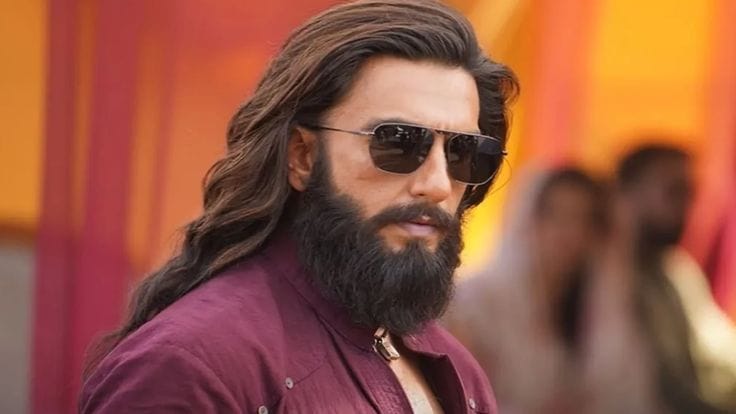
Ranveer Singh’s dispute with FWICE has raised questions about union power, industry boycotts, and the legal limits of non-cooperation directives in Bollywood.
Ranveer Singh Banned
A fresh conflict between Ranveer Singh and the Federation of Western India Cine Employees has become one of the most closely watched Bollywood disputes of the season. The row began after Ranveer Singh reportedly exited Farhan Akhtar’s Don 3, prompting concerns from the film’s makers about financial losses and contractual commitments. FWICE later issued a non-cooperation directive against the actor on Monday, escalating what had started as a production disagreement into a wider industry issue.
What makes the matter more significant is that it is no longer only about one film. It has now become a debate about how much power a film workers’ body really has, whether such a directive is legally binding, and what happens when a star refuses to accept the federation’s jurisdiction. Yeh issue kaafi important hai because it sits at the intersection of Bollywood politics, labor power, and contract law.
What Triggered the Clash
The immediate trigger was Ranveer Singh’s exit from Don 3. According to the reported sequence of events, filmmaker Farhan Akhtar and the producers raised concerns about the financial and professional impact of the sudden change. FWICE says it then attempted to hear both sides before taking action.
FWICE President Ashoke Pandit has said the federation wrote to Ranveer after receiving a complaint from Farhan Akhtar. He claimed that Ranveer initially did not respond to the communication and later replied by email saying FWICE did not have jurisdiction over the dispute and therefore had no authority to interfere. In that response, the actor’s side reportedly argued that the matter was contractual and should be dealt with by the appropriate legal forum. NDTV Movies has covered the full story.
The disagreement appears to have widened after mediation efforts did not move forward smoothly. FWICE then held a press conference and issued a Non-Cooperation Directive, or NCD, against the actor. In practical terms, that means its affiliated workers are expected not to cooperate with projects involving him until the dispute is resolved.
What a Non-Cooperation Directive Means
A non-cooperation directive in the film industry works almost like a trade-union boycott. FWICE is the umbrella body representing workers across the Hindi film and television industry through 38 affiliated unions. Its network includes technicians, crew members, actors, directors, and multiple behind-the-scenes categories that are essential to any shoot.
So when FWICE says it will not cooperate with someone, the effect can be immediate and disruptive. Film production depends on a huge workforce—from makeup artists and spot boys to camera technicians, lighting teams, and support crew. If these workers step back, schedules can get delayed, budgets can rise, and shooting logistics can become messy.
However, the directive is not the same as a state-imposed punishment. It is an industry action, not a criminal or government order. That distinction is crucial. It may influence production behavior, but it does not automatically decide the legal rights and wrongs of the original dispute. In simple words, yeh ban kaafi powerful ho sakta hai, but yeh court ka order nahi hai.
The Legal Angle
Legally, Ranveer Singh’s argument appears to have a credible foundation. Trade bodies and federations generally function as industry mediators and pressure groups. They often step in for issues like delayed payments, working conditions, labor disputes, and professional conflicts. But when it comes to breach of contract, commercial agreements, or large financial claims, the final authority usually lies with civil courts or arbitration.
That means if the Don 3 makers are seeking damages or enforcement of contractual obligations, FWICE itself cannot legally adjudicate those claims. It can only apply industry pressure. This creates a grey zone: the federation may see itself as protecting the industry’s interests, while the actor may see it as overstepping its role.
This is why the dispute is more complicated than a simple “ban” headline suggests. Ranveer may be legally right to say that FWICE does not have jurisdiction over a contract dispute. At the same time, FWICE may still have practical influence because it can mobilize workers and make production difficult. That difference between legal authority and industry leverage is the heart of the story.
Ranveer’s Response
After the directive, Ranveer Singh’s official spokesperson issued a statement that tried to keep the tone conciliatory. The statement said Ranveer holds the highest regard for the film fraternity and everyone associated with the Don franchise. It also said he had consciously chosen silence because he believed professional discussions and personal equations should be handled with dignity, maturity, and mutual respect.
That language is important. It suggests the actor wants to avoid making the issue more public or personal than it already is. The spokesperson also said Ranveer continues to hold deep respect and goodwill for all involved and wishes the franchise success. In public-relations terms, this is a careful attempt to cool things down without directly admitting fault or accepting the federation’s stance.
Such statements often reflect a strategic approach. By speaking respectfully rather than aggressively, the actor’s team may be trying to keep options open for future mediation while also protecting his reputation in the industry. In Bollywood, image matters as much as legal position, sometimes even more.
Background and Industry Context
FWICE has long been one of the most influential labor bodies in Indian entertainment. It exists to represent workers and to intervene in disputes when it believes members’ interests are at stake. Over time, such federations have played a major role in protecting working conditions and settling on-the-ground conflicts.
At the same time, Bollywood has also seen repeated debates about how far such bodies should go. The line between worker protection and coercion is often contested. When unions act against a prominent actor or filmmaker, the industry usually watches closely because the impact can go beyond one project. A directive can influence public discussion, contract negotiations, and even future casting decisions.
Ranveer’s case fits into that bigger tradition. Don 3 is a high-profile film, and any dispute connected to it naturally attracts attention. The fact that the issue now involves both a star and a workers’ body makes it even more sensitive. It is not just a contractual disagreement; it is a power test between celebrity influence and collective industry muscle.
Timeline
Earlier: Ranveer Singh reportedly exits Don 3.
After the exit: Farhan Akhtar and the producers raise concerns about financial losses and contractual obligations.
FWICE steps in: The federation writes to Ranveer seeking his side of the story.
Ranveer’s response: He reportedly says FWICE has no jurisdiction over the dispute.
FWICE escalates: The body holds a press conference and issues a Non-Cooperation Directive.
Latest development: Public debate grows over legality, industry power, and the future impact on upcoming projects.
Also Read: Dua Lipa Sues Samsung for $15 Million Over TV Box Image Use
Why This Matters
This matters because it could shape how future Bollywood disputes are handled. If a powerful workers’ body can effectively boycott an actor, it may change how stars negotiate exits, delays, and contractual changes. On the other hand, if legal challenges limit such directives, federations may have to rethink how they enforce discipline within the industry.
It also matters for the thousands of workers who depend on stable production schedules. A dispute involving one top actor can ripple through an entire film ecosystem. So while the public often sees only the headline, the real effect is felt by crews, technicians, and supporting teams whose jobs depend on smooth production. Yeh issue kaafi important hai because it affects both star power and working livelihoods.
India Angle
For Indian readers, this is not just a Bollywood gossip story. It is a case study in how industry bodies operate in India, where informal influence can sometimes be just as powerful as formal law. Many sectors in India have similar tension between unions, trade bodies, employers, and celebrities. Bollywood simply makes that conflict more visible.
The India angle is also about the public’s growing interest in accountability. Viewers now ask not only who is starring in a film but also how projects are managed, who bears losses when plans change, and what rules actually apply. In Hinglish, seedhi baat yeh hai: star bhi important hai, but system ka rule bhi important hai. This is why the dispute resonates beyond the film world.
Analysis
My opinion is that the biggest takeaway is not whether Ranveer is “banned” or not, but how the Indian entertainment industry still relies heavily on non-state pressure mechanisms. That creates a situation where legal rights and practical leverage do not always match. Ranveer may have a strong case if this reaches a legal forum, but FWICE may still make life difficult on the ground. That gap between legality and operability is where most Bollywood disputes actually live. If handled badly, this could become a long-running standoff. If handled smartly, it may end in private mediation and a quiet reset.
What Next
The next step will likely depend on whether either side seeks mediation or legal clarification. If Ranveer’s team challenges the directive formally, the dispute could move into a courtroom or arbitration setting. If that happens, the question will shift from industry pressure to legal enforceability.
The practical concern now is whether the directive will affect Pralay, Ranveer’s upcoming post-apocalyptic thriller backed by Hansal Mehta and directed by Jai Mehta, which is scheduled to go on floors in August 2026. If the standoff continues, production coordination could become harder because film shoots depend on cooperation from dozens of departments. NDTV has reportedly reached out to Hansal Mehta for a response, which suggests the industry is already watching the possible spillover. For now, the matter may remain in the pressure-and-response phase, but if neither side backs down, it could become a much bigger headline.
Conclusion
Ranveer Singh’s clash with FWICE has turned a Don 3 exit into a broader conversation about power, jurisdiction, and industry discipline in Bollywood. The federation’s non-cooperation directive is not a legal ban in the strict sense, but it can still have real consequences for productions and working relationships.
Legally, Ranveer may have room to challenge the move. Practically, however, the directive can still create friction on set and complicate future projects. That is why this dispute matters far beyond one film: it reveals how Bollywood’s formal contracts and informal power structures continue to operate side by side.
Written by A. Jack