Samsung says a clinical study has shown that the Galaxy Watch6 may be able to predict vasovagal syncope up to five minutes in advance, opening the door to preventive wearable health alerts. The company says the result could help users move to safety or seek help before a fainting episode occurs.
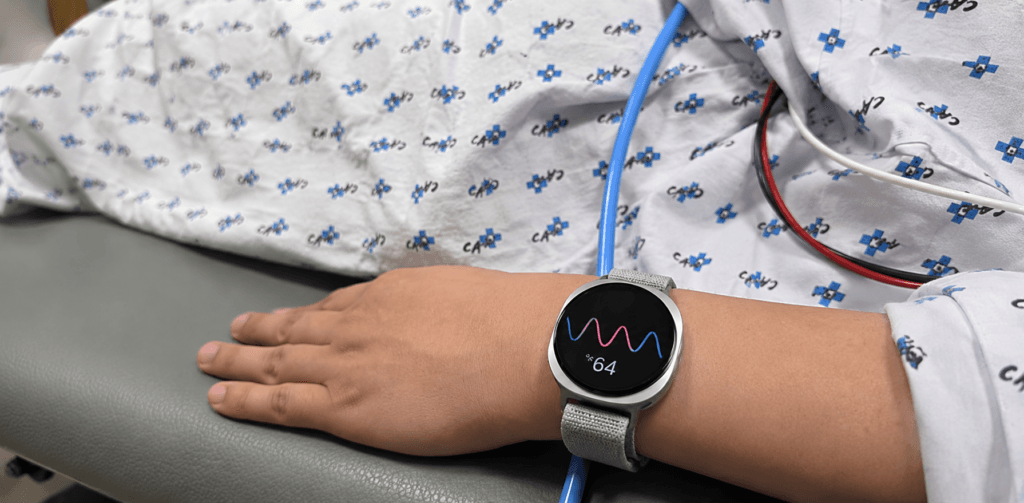
Samsung’s Galaxy Watch6 is shown as a health-focused wearable in a study exploring whether a smartwatch can predict fainting episodes before they happen. [This Image Is Only For Representation.]
Samsung Galaxy Watch Can Predict Fainting
Samsung announced on May 7 that a joint clinical study with Chung-Ang University Gwangmyeong Hospital has demonstrated what it describes as a world-first breakthrough in fainting prediction. The research suggests that the Galaxy Watch6 can identify signs of vasovagal syncope, a common fainting condition, up to five minutes before an episode, using sensor data and artificial intelligence analysis.
What The Study Found
The key result is the ability to predict vasovagal syncope, or VVS, with 84.6 percent accuracy in a controlled clinical setting. Researchers reportedly evaluated 132 patients with suspected VVS symptoms during induced fainting tests and used the Galaxy Watch6’s photoplethysmography, or PPG, sensor to monitor heart rate variability. The Indian Express has covered the full story.
According to the company, the AI model looked for changes in the body’s signals that often appear before a fainting episode. Because VVS usually involves a sudden drop in heart rate and blood pressure, the idea is that the watch may be able to detect a warning pattern early enough for a person to sit down, lie down, or alert someone nearby.
Why The Finding Matters
Vasovagal syncope is not usually fatal, but it can still be dangerous because fainting often leads to secondary injuries such as fractures or concussions. That makes early warning especially valuable, since the main risk is often not the faint itself but the fall that follows.
This is why the result is being seen as an important step in preventive wearable healthcare. Instead of waiting for a condition to happen and then recording it, smartwatches could soon help people act before the event occurs. Yeh shift kaafi important hai because it moves wearables from passive tracking toward active prevention.
How The Technology Works
The Galaxy Watch6 uses a PPG sensor, which tracks changes in blood flow through light-based readings on the wrist. In this study, the sensor data was fed into an artificial intelligence algorithm that analyzed heart rate variability and looked for patterns linked to impending fainting episodes.
The idea is not that the watch diagnoses a permanent disease on its own. Rather, it is trying to catch a short-term physiological event before it becomes visible to the user. That distinction matters, because the technology is more about warning than treatment and about prevention rather than cure.
Expert Statements
Professor Junhwan Cho of Chung-Ang University Gwangmyeong Hospital said that up to 40 percent of people may experience vasovagal syncope at some point in their lives, which means the condition is more common than many people realize. He also suggested that an early warning could help people move to safety or call for help before losing consciousness.
Jongmin Choi, who heads Samsung Electronics’ Health R&D Group in the Mobile eXperience business, said the study shows how wearables could shift healthcare toward preventive care. He added that Samsung plans to continue expanding health monitoring across its devices. Those comments point to a broader strategy: using consumer gadgets as early health assistants rather than just fitness trackers.
Background And Medical Context
Vasovagal syncope is often triggered by stress, pain, fear, dehydration, prolonged standing, or emotional strain. It causes a sudden drop in blood pressure and heart rate, which leads to temporary loss of consciousness. While many people recover quickly, the sudden nature of the event can be risky in daily situations such as driving, cooking, crossing roads, or standing on public transport.
Wearable health tech has already been used for heart rate monitoring, sleep tracking, and irregular rhythm alerts. This study pushes the category further by trying to forecast an event before it happens. That makes the Samsung result part of a larger trend in digital health, where consumer devices increasingly overlap with clinical monitoring.
Timeline
Before the study: Samsung and Chung-Ang University Gwangmyeong Hospital begin joint clinical research on fainting prediction.
During testing: Researchers evaluate 132 patients with suspected VVS symptoms in induced fainting tests.
May 7: Samsung announces the study results and describes the finding as a breakthrough.
Publication: The findings appear in Volume 7, Issue 4 of European Heart Journal-Digital Health.
This timeline shows that the announcement is not just a marketing claim. The results were tied to a published medical study, which gives the finding more credibility and makes it relevant for both healthcare professionals and tech users.
Also Read: Algae-Powered Air Purifier Device That Purifies Air and Boosts Oxygen Levels!
Why This Matters In India
For Indian users, this story matters because wearable devices are becoming more common in urban households, especially among young professionals, fitness users, and people managing health risks. If future smartwatch models can warn about fainting or similar events, that could be useful in crowded cities where a fall can quickly become serious.
It also matters because India is seeing rapid adoption of affordable smartwatches, and people are increasingly looking for health features beyond step counting. A feature like fainting prediction would appeal strongly to users who care about family safety, elderly care, and everyday health monitoring. In simple words, yeh feature sirf tech ka nahi, public safety ka bhi topic hai .
Analysis
My assessment is that the biggest value of this study is not that it has “solved” fainting, but that it shows consumer wearables may soon become clinically useful warning tools. The 84.6 percent accuracy figure is promising, but it still comes from controlled testing, not from real-world daily use across millions of people. So the breakthrough is real, but the caution is equally real: a smartwatch alert should support medical judgment, not replace it.
What Next
The next step will likely be larger real-world studies to test whether the model performs reliably outside clinical environments. Samsung also said it intends to deepen collaboration with medical institutions and expand health monitoring features across its wearables, so future Galaxy Watch models may include more advanced preventive health tools.
If the technology proves stable in broader settings, it could eventually be used for other early-warning health applications too. For now, the key question is whether the fainting prediction feature can stay accurate when people are walking, working, exercising, and living normal lives instead of being tested in a hospital setting.
Conclusion
Samsung’s new study suggests the Galaxy Watch6 could predict fainting episodes up to five minutes in advance, which is a meaningful step for wearable healthcare. With 84.6 percent accuracy in a clinical test and support from a hospital-led study, the finding shows how smartwatches may soon help users avoid injury before a fainting spell occurs.
The bigger story here is not just about one product. It is about where health technology is headed: from tracking what has already happened to warning about what may happen next. That shift could make wearables much more valuable in everyday life, especially for users who want more safety, more awareness, and more control over their health.
Written By A. Jack