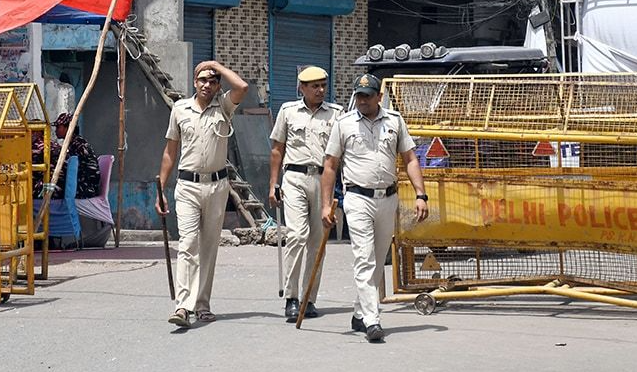
Hundreds of shops in the furniture market in Delhi’s Shastri Park area were gutted in flames on Friday night, alarming traders as the fire was dangerously close to the metro line and trees nearby. Fire officials said 25 fire tenders were called into action and the exact cause of the blaze is under investigation.
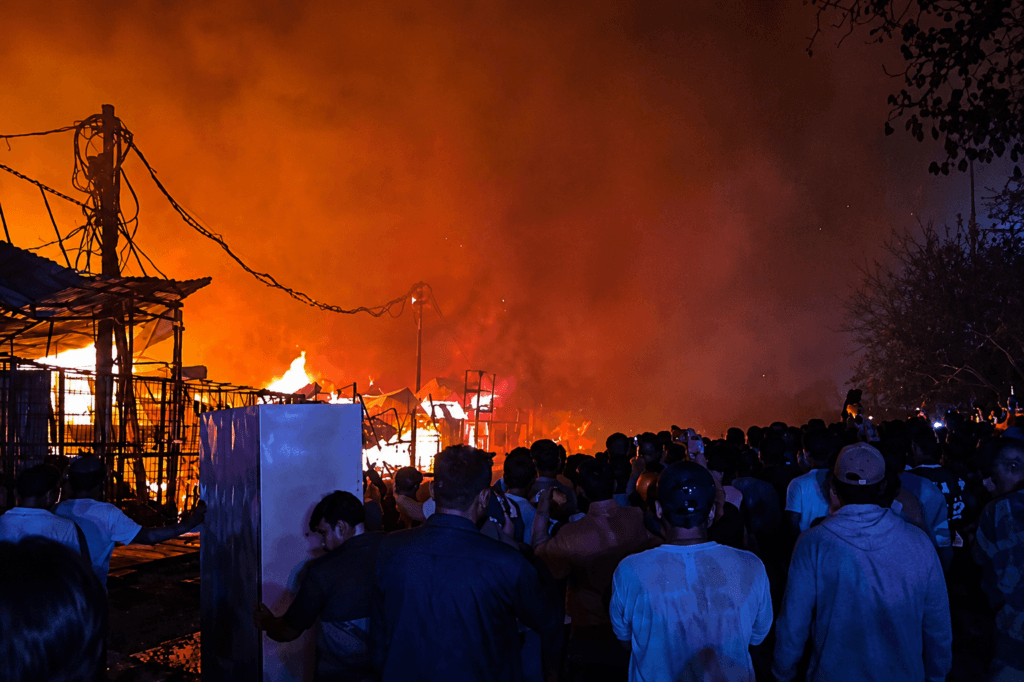
Firefighters battle a massive blaze at the furniture market in Shastri Park, Delhi, as thick flames spread across shops near the metro corridor.
A massive fire broke out at the furniture market in Delhi’s Shastri Park area on Friday night, triggering panic among traders and local residents after flames engulfed a large cluster of shops. According to the Delhi Fire Service, the call about the blaze was received at around 11.57 pm, and the fire quickly spread because the market was packed with highly combustible furniture material.
The fire erupted near the New Seelampur metro station and raised serious safety concerns as it moved dangerously close to the metro line and nearby trees. Traders alleged that the initial response from the fire brigade was delayed, while some also claimed that only two tenders first reached the spot, including one with damaged equipment. The situation worsened after reports that members of the public pelted stones at firefighting teams during the operation. Yeh incident kaafi serious hai because it combines a major commercial loss, a public safety risk, and a very tense emergency response.
What Happened
The fire started late at night in the furniture market and spread quickly through the area. Furniture shops typically contain wood, foam, varnish, polish, and upholstery materials, all of which can ignite and burn rapidly. That kind of environment makes any fire potentially dangerous from the very beginning, and once the flames catch, they can move from one unit to another in minutes. The Telegraph India has covered the full story.
Delhi Fire Service officials said that the fire call came in at 11.57 pm. By 12.50 am, police assistance had to be sought after some people allegedly threw stones at the fire tenders while the rescue work was underway. A total of 25 fire tenders were later sent to bring the flames under control. At the time of reporting, the cooling operation was still underway, and the exact cause of the fire had not been determined.
The blaze spread across a large number of shops, and the scale of the fire suggests that the market may have had a dense layout and limited fire separation between units. In furniture markets, such conditions can make fires especially destructive. A single spark can become a large inferno very quickly if response time is slow or the market lacks proper fire safety systems. In simple words, combustible material and close-packed shops made this fire more dangerous.
Traders’ Allegations and Ground Reality
Traders at the market alleged that the initial response from the fire brigade was slow and insufficient. Some claimed only two fire tenders reached the location first, and one of those vehicles had damaged equipment. While those allegations have not been independently confirmed in the information available, they show the frustration and fear felt by traders watching their businesses go up in flames.
When shopkeepers believe the emergency response is not fast enough, trust begins to break down. For many of them, furniture stock represents months or years of investment. A fire like this does not just damage goods; it can destroy livelihoods, loans, workers’ wages, and family income. So even a short delay can feel catastrophic to people on the ground.
The report of stone pelting adds another troubling layer. Firefighters are already operating in dangerous conditions, and any obstruction, aggression, or crowd interference can slow the response further. If emergency crews are attacked or prevented from working, it puts lives and property at even greater risk. Authorities will likely need to examine those claims carefully because emergency operations cannot function properly in a hostile environment.
Why the Fire Spread So Fast
Furniture markets are among the most fire-prone commercial spaces in cities like Delhi. The products stored and sold there often include wood, plywood, fabric, foam, adhesives, and polish, all of which are highly flammable. Add tight shop spacing, electrical wiring, packed inventory, and late-night vulnerability, and the risk becomes much higher.
Shastri Park’s market appears to have been especially exposed because the fire spread dangerously close to the metro line and trees. That means the fire did not remain contained to individual shops and may have benefited from open exposure and combustible surroundings. The larger the fuel load in a market, the more difficult it becomes for fire crews to bring the situation under control quickly.
It is also likely that the fire grew before a large-scale response could fully build. In many urban fire incidents, the first 15 to 30 minutes are critical. If the blaze gets ahead of the firefighting effort, later reinforcements are needed to stop it from spreading further. That seems to be what happened here, given that 25 tenders were eventually dispatched.
Background
Delhi has seen repeated fire incidents in crowded commercial zones, especially in markets where storage density is high and safety systems are often inadequate or overloaded. Furniture markets in particular are risky because they combine combustible inventory with busy footfall and, in many cases, older infrastructure. When such markets are located near transport corridors or dense neighborhoods, the hazard increases.
This incident also reflects a broader problem in Indian cities: commercial clusters often grow faster than safety planning. Businesses expand, inventories increase, and electricity usage rises, but fire exits, hydrants, emergency access, and electrical audits do not always keep pace. That gap becomes obvious only when a blaze breaks out.
For Delhi residents, incidents like this are a reminder that urban fires can turn into citywide emergencies very quickly. One market fire can affect traffic, nearby structures, metro operations, and local air quality. The Shastri Park blaze fits that pattern and shows how vulnerable crowded city markets remain.
Timeline
Friday, 11.57 pm: Delhi Fire Service receives the first call about the blaze.
Shortly after midnight: Flames spread rapidly through the furniture market near the New Seelampur metro station.
Around 12.50 am: Police assistance is requested after stone-pelting is reported.
Night hours: 25 fire tenders are deployed to control the fire.
Later: Cooling operations continue as officials work to determine the cause.
Also Read: Delhi Woman’s Death Sparks Dowry Death Probe After “Bacha Lo, Didi” SOS Call
Why This Matters
This matters because it is not only a shop fire. It is a public safety issue, a commercial loss, and a warning about urban fire preparedness. When a market of this size burns, hundreds of families can be affected directly through business losses and indirectly through disrupted jobs and supply chains.
It also matters because the fire came close to the metro corridor and nearby trees, which means the threat extended beyond the market itself. In dense cities, one accident can create a chain reaction if emergency systems are not strong enough. Yeh issue kaafi important hai because Delhi cannot afford repeated large-scale market fires in areas packed with people and property.
India Angle
For Indian readers, this is a familiar but worrying urban story. Many cities across India have wholesale and retail markets that store highly flammable goods in densely packed lanes. From furniture and electronics to textiles and plastics, the same fire-risk pattern appears again and again.
Delhi’s case is especially important because it could set off a wider conversation about market safety, fire audits, and emergency access in commercial zones across the country. If a furniture market near a metro corridor can become engulfed so quickly, then similar markets elsewhere may also be vulnerable. In Hinglish, seedhi baat yeh hai: safety checks sirf paper par nahi, ground par bhi honi chahiye.
Analysis
My view is that the most important part of this story is not just the fire itself, but what it reveals about urban risk management. Markets full of combustible goods need strict wiring checks, easier fire access, clear evacuation plans, and active local monitoring. The allegation of a delayed response will also need serious review because trust in emergency services depends on speed and coordination. At the same time, public interference during firefighting is unacceptable and dangerous. The real lesson here is that both infrastructure and civic discipline matter when disaster strikes.
What Next
The next step will be a detailed inquiry into the fire’s cause, the scale of losses, and the response timeline. Officials will likely inspect the damaged market, assess whether safety violations existed, and determine if any electrical fault, short circuit, or external factor sparked the blaze.
Traders will want compensation, insurance guidance, and a clear explanation of how the market can reopen safely. Authorities may also use the incident to review fire preparedness in other commercial hubs across Delhi. If lessons are not implemented now, similar incidents could happen again. The immediate focus, however, will remain on cooling operations, damage assessment, and ensuring that the fire does not reignite.
Conclusion
The massive blaze in Delhi’s Shastri Park furniture market is a stark reminder of how fast fire can spread in crowded commercial spaces filled with combustible material. What began as a late-night emergency call quickly escalated into a large-scale firefighting operation involving 25 fire tenders, police support, and ongoing cooling work.
The incident has caused fear, business damage, and serious questions about response time, safety preparedness, and public conduct during emergencies. As the investigation continues, the bigger challenge for Delhi will be to ensure that crowded markets are better protected before the next fire breaks out. Urban fire safety is not optional—it is essential.
Written By A. Jack