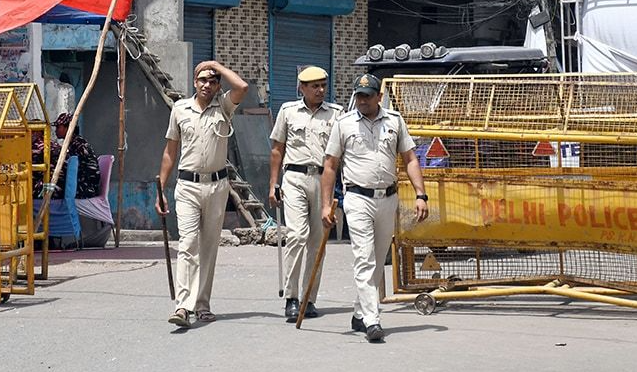
A 28-year-old woman’s death in Inderpuri of West Delhi has turned into a disturbing dowry death case after she allegedly called her sister for help just seven minutes before being found dead. Police have detained her husband and brother-in-law, while family says harassment, assault and dowry demands.
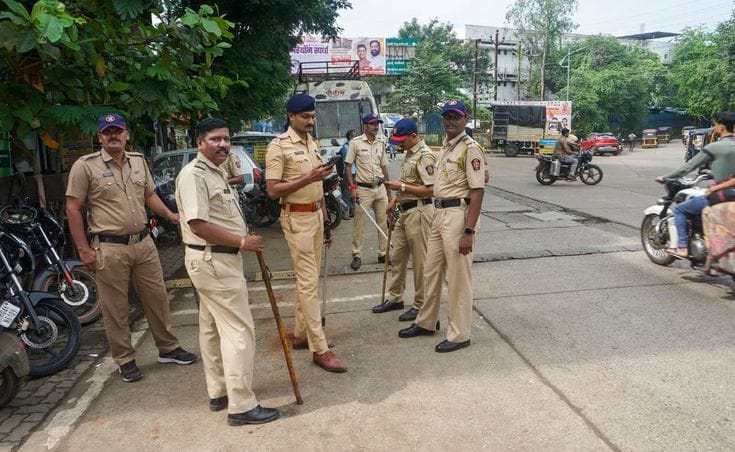
Police investigate the Inderpuri home in West Delhi after Veena Kumari died under suspicious circumstances following a distress SOS call to her sister.
A deeply troubling case from West Delhi has raised fresh questions about dowry harassment and domestic violence after Veena Kumari, 28, died under suspicious circumstances on May 18. Her family says she made a desperate phone call to her sister, pleading, “Didi mujhe bacha lo,” before the call dropped, and, just seven minutes later, she was reportedly dead.
According to police and family accounts, Veena’s husband, Raju Singh, claimed she fell from the terrace of a three-story building in Inderpuri. But Veena’s relatives allege that she had been facing repeated harassment, physical assault, and pressure over dowry. The case has now been registered as a dowry death, and her husband Raju and brother-in-law Rajkumar have been arrested. Yeh case kaafi serious hai because it shows how quickly a domestic dispute can turn into a fatal tragedy when warning signs are ignored.
What Happened
The sequence of events is chilling. On May 18 at around 9:55 pm, Veena called her sister Reena and allegedly said she was in trouble. The reported words were, “Didi, mujhe bacha lo. “Ye mujhe bahut maar rahe hain” suggests that she believed her life was in danger. She also reportedly asked Reena to take custody of her six-month-old son if something happened to her. NDTV has covered the full story.
The call then disconnected. Reena tried calling Veena back and also contacted her in-laws, but there was no meaningful response. Worried, she rushed toward Veena’s matrimonial home. Then, at around 10:02 pm, she received a call from Veena’s brother-in-law, who said, “Bhabhi chhat se gir gayi.” That seven-minute gap is at the center of the family’s suspicion and the police investigation.
According to the family, Veena had been under pressure for a long time. Her brother alleged that her in-laws were not satisfied with the dowry and wanted a Royal Enfield Bullet. He also claimed that Veena was regularly taunted and beaten and that the couple’s disputes were not minor household disagreements but repeated acts of cruelty. The family says Veena had stopped them from filing a police complaint earlier, which is sadly common in many domestic abuse cases where women hope the situation might improve.
Family Allegations and Claims
Veena’s brother gave disturbing details about the relationship. He alleged that Raju and his brother Rajkumar made snide remarks about the gifts Veena brought at the time of marriage and repeatedly compared her family’s contribution to what the other side had received. According to him, the brothers would humiliate her, beat her, and use dowry-related comparisons as a way to dominate the household.
One of the most serious claims is that Veena’s eardrum was ruptured after being slapped hard. If true, that points to severe physical abuse, not just emotional pressure. The brother also alleged that the in-laws were unhappy that the dowry did not include a Royal Enfield Bullet, which further strengthens the family’s claim that material demands may have been at the heart of the conflict.
These allegations matter because dowry harassment cases often involve a long pattern of intimidation before the final incident. The final death may appear sudden, but families often describe months or years of insults, violence, and pressure that build into tragedy. In this case, the SOS call suggests that Veena herself may have felt the danger was immediate.
In-Laws’ Denial
Veena’s father-in-law, Jaipal, has denied the allegations. He said the family did not ask for “even a single spoon” and rejected the claims of dowry harassment, physical assault, and pushing from the terrace. He described arguments between couples as normal and said the couple had been allowed to move to Delhi for a better life.
That denial is expected in cases like this, but it does not resolve the central question. Police will now have to piece together the physical evidence, post-mortem findings, call records, and witness statements. In dowry death cases, courts and investigators often look beyond verbal denials and focus on the pattern of behavior, medical findings, and circumstances leading to the death.
In simple words, both sides have very different versions. The family says abuse and dowry pressure led to her death. The in-laws say it was an accident and deny any harassment. The truth will depend on the investigation and evidence, not just the statements.
Police Action So Far
West Delhi Deputy Commissioner of Police Sharad Bhaskar confirmed that a PCR call was received on Monday about a woman falling from a building. She was taken to a nearby hospital, where she was declared dead. A post-mortem was conducted at Deen Dayal Upadhyay Hospital, and the body was handed over to the family on Wednesday.
Police have now registered a case of dowry death and arrested both Raju and Rajkumar. That is an important step because dowry death cases are treated seriously under Indian law, especially when there is an allegation of cruelty, harassment, or suspicious death within a marriage. The arrest indicates that investigators believe the claims require custodial questioning and deeper examination.
The next phase will likely include forensic review, statements from neighbors and relatives, and a close look at phone records and injuries. The timing of Veena’s SOS call may be crucial. If her sister’s testimony and the call logs support the family’s account, the case could become much stronger.
Also Read: Fire Scare on Air India Bengaluru-Delhi Flight AI2802, All Passengers and Crew Safe
Background
Dowry deaths remain one of the most painful and persistent social crimes in India. Despite decades of legal reform and public awareness, many women still face pressure over gifts, money, vehicles, and household items after marriage. The tragedy often begins with small taunts and escalates into violence, especially when the woman’s family is unable or unwilling to meet demands.
Delhi, like many other Indian cities, continues to see cases where marital violence and dowry pressure overlap. The problem is not limited to one class or one neighborhood. It cuts across income groups and often remains hidden until the situation becomes unbearable. Cases like Veena’s are especially tragic because they involve a young mother, a six-month-old child, and a desperate final call for help.
Timeline
Mid-2023: Veena and Raju move from Sambhal, Uttar Pradesh, to Delhi after marriage.
Over the marriage period: Family alleges repeated arguments, taunts, and dowry pressure.
May 18, 9:55 pm: Veena allegedly calls her sister and pleads for help.
May 18, 10:02 pm: Reena receives a call saying Veena fell from the terrace.
After the incident: Veena is taken to the hospital and declared dead.
Following days: Post-mortem is completed; body handed over to family.
Now: Police register the dowry death case and arrest Raju and Rajkumar.
Why This Matters
This matters because it is a reminder that dowry-related abuse is still very much alive in modern India. A woman asking her sister to save her just minutes before her death is not just a personal tragedy; it is a social failure. It shows how domestic abuse can remain invisible until it becomes fatal.
It also matters because it affects the safety of married women and the accountability of families and communities. When harassment is ignored, normalized, or kept private, it can spiral into irreversible harm. Yeh issue kaafi important hai because it is not only about one household but also about how society responds to abuse behind closed doors.
For the child left behind, the consequences are lifelong. For the family, the grief will be mixed with questions that may never fully go away. For the legal system, the case is another test of how seriously it handles dowry death allegations and whether justice can be delivered quickly and fairly.
India Angle
For Indian readers, this case is a stark reminder that dowry remains a dangerous reality despite being illegal. In many families, the violence is not always open; it begins through taunts, repeated demands, and psychological pressure. The violence may be hidden, but the consequences are very real.
The India angle is also about women’s right to safety within marriage. A young woman in Delhi, a major metropolitan city, still allegedly had to call her sister to say she might not survive the night. That is disturbing because it shows that urbanization alone does not remove patriarchal abuse. In Hinglish, seedhi baat yeh hai: education aur city life ke bawajood dowry abuse ka problem abhi bhi zinda hai.
Analysis
My opinion is that the most heartbreaking element is the seven-minute gap between the SOS call and the reported death. That tiny window shows how quickly crisis can unfold when a victim is trapped in an unsafe environment. If the allegations are proven, this case will not just be about one family’s cruelty but about a systemic failure to protect women before it is too late. The police have taken the first step by arresting the accused, but the public will now be watching to see whether the investigation is thorough and whether the evidence is strong enough to secure justice. In cases like this, the legal process must be fast, careful, and humane.
What Next
The next step will be the completion of the police investigation and the collection of forensic and digital evidence. Investigators are likely to review the post-mortem report, the injury pattern, call records, neighbor statements, and any prior complaints or messages that may support the family’s claims.
If the evidence supports dowry harassment and assault, the charges could become more serious and the case could move toward trial with stronger prosecution. If the defense continues to insist it was an accidental fall, the court will have to examine whether the circumstances fit that explanation. For the family, the immediate hope is that Veena’s final call is treated not as a tragic detail but as a crucial signal that may help deliver justice.
Conclusion
Veena Kumari’s death in Inderpuri is a heartbreaking case that has shaken Delhi and renewed attention on dowry harassment, domestic violence, and women’s safety in marriage. Her reported SOS call to her sister, followed by her death seven minutes later, has made the case especially disturbing.
Police have arrested her husband and brother-in-law, and a dowry death case has been registered. The investigation will now decide whether her death was a tragic accident, as the in-laws claim, or the result of long-term abuse and dowry pressure, as her family alleges. Whatever the final legal outcome, the case is already a painful reminder that many women still live under fear inside their own homes.
Written By A. Jack