The LaLiT New Delhi, one of Lutyens’ Delhi’s most recognisable luxury hotels, is now in a serious legal and financial crisis after the Delhi High Court upheld the NDMC’s demand of over Rs 1,063 crore and backed the termination of the property’s land licence. The ruling puts Bharat Hotels Ltd, the parent company of The LaLiT, under intense pressure over its flagship asset and future business plans.
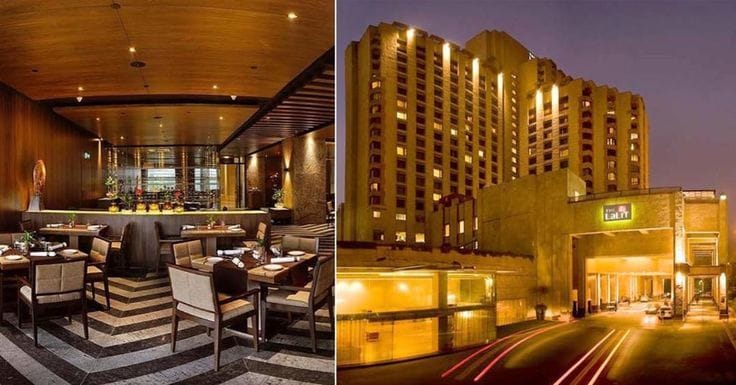
The LaLiT New Delhi in Barakhamba Road, a landmark luxury hotel, is now at the centre of a Rs 1,063-crore legal and financial dispute.
The LaLiT New Delhi has long been seen as a symbol of Indian hospitality in the heart of the capital, but that image has been shaken by a major Delhi High Court ruling. The court recently upheld the New Delhi Municipal Council’s demand for more than Rs 1,063 crore in unpaid licence dues and also validated the termination of the land licence for the hotel’s prime property in central Delhi.
For Bharat Hotels Ltd, which operates The LaLiT, the judgement is more than a legal setback. It threatens control over its crown jewel asset, raises concerns about financial stress, and could reshape the future of one of India’s best-known hotel brands.
How The Crisis Began
The roots of the dispute go back to 1982, when NDMC granted Bharat Hotels a licence for a roughly six-acre parcel on Barakhamba Road in Lutyens’ Delhi. This was not a sale or permanent lease in the usual sense; it was a licence arrangement for developing and operating a hotel and commercial complex. NDTV Lifestyle has covered the full story.
Over time, the property became The LaLiT New Delhi and the adjoining World Trade Centre. For years, the arrangement worked without major public conflict, but as land values in central Delhi rose sharply, NDMC began to argue that the old fee structure was far below market rates. That gap between old licence terms and modern property values became the core of the legal fight.
What The Court Decided
On April 22, 2026, a division bench of the Delhi High Court overturned earlier relief granted to Bharat Hotels and sided with NDMC. The court held that the 1982 arrangement was a licence governed by the NDMC Act, not a fixed commercial deal that could not be revised.
That interpretation gave the NDMC stronger authority to reassess licence fees in line with market conditions. The bench also accepted NDMC’s position that the licence had been fundamentally breached because shop spaces in the complex were sold through transactions in 2016, which the original agreement did not permit.
As a result, the court upheld the Rs 1,063 crore dues demand and validated the termination of the licence. It also directed Bharat Hotels to hand over possession of the property within 90 days.
Why The Licence Was Revoked
The court’s reasoning rested on two major points. First, it said public land in a prime part of Delhi should generate fair returns and cannot remain tied to outdated financial terms forever. Second, it found that the sale of shop and office spaces by sub-licencees went against the original licence structure.
The judges were not persuaded by Bharat Hotels’ argument that it was not directly involved in the sale transactions. The bench said the record showed enough confirmation and involvement to treat the issue as a serious breach. In short, the court saw this not as a minor paperwork problem but as a violation that went to the heart of the arrangement.
The Hotel’s Growth Story
The current crisis is striking because The LaLiT began as a big Indian success story. Lalit Suri founded Bharat Hotels in 1981 with a vision of building a world-class hospitality brand in India. The Delhi hotel first came up as a Holiday Inn property ahead of the 1982 Asian Games and later evolved into one of the city’s most prominent luxury addresses.
By the 1990s and 2000s, the group expanded to Mumbai, Goa, Bengaluru, Udaipur and, later, London, building a brand identity around large-format luxury, banquet spaces and an Indian aesthetic. After Lalit Suri’s death in 2006, Jyotsna Suri led the group into a new phase and formally reintroduced the brand as The LaLiT in 2008.
That growth story is why the current legal setback feels so significant. The Delhi property was not just another hotel; it was the symbolic centre of the entire company.
Timeline
1981: Bharat Hotels Ltd is founded by Lalit Suri.
1982: NDMC grants licence for the Barakhamba Road land parcel.
2006: Lalit Suri dies; Jyotsna Suri takes over leadership.
2008: The brand is formally relaunched as The LaLiT.
2020: NDMC issues notices demanding arrears and termination.
2023: A single-judge bench grants Bharat Hotels temporary relief.
April 22, 2026: Delhi High Court division bench overturns the relief and backs NDMC.
Also Read: Paytm Payments Bank Licence Cancelled: What Happens to Your Money, Accounts and UPI
Why This Matters
This matters because it involves one of India’s most visible luxury hospitality assets and a major public land dispute in the capital. If Bharat Hotels loses operational control of the property, the impact will be both financial and symbolic.
It also matters for public policy because the court’s ruling reinforces the idea that public land must produce fair value for taxpayers. In simple words, yeh case sirf ek hotel ka nahi hai — it is about how India handles expensive public property in top city locations.
Financial Pressure On Bharat Hotels
The immediate danger is not just losing the hotel but also the Rs 1,063 crore liability itself. If Bharat Hotels cannot clear the dues, NDMC may move to recover the money through legal and asset-related action. That could deepen the company’s financial stress and potentially push it toward insolvency risk.
This is happening at a sensitive time because the group has reportedly been exploring an IPO after 2026 to raise funds and support expansion. A major legal debt of this scale could complicate those plans badly.
India Angle
For Indian readers, this story goes beyond luxury hotels and court orders. It shows how old public-private arrangements, once seen as practical, can become huge financial battles decades later as land values change dramatically. That is a very Indian problem, because many prime urban properties across the country sit on similarly old and complex agreements.
It also reflects how business growth in India is often tied to regulatory clarity. When rules on public land, licensing, and transfer rights are unclear or outdated, the conflict can surface years later with enormous financial consequences.
Analysis
My analysis is that the court’s decision sends a strong signal to companies occupying public land in high-value zones. The message is clear: old licence arrangements may not survive unchanged if they no longer reflect market realities or if the licensee breaches key conditions. For The LaLiT, the real challenge now is not just legal defence but financial survival planning.
What Next
NDMC now has a clear path to enforce the court’s order if Bharat Hotels does not comply within the stated timeline. That could mean eviction proceedings, possession transfer, or fresh redevelopment plans for the property at current market rates.
The company may choose to appeal again, seek interim relief, or attempt a settlement with NDMC. At the same time, it will likely need to address how it manages operations, debt, and brand confidence if the Delhi property is no longer under its control.
Conclusion
The LaLiT New Delhi’s legal trouble is far more than a property dispute; it is a crisis that strikes at the heart of Bharat Hotels’ identity, finances and future. The Delhi High Court’s decision to uphold more than Rs 1,063 crore in dues and terminate the land licence has put the hotel group in one of the toughest positions in its history.
What happens next will matter not only to Bharat Hotels but also to policymakers, investors and hospitality watchers across India. If NDMC takes possession, the city may reclaim one of its most valuable land parcels — and one of India’s most iconic hotel brands may have to rethink its future from the ground up.
Written By A. Jack