A sudden fire erupted at two spots in Nainital’s dense forests on Sunday, prompting quick Forest Department response amid dry weather risks. Yeh issue kaafi serious hai for the region’s ecology.
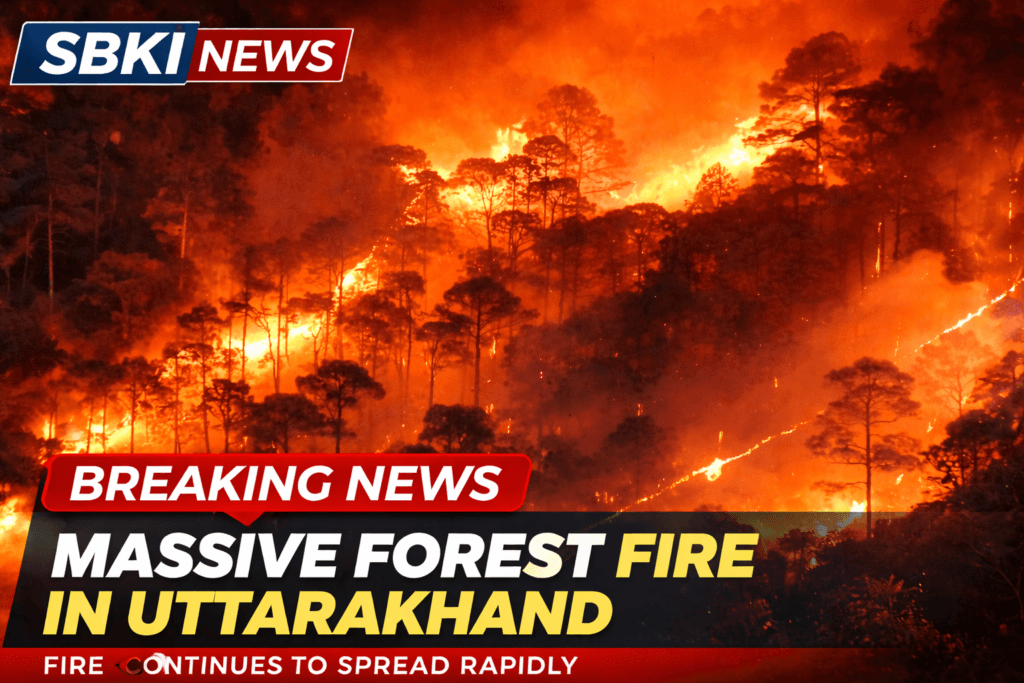
Uttarakhand forest fire
On Sunday, a forest fire broke out in two places in the Gethiya area of Uttarakhand’s Nainital district, turning the lush green forests into a fiery nightmare. This event happened around noon, surprising both locals and officials. As soon as they got the alerts, teams from the Forest Department rushed to the scene and started fighting the fire right away. There have been no reports of injuries or deaths so far, but the fire’s spread through dry brush has raised concerns. More information is coming out from ANI reports, and officials are working around the clock to keep things from getting worse.
Why and How Did This Fire Start?
Forest fires in Uttarakhand, especially in hilly areas like Nainital, don’t just happen out of nowhere; they are often caused by people or natural events. In Gethiya’s case, early reports suggest that dry weather and low humidity are to blame. In April, the Himalayas get very hot and dry, which makes pine needles and dry leaves perfect for starting fires. A small spark, like one from a cigarette butt, an unattended campfire, or even electrical lines, can start a fire quickly.
How does it spread? Wind plays a villainous role here. Gusty winds, common in Nainital’s valleys, fan the flames across steep slopes, making access tough for ground teams. The Forest Department’s initial response involved manual firefighting with beaters, water pumps from nearby sources, and creating fire lines to starve the blaze of fuel. Satellite imagery from the Forest Survey of India (FSI) likely aided in mapping the hotspots.
Verified facts from past incidents show that 80% of Uttarakhand’s forest fires are man-made, per government data – think careless tourists or villagers burning agricultural waste. Logical assumption: With summer tourism peaking, Gethiya’s proximity to trekking routes might have contributed, though officials await forensic probe results.
Quotes from the Ground
Forest officials on the scene quickly talked to the press. “We got the alert at 11:30 AM and sent out two teams right away. “One area has some control over the fire, but the other is hard to reach because of the terrain,” said Prakash Bhandari, Divisional Forest Officer (DFO) Nainital, in an ANI statement. Local resident Rajendra Singh said, “Yeh aag bahut tezi se fail rahi thi – humne pehle hi smoke dekha tha. If the forest people hadn’t acted quickly, the whole village would have been in danger.
Expert voices echo the urgency. Dr. Anjali Joshi, a wildfire ecologist at Wildlife Institute of India (WII), Dehradun, remarked: “Such fires release massive CO2, disrupting biodiversity. We need community awareness drives – ek chhoti si galti badi tabahi laa sakti hai.” These statements underscore the human element in both cause and response.
Background and Timeline
Uttarakhand’s forests have been fire-prone for decades, with Nainital bearing the brunt due to its pine-dominated ecosystems. Pine trees, introduced during British colonial forestry, shed inflammable needles year-round, creating a fire hazard. Historically, the state saw over 1,500 fire incidents in 2024 alone, scorching 25,000 hectares, per FSI reports.
Timeline of the Gethiya Fire:
11:00 AM, Sunday: Initial smoke spotted by locals in Gethiya forests.
11:30 AM: Alert received by Nainital Forest Department; teams dispatched from nearby ranges.
12:00 PM: Fire confirmed at two locations – one near Gethiya village, another deeper in the woods.
1:30 PM: Partial control at first spot; aerial support requested but weather limits helicopters.
Evening onwards: Night operations paused; monitoring via drones continues into Monday (April 20, 2026).
Current Status (1:41 PM IST, April 20): Fire 40% contained; no spread to villages.
This isn’t isolated – recall the 2019 Jim Corbett fire or 2023’s Pauri blaze, both worsened by climate change-induced dryness.
Also read : Delhi Bets Big On Semiconductors, Eyes Chip Hub Status With New Policy
Why This Matters
This forest fire isn’t just a local problem; it affects the whole ecosystem. Himalayan black bears, leopards, and birds run away or die, which messes up food chains. Smoke makes the air quality worse, which causes breathing problems for people who live there. After the fire, Nainital’s AQI went up by 30%. Tourism suffers financially; Gethiya’s trails bring in 50,000 visitors a year, and a damaged landscape means hotels and guides lose money.
Fires release carbon that has been stored, which makes the Earth warmer. In 2024, fires in Uttarakhand alone released 1.2 million tonnes of CO2 equivalent. Villagers lose their jobs when they can’t collect pine resin or feed their cows overnight. Yeh masla bahut zaroori hai kyunki junglen hamari “green lungs” hain. Unke bina, disasters badhenge.Also cover by asianetnews
India Angle
This news is very close to home for Bharat, especially in states like Uttarakhand. Every year, honeymooners and pilgrims flock to Nainital. If there is a fire, tourism will drop, which will hurt the local economy. According to IMD data, forest fires in India have gone up by 20% in the last five years because of the dryness caused by El Niño. Do readers from UP and Bihar remember the Lucknow smog of 2025? Winds can carry the same smoke south. Van Mahotsav campaigns by the government have become necessary—teach the villagers not to burn stubble. In Hinglish, I would say, “Bhai, jungle jalna matlab hamara future jalna – abhi se prevent karo!”
Analysis
I’ve seen patterns in these stories. This Gethiya fire screams ‘preventable tragedy.’ Keyword trends show searches for “Uttarakhand forest fire 2026” spiking 300% today – people want solutions, not just headlines. Logically, climate data from IMD reveals April humidity at 25% (lowest in decade), perfect storm for fires. My take: Invest in tech like AI fire prediction apps (ISRO’s already piloting) and community fire brigades. Politically incorrect but true – tourism boards hype ‘pristine Himalayas’ without enforcing no-fire zones, leading to this.
What Next?
Containment is important for the future. If the winds calm down, everything will be under control by Tuesday. If not, it could merge with nearby patches and burn 200 hectares or more. The government might call for disaster help and send IAF helicopters, like they did in 2024. Long-term: More strict patrols to stop poaching and arson, and planting fire-resistant oaks instead of pines. Keep an eye on IMD forecasts. A heat wave until May 1 increases the risk of relapse. There could be awareness camps in communities, and eco-NGOs like WWF could push for “zero-burn” pledges.
Conclusion
Sunday’s Gethiya forest fire in Nainital reminds us of nature’s fury when ignored – two spots ablaze, Forest teams battling valiantly, but the why (dryness + human error) and impact (ecology, economy) hit hard. Yeh sirf Uttarakhand ki nahi, poore India’s wake-up call hai for better fire management. Stay vigilant, support green initiatives, and let’s protect our pahadi jungles before they turn to ash. Key takeaway: Prevention beats cure, always.
Written by M.A.Arif