The incident took place late Monday night near Khand Gaon area when the empty Ujjain Express was being moved towards the railway yard. There were no passengers on board, and officials have ordered a probe into the derailment.
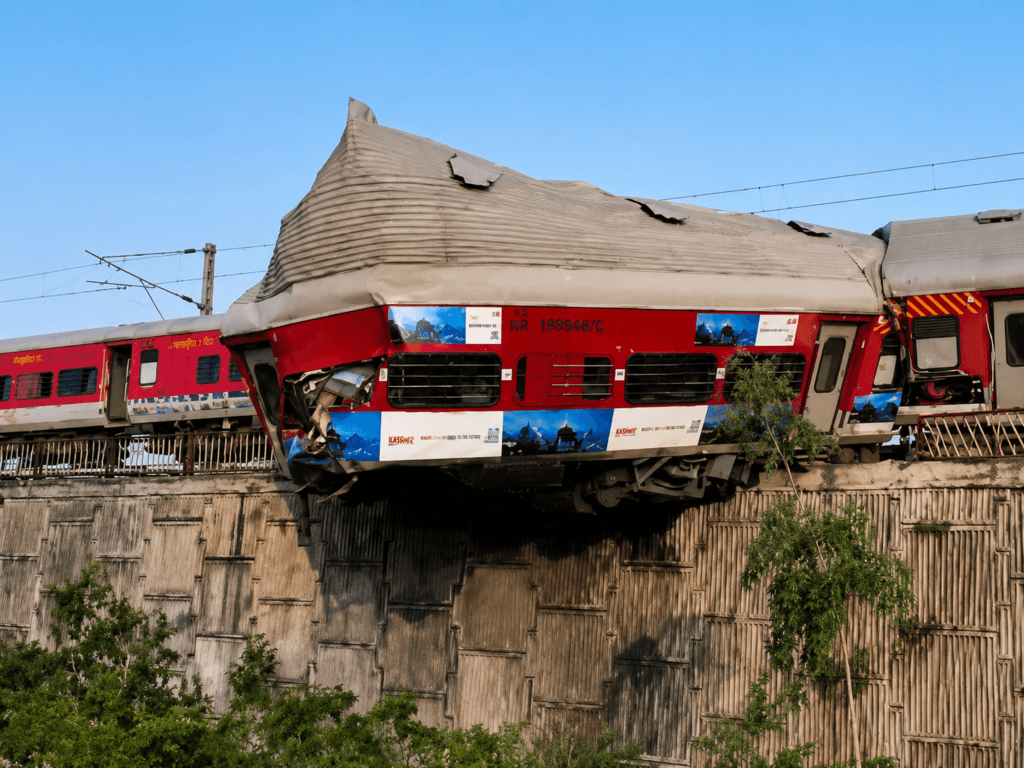
Visual from the accident spot near Yog Nagari railway
Three coaches of the Ujjain Express derailed near Yog Nagari railway station in Rishikesh, Uttarakhand, on Monday night, but a major tragedy was averted as the train was empty at the time of the incident. The derailment took place around 9.30-9.40 pm when the train was being moved towards the railway yard, the officials said. An inquiry has been ordered to find out the exact cause.
What Happened
Railway sources said the derailment took place in the Khand Gaon area near Yog Nagari station during the shifting of the train from the platform to the yard. It is said the locomotive hit the buffer or dead end at the end of the shunting line, which put pressure on the coaches and derailed three of them.
There were no passengers on board, so injuries or casualties in a railway accident, which could have turned into a much more serious one, were averted. Officials also said there was no disruption to normal rail operations, and services continued as usual after the damaged coaches were detached.
Why It Happened
Initial reports indicate it may have been a brake failure during routine maintenance, but the real cause will only be known once the railway inquiry has been wrapped up. Yard movement and shunting are delicate operations in railway work, and a slight technical fault may result in a derailment if the movement of the coach is not entirely under control.
Reports so far suggest the engine pushed against the buffer, creating a force on the rake, and it is possible that pressure threw one coach off the track and buckled another in the middle. It’s a preliminary explanation, but one that fits the basic engineering pattern of low-speed yard mishaps.
The station official said cranes had been used to lift the coaches that were affected back onto the track while railway staff and security personnel controlled the crowd that had gathered near the site. “Work to restore two passenger coaches on the track is going on with the help of a crane, and a probe has been ordered,” said station manager Surendra Kumar Sharma.
Background
The Ujjain Express, or Ujjaini Express as it is called in some reports, is an important long-distance train for passengers traveling between Madhya Pradesh and Uttarakhand. It runs between Lakshmibai Nagar in Indore and Yog Nagari in Rishikesh. The train had reportedly arrived at Yog Nagari station around 6 pm on Monday and was supposed to start its return journey early Tuesday morning.
The incident of non-passenger movement did not develop into a passenger emergency but raises questions about railway safety checks during yard handling. Operational caution is equally important, as many accident-like situations in Indian Railways do not occur during full-speed travel but during shunting, maintenance, or movement between the platform and the yard.
Timeline
Monday evening, around 6 o’clock, the Ujjain Express reaches the Yog Nagari railway station.
9.30 to 9.40 pm, Monday night: The train was being moved to the railway yard when it derailed in the Khand Gaon area.
Post-incident: Railway staff decoupled damaged coaches and started a recovery operation with the help of a crane.
Soon after, teams of GRP and the Railway Protection Force controlled the crowd and secured the area.
Tuesday: A formal inquiry was ordered by authorities to establish the exact cause.
Also read: Delhi Records Hottest May Day in 2 Years as Heatwave Grips Capital at 43.4°C
Why This Matters
This is a cause of concern, as Indian Railways carries millions of passengers every day, and even a derailment at a low speed can reveal weak links in safety systems. An empty train derails, and the immediate human loss may be avoided, but the operational message remains serious: better checks, tighter maintenance, and more disciplined yard movement are needed.
Also, it matters for Uttarakhand, as Rishikesh is a major spiritual, tourism, and transit hub. Any rail incident in the vicinity of Yog Nagari station is a quick concern for pilgrims, local commuters, and visitors heading towards the hill state, so public confidence in rail safety is directly linked to the regional mobility.
India Angle
Yeh incident ek reminder hai ki railway safety sirf long-distance high-speed routes ka issue nahi hai, balki routine operations mein bhi risk hota hai, especially for Indian readers. In a country where rail is one of the most used modes of travel, a derailment near a prominent station like Yog Nagari creates anxiety even if there are no casualties.
The India angle is also about responsibility. When a train is being moved for maintenance, passengers want the system to have already put in place layers of protection. In a busy rail network, a small mistake can snowball into a bigger crisis.
Analysis
Editor’s Note: This appears to be a classic example of a technical or procedural error during yard movement that caused a preventable disruption. While it’s a relief there were no passengers involved, that shouldn’t diminish the seriousness of this incident, as near misses often expose deeper process gaps.
In short, railway investigations should not only look for a single failed part but also maintenance discipline, communication between yard staff, and braking checks and movement supervision. Basically, this is a very important issue because the operational safety of Indian Railways is dependent on the entire chain and not on a single machine or a single employee.
This is also a lesson in communication. Some reports from the site suggest that senior officials arrived late, at least in some accounts. Quicker on-ground response and clearer public updates can help reduce panic and misinformation. In fast-moving incidents, trust is very much about the first 30 to 60 minutes.
What’s Next?
Then there is the railway inquiry, which should establish if the derailment was caused by brake failure, shunting error, buffer collision, or some combination of the above. When that report is out, railway authorities might send corrective instructions to maintenance crews and yard operators.
It will take time to put the derailed coaches back on the track and check the damaged rake for any mechanical problems. If the investigation finds there was a mistake in the process, it could mean internal disciplinary action, tighter inspection rules, and maybe changes to how train movement is dealt with in the station yard. This story is also covered by The Hindu.
Conclusion
Three coaches of the Ujjain Express derailed near Yog Nagari station. There were no injuries to passengers, but it is a serious railway incident. The empty train, yard movement, and quick recovery response helped to avoid a bigger disaster, but the inquiry will be critical in fixing responsibility and improving safety.
The bottom line, for now, is clear: Indian Railways need to consider every derailment, even during maintenance, as a warning sign. In a country as rail-dependent as India, small operational failures can have big public consequences, so stronger vigilance is not optional; it is essential.
Written by Arif