There is a growing demand from passengers to commence the proposed Bengaluru-Mumbai Vande Bharat Sleeper service at the earliest. There are two trainsets stationed at KSR Bengaluru City Railway Station. Preliminary inspections and pre-commissioning checks are being carried out on BEML’s premium overnight rakes before they are put into passenger operations.
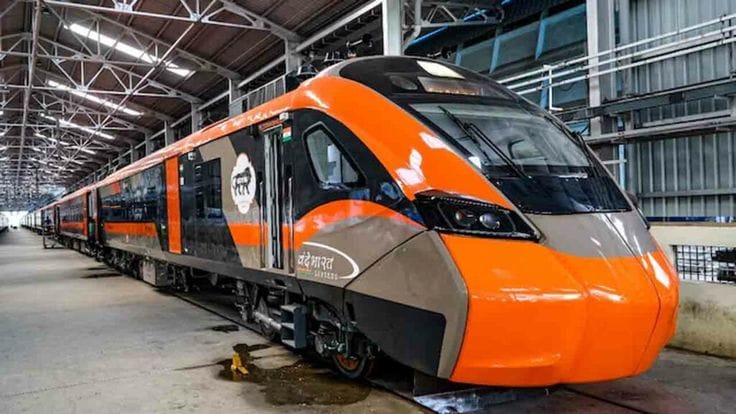
Vande Bharat Sleeper trainsets. This image is only for representations.
The proposed Bengaluru–Mumbai Vande Bharat Sleeper service has returned to the spotlight, with railway passenger groups urging the Union government to fast-track its launch. The demand has grown louder after two trainsets intended for the route were seen stationed at the Krantivira Sangolli Rayanna (KSR) Bengaluru City Railway Station, where they are now in the coaching yard undergoing preliminary inspections and pre-commissioning checks.
The development has sparked excitement among long-distance travellers, especially those who regularly commute between Karnataka and Maharashtra for business, work and family reasons. A sleeper version of Vande Bharat has long been seen as a major upgrade for overnight travel, offering a faster and more comfortable alternative to existing train options. Yeh topic kaafi important hai because it combines speed, comfort and connectivity on one of India’s busiest intercity corridors.
Why the Demand Is Rising
The biggest reason behind the renewed push is simple: passengers want a premium overnight train that can save time without sacrificing comfort. Bengaluru and Mumbai are two of India’s largest economic centres, and the travel demand between them is constant. A Vande Bharat Sleeper service on this route could make rail travel far more attractive for professionals, families and regular intercity travellers. This story was also covered by TheHindu.
Passenger groups are also reading the presence of the trainsets at KSR Bengaluru as a sign that the service is closer to reality. When rakes are already in the city and undergoing checks, expectations naturally rise. People begin to ask why the service is still waiting for final clearance if the physical trainsets are already in place. That is why pressure is building on the government to move faster.
Another factor is the growing public interest in premium train travel across India. Vande Bharat trains have become symbolic of modern rail travel, and a sleeper version carries even more value because it targets overnight routes where comfort matters most. In a country where long-distance train journeys are still the lifeline for millions, a reliable sleeper service can significantly improve the travel experience. Seedhi baat yeh hai: if the train is ready, passengers want the service ready too.
What Is Happening at KSR Bengaluru
According to the available information, two Vande Bharat Sleeper trainsets built by BEML are currently stationed at KSR Bengaluru City Railway Station. They have been moved to the coaching yard, where railway staff are conducting preliminary inspections and other pre-commissioning checks before the trains are allowed to carry passengers.
This stage is important because it is part of the formal readiness process. Before a train enters service, it must go through technical verification, safety checks and operational testing. These procedures ensure that systems, interiors and equipment meet the required standards. The fact that the trainsets are already in Bengaluru suggests that the proposed route is not just a concept anymore; it has moved into the physical preparation phase.
However, being stationed and being operational are two different things. The current checks indicate that the trainsets are still in the pre-launch stage. That means there may still be regulatory, technical or scheduling hurdles before passenger service can begin. But the presence of the rakes in the city has given the public a tangible reason to hope for a launch soon. Yeh ek strong visual cue hai that the project is moving forward, even if final approval is still pending.
Background and Context
The Bengaluru–Mumbai corridor is one of the country’s most economically important routes. It connects two metropolitan regions with strong business, technology, industrial and educational links. A premium overnight train on this line would naturally draw a lot of interest because the route is long enough for sleeper service to make sense, and fast enough service can significantly improve travel planning.
Vande Bharat Sleeper trains are meant to extend the brand beyond daytime chair-car operations into long-distance overnight travel. That makes them especially relevant for intercity routes where passengers prefer to sleep during the journey and arrive early the next day. For many travellers, this could be a better alternative to conventional overnight trains if speed, cleanliness and punctuality are all improved.
BEML’s role in building the trainsets also matters. The company is a key public-sector manufacturer with a major role in India’s rail modernisation push. The fact that these trainsets are already built and under checks shows that India’s sleeper train ambitions are no longer theoretical. They are entering the practical phase. That is why the anticipation around the Bengaluru–Mumbai route keeps growing.
Timeline
Earlier: Plans emerge for a Bengaluru–Mumbai Vande Bharat Sleeper service.
Recently: Two BEML-built trainsets for the proposed service have been brought to KSR Bengaluru.
Now: The trainsets are stationed in the coaching yard for preliminary inspections and pre-commissioning checks.
At the same time: Passenger groups urge the Union government to speed up the service launch.
Next: Clearance and final readiness checks will determine when passenger operations can begin.
Also Read: Bengaluru-Mumbai Vande Bharat Sleeper Train Approved By Railway Minister
Why This Matters
This matters because overnight rail travel is a major part of India’s transport system, and any improvement on a high-demand corridor has a wide impact. If the Bengaluru–Mumbai Vande Bharat Sleeper becomes operational, it could offer a faster, cleaner and more comfortable alternative to existing overnight trains. That would be a significant upgrade for passengers who currently have limited premium choices on this route. Yeh issue kaafi important hai because better rail options can reduce travel stress for thousands of people.
It also matters for India’s broader rail modernisation story. The Vande Bharat brand has already changed how many people think about trains in the country. A sleeper version expands that promise into longer distances, which is exactly where Indian Railways can make a big difference. When a train like this launches, it is not just another route — it becomes part of a larger shift toward modern, faster and better-managed passenger rail.
There is also a regional economic angle. Bengaluru and Mumbai are both powerful urban centres with frequent business travel between them. A high-quality overnight train can support work trips, family travel and even tourism. For travellers, that means less fatigue and better time use. For the railways, it means a chance to strengthen confidence in premium services.
India Angle
For Indian passengers, this story connects directly to everyday travel aspirations. In Hinglish, seedhi baat yeh hai: people fast train bhi chahte hain aur comfortable sleep bhi chahte hain. The proposed sleeper service promises both, which is why it is drawing so much interest. On routes like Bengaluru–Mumbai, where distance and overnight timing matter, a modern sleeper train can make rail travel feel far more practical and premium.
This also matters because India’s middle-class travellers are increasingly looking for value plus convenience. They want journeys that save time, feel safe and arrive on schedule. A service like this could answer that demand if it is launched properly. It would also show that Indian Railways is serious about matching changing passenger expectations.
For South India and West India, the route has additional meaning because it links two major commercial ecosystems. Many people travel for work, family visits, education and healthcare. A better overnight train could make those journeys smoother and more predictable. That is why even a pre-launch update becomes newsworthy.
Analysis
My opinion is that the physical presence of the trainsets changes the story from “planned” to “imminent-looking”, even if formal clearance is still pending. That distinction matters. People respond to what they can see, and seeing two sleeper rakes at Bengaluru creates a sense that the launch should not be far away. But in rail operations, readiness is always more than appearance. Testing, certification and scheduling must all align before passengers are allowed aboard.
I also think the demand is “imminent-looking” and how successful the Vande Bharat brand has become. When passengers begin asking for a sleeper version of a premium train, it means the concept has already won public trust. That is a valuable policy signal. It suggests that Indian Railways can build more passenger enthusiasm by expanding not just speed, but also comfort and route relevance.
From an editorial standpoint, this story is less about a single event and more about expectation management. People want to know when the train will run, not just that it exists. That means future updates should focus on clearance milestones, trial readiness and launch planning. The more transparent the process, the better the public response will be.
What Next
The next step will depend on the outcome of the inspection and pre-commissioning process. If the trainsets clear the required checks, the route could move closer to a formal launch. If not, there may be more testing or technical refinement before service begins.
Passenger groups are likely to keep up the pressure for an early rollout. Their appeals to the Union government indicate that public expectation is already building. If Indian Railways announces even a tentative service timeline, it will likely generate strong interest among travellers in Karnataka, Maharashtra and beyond.
The most likely near-term scenario is continued testing, followed by regulatory and operational decisions on deployment. Once those are completed, the route can move from anticipation to actual booking and service. Until then, the trainsets at KSR Bengaluru will remain a visible symbol of a service many passengers are waiting for.
Conclusion
The Bengaluru–Mumbai Vande Bharat Sleeper project has reached a visible and promising stage, with two BEML-built trainsets already stationed at KSR Bengaluru City Railway Station and undergoing pre-launch checks. Passenger demand for early rollout is growing because the route is highly important and the premium overnight format fills a real travel need. While the service is not yet operational, the current developments suggest that the proposal is moving closer to reality. For travellers looking for faster, more comfortable overnight connectivity between two major Indian cities, this is a development worth watching closely.
Written By A. Jack