Star India batter Virat Kohli has been ruled out of the upcoming ODI series against Afghanistan after he suffered a rare distal semimembranosus tendon tear in the final of IPL 2026. The injury, which cropped up after his match-winning knock for Royal Challengers Bengaluru, is unusual for a player known for elite fitness and durability.
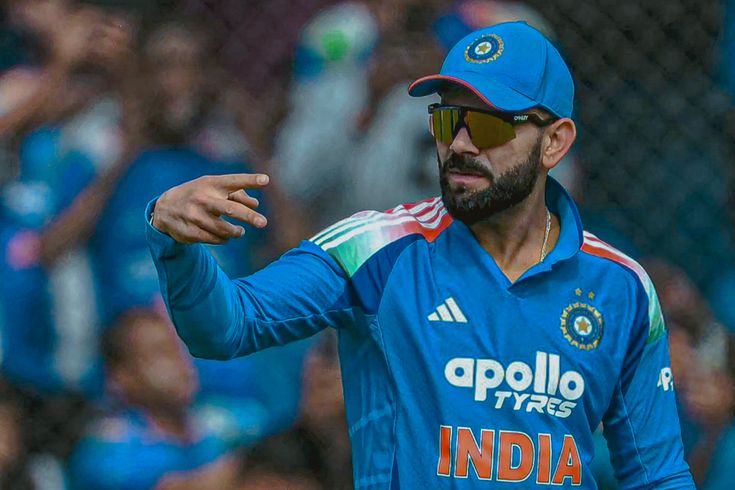
Virat Kohli celebrates after RCB’s IPL 2026 final, where he later appeared to struggle with a leg issue that has now ruled him out of India’s ODI series against Afghanistan.
Virat Kohli’s injury has quickly become one of the biggest talking points ahead of India’s ODI series against Afghanistan, starting June 13 in Dharamshala. What initially looked like ordinary cramps during the IPL 2026 final on May 31 has now been confirmed as a hamstring injury serious enough to rule him out of the three-match series.
According to reports, Kohli suffered the problem during Royal Challengers Bengaluru’s title-winning final against Gujarat Titans, where he stayed unbeaten on 75 and played through visible discomfort. The diagnosis has revealed a distal semimembranosus tendon tear, a rare form of hamstring injury. For a cricketer whose fitness has long been one of his biggest strengths, this is a significant setback. Yeh news kaafi important hai because Kohli’s absence changes both India’s batting structure and the series’ star appeal.
What Happened
The signs were first visible in the IPL 2026 final. Towards the end of his innings, Kohli appeared to be struggling with a leg issue while chasing a 156-run target. At the time, many observers believed it was a temporary cramp caused by the May heat, especially since he continued batting and eventually helped RCB complete the chase. NDTV Sports has covered the full story.
But the medical update has shown that the injury was more serious. A BCCI source said Kohli is out of the ODI series because of a hamstring injury sustained in the final. Scans reportedly revealed a distal semimembranosus tendon tear. That explanation matters because it indicates a structural injury rather than a simple muscle tightness issue.
This type of injury is not common in everyday cricket conversations, which is part of why the news has drawn attention. Kohli is famous for his strength, conditioning, and recovery standards, so a rare hamstring problem stands out even more. It also explains why the team management is being cautious rather than rushing him back.
What Is the Injury?
A distal semimembranosus tendon tear affects a tendon connected to the hamstring muscle group, specifically near the inner part of the shinbone below the knee. In simpler terms, it is a deeper soft-tissue injury that needs proper rest and assessment. It is not the kind of problem a player simply shakes off overnight.
The hamstring is crucial in cricket because it supports sprinting, quick turns, explosive starts, and movement between the wickets. For a batter like Kohli, who relies on speed, timing, and sharp running, even a moderate hamstring issue can affect performance. That is why the advice reportedly includes at least two weeks of rest.
Reports have also suggested that Kohli may technically recover in time for the final ODI against Afghanistan on June 20, but selectors are unlikely to take that risk. This is understandable. When a rare injury occurs during a packed cricket calendar, India is more likely to prioritize long-term fitness than short-term availability.
Team and Official Response
India assistant coach Ryan ten Doeschate has kept the team’s public response measured, saying official communication would come later. He also noted that injuries involving players like Virat Kohli or Rohit Sharma naturally become major news.
That statement is important because it shows the team wants to avoid speculation until medical and selection decisions are fully confirmed. In modern cricket, where fitness updates spread fast, official caution often prevents confusion. The message from the team is clear: wait for the final word before reading too much into the situation.
For fans, though, the concern is already obvious. Kohli is not just another senior player. He is one of India’s biggest match-winners and one of the most recognizable figures in world cricket. Any injury involving him creates immediate discussion around team balance, morale, and public interest.
Background and Context
Kohli’s latest form had been one of the major positives of the IPL 2026 season. He played a central role in RCB’s triumphant campaign, scoring 675 runs and producing one century along with five fifties. He also hit the winning runs in the final against Gujarat Titans, underlining his ability to deliver in high-pressure moments.
This made the injury news even more surprising. At 37, Kohli has maintained exceptional fitness standards and has become a model for professional conditioning in Indian cricket. Because of that, he rarely misses games due to injury, which is why this one feels unusual.
The broader context is also important. Kohli is now a one-format player, which means every ODI appearance matters more for both India and fans. He is still a major draw, and his absence from a short bilateral series reduces not only India’s batting depth but also the series’ star value. For broadcasters and spectators alike, his presence is a big part of the appeal.
Timeline
May 31, 2026: Kohli plays the IPL 2026 final for RCB and appears to struggle with a leg issue late in the innings.
June 1-4, 2026: Injury details are assessed after the title-winning match.
Thursday, June 4: Kohli is officially ruled out of the ODI series against Afghanistan.
June 13, 2026: The three-match ODI series begins in Dharamshala.
June 17, 2026: Second ODI scheduled in Lucknow.
June 20, 2026: Third ODI scheduled in Chennai.
July 14, 2026: India’s next ODI assignment begins in England.
Also Read: Virat Kohli Powers RCB to IPL 2026 Title No. 2 as Gujarat Titans Finish Runners-Up
Why This Matters
This matters because Kohli’s fitness has long been part of India’s cricketing stability. When a player known for availability, consistency, and high physical standards is ruled out, it raises questions about workload management and the pressure of a long season. It also reminds everyone that even the fittest athletes can face rare injuries when playing through pain.
It matters for the team too. India’s batting order is more settled when Kohli is available, and his absence means selectors will need to adjust strategy, roles, and batting combinations. Yeh issue kaafi important hai because a short series can still influence confidence heading into bigger assignments.
The impact extends to fans as well. Kohli is one of the biggest crowd-pullers in Indian cricket. His absence will reduce the emotional pull of the series for many viewers, especially those who tune in to see star players in action. In a cricket market like India, that is not a minor issue.
India Angle
The India angle here is straightforward: when Virat Kohli is unavailable, the national conversation shifts instantly. Cricket in India is not just a sport; it is a cultural event. A Kohli injury is followed by discussion in homes, offices, social media, and sports channels across the country.
In Hinglish, the seedhi baat yeh hai: Virat Kohli jaise player ka miss hona sirf team problem nahi hota, fan moment bhi hota hai. His presence adds intensity, pressure, and excitement. Without him, India’s ODI series against Afghanistan will feel less star-driven even if the cricket remains competitive.
The story also matters because it connects to India’s larger workload and injury-management debate. With IPL, international tours and limited recovery windows, top players often carry physical strain into national duty. That is a relevant issue for Indian cricket fans and administrators alike.
Analysis
My view is that this is less about a dramatic crisis and more about a cautionary fitness moment. Kohli pushing through pain in the IPL final helped RCB win, but it may also have masked the seriousness of the problem until scans were done. That is common in elite sport: athletes often continue playing before the full injury picture becomes clear. The bigger point is workload. India and franchise cricket keep asking top players to perform at maximum intensity across formats and tournaments. When a rare tendon tear appears, it becomes a reminder that even the most disciplined athletes have physical limits.
What Next
The next step is recovery and monitoring. Kohli will likely undergo a short rest period before reassessment, and the team management will decide whether he needs additional rehabilitation beyond the initial two-week window.
For India, the immediate focus will be finalizing the ODI squad without him. That means reshuffling the batting order and possibly giving another batter a chance to take on a bigger role. The selectors are unlikely to gamble on bringing Kohli back for the final match if he is not fully ready.
After the Afghanistan series, India’s next ODI assignment is in England starting July 14. That gives Kohli a more important target to recover for, assuming the injury responds well to treatment. If rehabilitation goes smoothly, his return may be timed with that tour rather than the current series.
Conclusion
Virat Kohli’s rare hamstring injury is a significant development for Indian cricket, not just because it rules him out of the ODI series against Afghanistan but because it shows how even the most durable players can be sidelined by unexpected physical setbacks. What first looked like cramps during the IPL final has turned out to be a distal semimembranosus tendon tear, requiring caution and rest.
For India, the immediate impact is tactical and emotional. Kohli’s absence removes a major batting anchor and a huge fan attraction. But the longer-term priority is clear: ensuring he recovers fully for bigger assignments ahead. In modern cricket, fitness is part of performance, and this time, the smartest move is to let recovery win.
Written By A. Jack