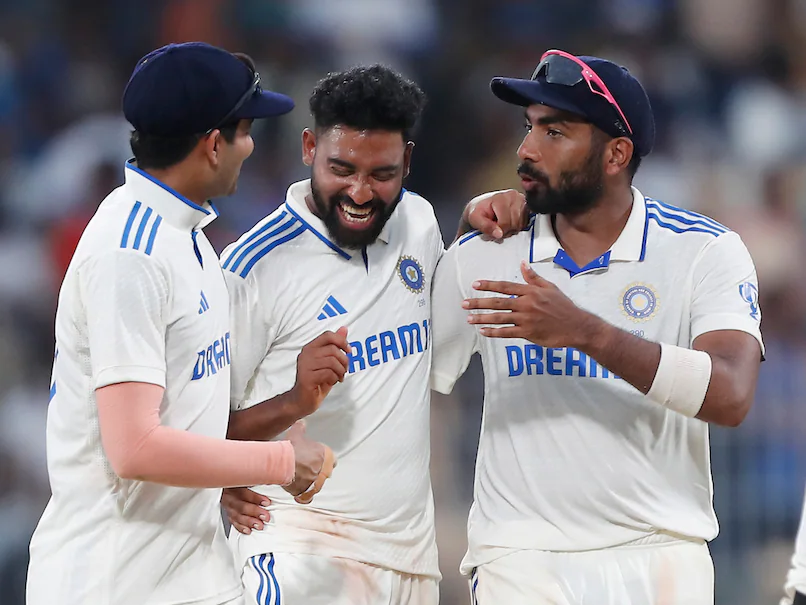
India post 149/6 and restrict Bangladesh to 109/7 in Dubai; Shafali dropped three times but makes Bangladesh pay, and Deepti Sharma takes 3/26

The Women’s Asia Cup 2026 semi-final at the Dubai International Cricket Stadium on September 10, 2026. Image Credit: NDTV
Women’s Asia Cup 2026: India defeated Bangladesh by 40 runs in the Women’s Asia Cup 2026 semi-final at the Dubai International Cricket Stadium on Thursday, securing their place in a record 10th final appearance and keeping their bid for an eighth continental title alive.
After being asked to bat first by Bangladesh captain Nigar Sultana Joty, India posted a competitive 149/6 in 20 overs, powered by an aggressive 64 from Shafali Verma. Bangladesh, who needed 150 to win, finished at 109/7 after India’s disciplined spin attack and strong death-overs bowling shut down their chase.
Shafali rode her luck throughout her innings, being dropped three times on 6, 11, and 56 and surviving a near run-out immediately after reaching her half-century. She ultimately struck seven fours and three sixes in a 40-ball knock that gave India the momentum they needed on a slow Dubai surface.
India will face the winner of the second semi-final between defending champions Sri Lanka and Pakistan in the title clash on Sunday, September 13.
Shafali’s Luck, Power, and India’s Spin Control
The match was shaped by two contrasting performances: Shafali Verma’s explosive batting and Bangladesh’s missed opportunities in the field.
Bangladesh won the toss and chose to bowl first, hoping to exploit the slow pitch and restrict India’s powerful top order. The decision appeared to work initially when Smriti Mandhana was dismissed for just two runs, leaving India under early pressure.
But Shafali changed the course of the innings. The opener attacked the bowlers with a combination of clean hitting, wristy strokes, and powerful bottom-hand shots, scoring mostly through the V and punishing anything short or overpitched. Her innings included seven boundaries and three sixes, and she reached her 20th T20I half-century during a knock that eventually became the foundation of India’s total. This story was also covered by The IndianExpress.
Bangladesh had several chances to remove her. Shafali was dropped on 6, 11, and 56, while a run-out chance went begging soon after she completed her half-century. Those errors proved costly: Bangladesh’s missed chances allowed India to add crucial runs during the middle overs and push the score close to 150.
Shafali was finally dismissed after scoring 64, caught by substitute fielder Farjana Easmin. By then, however, she had done enough damage to give India a strong platform.
Pratika Rawal contributed 20, Shafali Ghosh added 21, and captain Harmanpreet Kaur remained unbeaten on 24. Harmanpreet’s innings was not fluent, but her presence at the finish helped India maintain a competitive scoring rate. India collected 12 runs from the final over to finish at 149/6, one run short of 150.
India’s Bowling Attack Defends 149 with Authority
On a slow pitch where stroke-making became increasingly difficult, India’s bowlers delivered a disciplined performance. Bangladesh began the chase with intent but struggled to build sustained partnerships against India’s spin-heavy attack.
Deepti Sharma was the standout bowler, finishing with 3/26 and repeatedly breaking Bangladesh’s momentum. Nandani Sharma also impressed with 2/10, including wickets from the final two deliveries of the innings, while India’s other bowlers kept the scoring rate under control.
Bangladesh’s openers failed to provide the platform required in a 150-run chase. Juairiya Ferdous scored 14 from 18 balls, while Dilara Akter contributed 21 and Shorna Akter remained unbeaten on 22. But with wickets falling at regular intervals, Bangladesh never looked capable of threatening India’s total.
Bangladesh eventually ended at 109/7 in 20 overs, handing India a comfortable 40-run victory. India’s bowlers used the conditions far better, varying their pace and targeting the stumps rather than attempting overly aggressive lines.
Quotes and Reactions After the Semi-Final
India captain Harmanpreet Kaur praised the team’s all-round performance after the victory. “Happy with the way things are going,” Harmanpreet said, acknowledging that the team had adapted well to difficult batting conditions and executed its bowling plans under pressure.
She also recognized Shafali’s contribution, noting that the opener made Bangladesh pay for every missed chance. “When you get opportunities like that, you have to make the opposition pay, and Shafali did exactly that,” the captain said.
Shafali’s innings was widely praised by former players and cricket analysts. Her ability to convert multiple reprieves into a match-defining score was the difference between India posting a merely competitive total and setting up a winning one.
Bangladesh captain Nigar Sultana Joty is expected to face questions about the team’s fielding errors and the decision to bowl first after winning the toss. Four missed chances, including three involving Shafali, proved expensive in a knockout match where every run mattered.
India’s Unbroken Asia Cup Final Record
India’s victory means they have reached the final in every edition of the Women’s Asia Cup. This will be their 10th final appearance, extending a remarkable record of consistency in the continental tournament.
India has won the Women’s Asia Cup seven times and entered the 2026 tournament as the defending champions. Their dominance reflects the strength of the country’s women’s cricket system, which has benefited from improved domestic competitions, professional contracts, stronger fitness programs, and increased international exposure.
The 2026 tournament has also showcased India’s depth. In the group stage, India defeated Pakistan by seven wickets after bowling them out for a record-low 55, with Shree Charani and Prema Rawat taking three wickets each. The team has now maintained an unbeaten run through the tournament and will enter Sunday’s final as the clear favorite.
Bangladesh, meanwhile, showed enough quality to reach the semi-final but could not match India’s execution under pressure. Their fielding errors and failure to build partnerships ultimately ended their campaign.
From Toss to Final Qualification
September 10, 2026: Bangladesh captain Nigar Sultana Joty wins the toss at the Dubai International Cricket Stadium and chooses to bowl first.
Early India innings: Smriti Mandhana is dismissed for two, giving Bangladesh an early breakthrough.
Middle overs: Shafali Verma is dropped on 6 and 11 but continues attacking the Bangladesh bowling.
India’s 10th over: Shafali reaches her half-century; she narrowly survives a run-out soon afterwards.
Late India innings: Shafali is dismissed for 64 off 40 balls after being dropped again on 56.
End of India innings: Harmanpreet Kaur remains unbeaten on 24; India finishes at 149/6.
Bangladesh chase: Deepti Sharma takes three wickets and Nandani Sharma claims two as Bangladesh struggles to score freely.
End of match: Bangladesh finish at 109/7; India win by 40 runs and enter their 10th Asia Cup final.
September 13, 2026: Women’s Asia Cup final scheduled; India will face Sri Lanka or Pakistan.
Why This Matters
Yeh issue kaafi important hai for multiple reasons. First, India’s record 10th final appearance demonstrates unprecedented consistency in women’s Asian cricket. Reaching every final is not just a tournament statistic; it shows that India has sustained a winning system across different generations of players.
Second, the match underlined the value of depth. Even after Smriti Mandhana fell early, Shafali Verma stepped up with a match-winning performance. When Shafali was dismissed, Harmanpreet Kaur, Shafali Ghosh, and Pratika Rawal ensured India still posted a defendable score.
Third, India’s bowling attack is becoming increasingly versatile. Deepti Sharma’s experience, Nandani Sharma’s control, and the team’s broader spin resources make India difficult to attack on slow pitches. This is especially important ahead of major global tournaments where conditions may vary sharply.
For Bangladesh, the defeat highlights the cost of poor fielding in elite cricket. Dropping a batter three times in a semi-final is rarely survivable, especially when that batter is an aggressive opener capable of changing the game in a few overs.
India Angle
For Indian readers, yeh match sirf cricket nahi hai—yeh national pride ka moment hai. India’s women’s team has become a major sporting force, and its consistent success is inspiring a new generation of fans across the country.
Agar aapko lagta hai ki women’s cricket does not receive the same attention as men’s cricket, toh sochiye dobara. India-Bangladesh matches, Asia Cup knockouts, and high-profile performances by players such as Shafali Verma, Harmanpreet Kaur, Smriti Mandhana, and Deepti Sharma attract growing audiences across television, digital platforms, and social media.
The rise of young players is particularly encouraging. Shafali’s aggressive approach, Nandani Sharma’s bowling impact, and the emergence of players like Pratika Rawal demonstrate that India’s bench strength is improving.
Yes, victory also matters beyond the scoreboard. Every major win helps normalize women’s cricket as mainstream sport, increases commercial interest, and creates more opportunities for girls who want to pursue cricket professionally.
Analysis
Shafali’s innings was both fortunate and skillful. Being dropped three times is luck, but converting those reprieves into 64 runs requires extraordinary confidence and shot-making ability. Shafali did not merely survive; she attacked, rotated strike, and took calculated risks on a difficult pitch.
Bangladesh’s fielding was the turning point. Four missed opportunities allowed India to add valuable runs. Without those errors, India might have been restricted to around 120, a total that could have created a very different contest.
India’s 149 was more competitive than it appeared. On a slow surface where most batters struggled to time the ball, 149/6 was a strong total. India understood that the pitch would make chasing difficult and used the final overs to add runs rather than attempting reckless acceleration throughout.
The bowling plan was excellent. Deepti Sharma and the other Indian bowlers kept the ball away from Bangladesh’s hitting arc, varied their pace, and forced batters to manufacture shots. Once Bangladesh fell behind the required run rate, the match was effectively under India’s control.
India still has areas to improve. Smriti Mandhana’s early dismissal and the middle-order slowdown show that India’s batting is not flawless. Against a stronger opponent in the final, they cannot rely on dropped catches or one batter carrying the innings.
What Next
India will play the Women’s Asia Cup 2026 final on Sunday, September 13, against the winner of the second semi-final between Sri Lanka and Pakistan.
In the immediate term:
Final opponent: India will assess whether Sri Lanka or Pakistan emerges from the second semi-final; both sides offer different challenges.
Batting review: The team management may review the top-order approach after Mandhana’s early dismissal and assess how to improve middle-over scoring.
Fielding focus: India will need to maintain sharp catching and ground fielding, especially against a high-quality final opponent.
Bowling combinations: Deepti Sharma’s form and the effectiveness of India’s spin attack may influence the final XI.
Longer-term:
Eighth Asia Cup title: India are one victory away from adding an eighth Women’s Asia Cup crown to their record.
Tournament dominance: A title would further strengthen India’s position as the leading women’s cricket team in Asia.
Player development: Performances by Shafali Verma, Nandani Sharma, Pratika Rawal, and other emerging players will support India’s transition into the next generation.
Global preparation: The tournament provides valuable preparation for upcoming ICC events, where India will face stronger teams and varied playing conditions.
Final Thoughts
India’s 40-run win over Bangladesh was a professional semi-final performance, even if it was not perfect. Shafali Verma’s 64 provided the spark, while Deepti Sharma and India’s disciplined bowling attack supplied the control.
Bangladesh will regret the dropped catches and missed run-out opportunity that allowed Shafali to build an innings that changed the game. But credit must also go to the Indian opener for making the most of every chance and producing a fearless knock on a challenging surface.
India’s 10th final appearance is a remarkable achievement. Seven titles already sit in their cabinet, and now the team has a chance to win an eighth. Harmanpreet Kaur’s side has remained unbeaten and looks well-equipped to finish the tournament in style.
For Indian fans, the equation is simple: one more win, one more trophy, and another chapter in the dominance of women’s cricket. The final awaits on September 13—and India is just one step away from history.
Written By A. Jack