After being confronted in Rampura-Kanwarpura, Cockroach Janta Party, a Jantar Mantar-style protest in Jaipur; group demands repairs and arrests
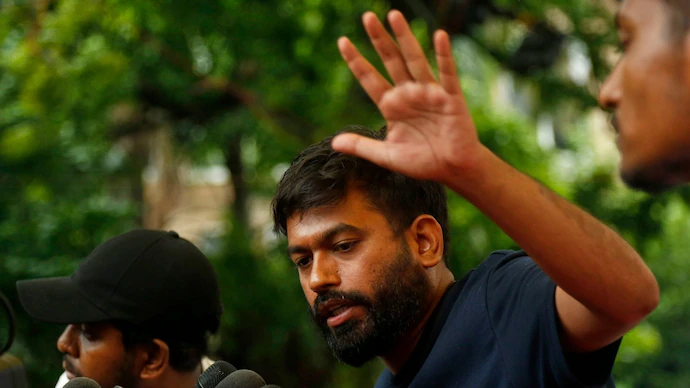
This Image is only for illustrations. Image Credit: India Today
The Cockroach Janta Party (CJP), which recently led a successful protest at New Delhi’s Jantar Mantar, is now threatening to launch a major agitation in Jaipur after a confrontation during a visit to a government school in Rajasthan’s Rampura-Kanwarpura village.
CJP founder and convenor Abhijeet Dipke has given the Rajasthan government 48 hours to begin repair work at the school and arrest those allegedly responsible for attacking CJP activists.
“If the school repair work doesn’t begin and the BJP goons are not arrested within the next 48 hours, I will personally come to Jaipur and sit in front of the school until work to repair it begins,” Dipke said in a video message.
The confrontation took place on Friday, August 21, when CJP co-convenor Ashutosh Ranka and other activists attempted to visit a government primary school in Rampura-Kanwarpura. CJP members alleged that they were attacked and forced to leave, while local residents said they opposed the group’s attempt to politicise the school premises.
What Happened in Rampura-Kanwarpura
The CJP team visited the school as part of its “School Thik Karo” campaign, launched on August 15 to highlight poor infrastructure and lack of basic facilities in government schools.
Ranka claimed the school had been operating for years in conditions resembling a buffalo shed. He said the team wanted to inspect the premises and document the condition of the school, but locals confronted the activists and prevented them from entering. This story was also covered by The India Today.
According to Ranka, the confrontation turned violent. He alleged that CJP workers were manhandled, vehicles were damaged, phones were broken, stones were thrown and his clothes were torn.
Ranka also alleged that a woman member of the team was assaulted and that the group informed police, but the confrontation continued.
The CJP has described those involved as “BJP goons” summoned to stop the activists from exposing the condition of the government school. That claim has not been independently established in the available reports.
Local residents have offered a different account. They said the CJP team arrived without proper permission and that the school should not be turned into a political platform. The conflicting versions mean that police investigation, video evidence and statements from independent witnesses will be important in determining what happened.
Dipke’s 48-Hour Warning
After learning about the confrontation, Abhijeet Dipke warned that he would personally travel to Jaipur if the Rajasthan government failed to act within 48 hours.
His two demands are:
Begin repair work at the Rampura-Kanwarpura government school.
Arrest those accused of attacking CJP activists.
Dipke also appealed to supporters to join him in Jaipur if the demands were not met.
“We will sit in Jaipur just as we sat at Jantar Mantar, and we will not back down,” he said in his video message.
He further demanded the withdrawal of a government circular that reportedly restricts people from photographing or recording damaged government schools.
Ranka shared Dipke’s message on X and urged people who do not want children to study in what he described as “cow shelters” to come to Jaipur.
The language signals that the CJP intends to convert the local school dispute into a statewide education campaign.
The “School Thik Karo” Campaign
The CJP launched the “School Thik Karo” campaign on August 15. Its members have been visiting government schools to document infrastructure problems, including damaged buildings, collapsed roofs, poor sanitation and inadequate classrooms.
The campaign follows the group’s earlier youth mobilisation around education, examinations and government accountability. It seeks to make the condition of public schools a political issue by using on-ground inspections, social-media videos and public protests.
In Jodhawas village in Rajasthan’s Jalore district, Ranka had earlier sat in protest with schoolchildren over a school whose roof had reportedly collapsed.
The Jaipur visit appears to be part of an expanding strategy: identify neglected schools, create public pressure, demand repairs and challenge state authorities if action is not taken.
Supporters say such visits expose problems that might otherwise remain ignored. Critics argue that political organisations entering schools without permission could disrupt classes, create confrontations and turn educational institutions into protest sites.
Both concerns are relevant. Government schools need public accountability, but inspections must also follow rules protecting children, teachers and school administration.
Statements From Both Sides
CJP’s position:
Ashutosh Ranka said the school had been functioning in a buffalo shed for several years and that the team had previously visited the location.
He accused people allegedly linked to the BJP of attacking the CJP delegation and claimed police failed to prevent the violence.
Dipke said the activists were attacked because they were trying to expose the school’s condition.
Local residents’ position:
Residents disputed the CJP’s version and said they opposed the activists’ entry because they believed the school should not be politicised.
Government position:
A detailed official response from the Rajasthan government and Education Minister Madan Dilawar was awaited in the initial reports. The CJP has demanded that Dilawar take action within 48 hours and has also called for his resignation if the demands are not met.
CJP’s Rise After Jantar Mantar
The Cockroach Janta Party emerged as a youth-led political movement and recently held a major agitation at New Delhi’s Jantar Mantar. The group’s campaign focused on education, examination irregularities and accountability.
The movement gained national attention after prolonged protests in the capital and has sought to position itself as an unconventional platform for young people angry about public institutions and government services.
Its current “School Thik Karo” campaign expands that focus beyond competitive examinations. Rather than concentrating only on recruitment or entrance tests, the CJP is now drawing attention to the condition of government schools themselves.
This could help the group connect with parents, teachers, students and rural communities. But it also introduces new risks. A confrontation at a school can quickly become a law-and-order issue and overshadow the original education concern.
The Jaipur incident demonstrates that the campaign has entered a more politically sensitive phase.
Timeline
August 15, 2026: CJP launches the “School Thik Karo” campaign to highlight infrastructure problems in government schools.
Previous week: CJP co-convenor Ashutosh Ranka visits Jodhawas village in Jalore district and protests with schoolchildren over a reportedly damaged school roof.
August 21, morning: Ranka and CJP activists visit a government primary school in Rampura-Kanwarpura village near Jaipur as part of the campaign.
During visit: Locals confront the activists and prevent them from entering the school premises.
After confrontation: Ranka alleges assault, stone-pelting, damage to vehicles and phones, and police inaction.
Later on August 21: Abhijeet Dipke gives Rajasthan authorities a 48-hour deadline to begin school repairs and arrest those allegedly involved.
Same day: CJP demands withdrawal of restrictions on photographing or recording damaged schools.
Possible next step: Dipke threatens to hold a dharna in Jaipur similar to the group’s Jantar Mantar agitation.
Also Read: Delhi-NCR H1N1 Cases Rise: Falling Oxygen, Severe Breathing Issues Raise Concern
Why This Matters
Yeh issue kaafi important hai because it connects education infrastructure, political protest and public accountability.
School conditions: If children are genuinely being taught in unsafe or inadequate buildings, the administration must inspect and repair the premises immediately.
Safety of activists: Allegations of assault, stone-pelting and property damage require a fair police investigation, regardless of the political identity of those involved.
Children’s education: Poor infrastructure affects attendance, learning outcomes, teacher morale and student safety.
Political access to schools: Government institutions should remain open to scrutiny, but visits should not disrupt classes or compromise children’s privacy.
Law-and-order concerns: A large Jaipur protest could create tension if authorities do not respond quickly and transparently.
The key issue is to separate the legitimate question—whether the school needs repairs—from the political dispute over who is responsible for the confrontation.
India Angle
The Jaipur controversy reflects a national concern. Across India, many government schools struggle with damaged classrooms, inadequate toilets, unsafe roofs, poor boundary walls, overcrowding and shortages of teachers or basic equipment.
In rural and semi-urban areas, school infrastructure often depends on state budgets, local administration, panchayat coordination and timely maintenance.
The CJP campaign may resonate because parents and students frequently lack a high-profile platform to report problems. Social media can bring attention quickly, but online visibility does not automatically guarantee repair work.
Authorities should establish clear systems for:
Reporting damaged school buildings
Conducting safety inspections
Publishing repair timelines
Tracking expenditure and contractors
Protecting children during inspections
Allowing media and civil-society access under defined rules
A school inspection should be transparent, peaceful and child-sensitive. Public activism must not replace formal engineering assessments, but it can push authorities to conduct them.
Analysis
A protest outside a neglected school can create strong emotional impact, especially when children are shown studying in poor conditions. But allegations that activists entered without permission and disrupted a school could also alienate local communities and give the government grounds to restrict access.
The CJP must therefore support its allegations with evidence: photographs, school records, engineering reports, statements from teachers and parents, and details of the repair requirement.
The Rajasthan government, meanwhile, should not respond only through political statements. It should publish a factual account of the school’s condition, explain whether repairs have been sanctioned and clarify the circumstances of the clash.
In my view as a news writer, a joint inspection involving education officials, engineers, parents and neutral observers would be more useful than a political confrontation. If the school is unsafe, repair work should begin. If the assault allegations are credible, arrests should follow due process.
What Next
The next 48 hours will determine whether the dispute escalates.
Administrative response: Rajasthan authorities may inspect the school and announce repair or reconstruction measures.
Police investigation: Officers may examine CCTV footage, mobile videos, vehicle damage, medical reports and witness statements to establish what happened.
Legal action: Cases could be registered if assault, vandalism or unlawful obstruction is confirmed.
CJP protest: If Dipke’s demands are not addressed, he may travel to Jaipur and begin a dharna outside the school.
Statewide campaign: The CJP could expand “School Thik Karo” inspections to more Rajasthan districts.
Government circular review: Authorities may clarify or reconsider restrictions on photographing and recording damaged schools.
Political pressure: The controversy could put Rajasthan Education Minister Madan Dilawar under further pressure if the CJP attracts large public support.
Conclusion
The confrontation during the CJP’s school-inspection visit in Jaipur has opened a new chapter in the group’s campaign after its high-profile Jantar Mantar agitation.
Abhijeet Dipke has given Rajasthan authorities 48 hours to begin repairs at the Rampura-Kanwarpura government school and arrest those accused of attacking CJP activists. If no action is taken, he has threatened to launch a Jaipur dharna.
The allegations of assault remain disputed, with CJP leaders blaming BJP-linked workers and local residents opposing the group’s version. A fair investigation is essential.
At the centre of the dispute is a serious public question: are children being forced to study in unsafe or inadequate conditions? Jaipur authorities should answer that question with facts and action—not silence.
CJP ka Jaipur plan ab sirf protest nahi, education accountability ka test ban gaya hai. The next 48 hours will show whether dialogue can prevent another major confrontation.
Written By A. Jack