Delhi records more than 1,770 H1N1 cases in 2026 as hospitals report a rise in influenza-like illness; health authorities review preparedness but say there is no need for panic.
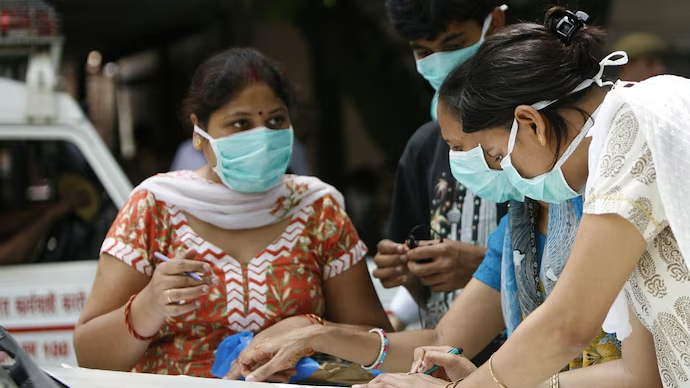
This image is only for illustrations. Image Credit: IndiaToday
Delhi-NCR is witnessing a rise in H1N1 infections—commonly referred to as swine flu—along with other respiratory illnesses amid humid and changing weather conditions. Doctors and hospitals are reporting more patients with fever, cough, sore throat and breathing problems, while some patients have experienced falling oxygen levels and severe respiratory distress.
More than 1,770 H1N1 patients had reported for treatment in Delhi by Thursday, according to Delhi Health Minister Pankaj Kumar Singh. The latest rise has also affected healthcare workers, with several doctors and the head of a Delhi government hospital reportedly testing positive.
The Delhi Health Department held a meeting with the Municipal Corporation of Delhi (MCD) health department and hospitals on Thursday to assess the situation. Officials have been instructed to strengthen surveillance, improve preparedness and implement necessary health protocols.
Union Health Minister J.P. Nadda also reviewed the situation with Delhi Health Minister Pankaj Kumar Singh and senior officials from the Union Health Ministry and the Delhi government on Friday.
What Doctors Are Seeing
The symptoms can overlap with other respiratory infections, including H3N2, COVID-19, pneumonia and seasonal viral illnesses. A person cannot confirm H1N1 based on symptoms alone; testing and medical assessment may be required.
Doctors have said that most patients recover with appropriate care, but some can develop severe pneumonia or respiratory complications, especially if they have underlying health conditions.
Dr Harpreet Kaur of Aakash Healthcare said her hospital had recorded both dengue and H1N1 cases in July, with H1N1 infections increasing significantly in August. Dr Sunil Rana of Asian Hospital said the facility was seeing dengue, swine flu and H3N2 cases, with symptoms ranging from cough and throat pain to severe pneumonia. This story was also covered by The IndiaToday.
The combination of monsoon-related illnesses is complicating diagnosis. Fever and body ache, for example, may occur in both influenza and dengue, while cough and breathing problems may point toward respiratory infection but require clinical examination to determine severity.
Why Humid Weather Matters
Doctors have linked the rise partly to Delhi’s humid and variable weather. Damp conditions can support the spread of respiratory infections, particularly in crowded indoor settings with limited ventilation.
During humid weather, people may spend more time inside offices, homes, schools, public transport and other enclosed environments. Close contact increases the opportunity for respiratory viruses to spread through droplets and contaminated surfaces.
Monsoon conditions also create a broader seasonal-health burden. Stagnant water can encourage mosquito breeding, increasing the risk of dengue and other vector-borne illnesses at the same time that respiratory infections are circulating.
This creates a difficult situation for hospitals because patients may arrive with overlapping symptoms. Doctors must decide whether testing is needed for influenza, dengue, COVID-19 or other conditions.
The weather may be contributing to transmission, but it is not the only factor. Population density, indoor crowding, school and workplace exposure, delayed testing and underlying health conditions also influence the number of severe cases.
Government Reviews Preparedness
The Delhi Health Department has directed the MCD and hospitals to increase surveillance and strengthen preparedness.
The review has focused on:
Monitoring influenza-like illness and severe acute respiratory infections
Hospital bed availability
Critical-care and oxygen capacity
Testing and laboratory surveillance
Availability of medicines and protective equipment
Infection-control protocols
Readiness of government hospitals to manage seasonal influenza cases
After meeting J.P. Nadda, Delhi Health Minister Pankaj Kumar Singh said there was no shortage of beds, doctors, medicines or essential medical equipment in the Capital.
“I would like to assure the people of Delhi that we lack neither equipment nor beds,” Singh said, adding that there was “no need to panic.”
The Centre has also reviewed the national surveillance and epidemiological situation, trends in influenza-like illness and severe acute respiratory infections, laboratory testing and preparedness of healthcare facilities.
This response is intended to ensure that a rise in cases does not overwhelm hospitals or delay treatment for patients developing serious complications.
When Falling Oxygen Becomes an Emergency
Falling oxygen saturation is one of the most important warning signs in a patient with a respiratory infection. It may indicate that the infection has progressed to pneumonia or is affecting the lungs.
People should seek urgent medical attention if they experience:
Breathlessness at rest or after minimal activity
Chest pain or pressure
Bluish lips or face
Confusion, unusual drowsiness or difficulty waking
Persistent high fever
Severe weakness or dehydration
A clearly falling oxygen reading on a reliable pulse oximeter
Doctors have specifically urged people to take breathlessness, chest pain and falling oxygen levels seriously.
A pulse oximeter reading should not be interpreted in isolation. Cold fingers, nail polish, poor circulation, movement and device quality can affect results. If a reading remains low or symptoms are worsening, the person should contact a doctor or visit an emergency department rather than relying only on home monitoring.
People with asthma, chronic lung disease, heart disease, diabetes, kidney disease, weakened immunity, pregnancy or advanced age may require earlier medical assessment.
Who Is at Higher Risk?
Influenza can affect anyone, but complications are more likely among certain groups:
Older adults
Young children
Pregnant women
People with asthma or chronic lung disease
Patients with diabetes or heart disease
Individuals with weakened immunity
People with obesity or other chronic conditions
Healthcare workers with repeated exposure
Doctors are also reporting infections among medical professionals, increasing the need for infection-control precautions in hospitals.
Healthcare workers should follow institutional protocols, use appropriate masks and protective equipment when indicated, and avoid reporting for duty when acutely unwell unless cleared by medical authorities.
H1N1 and Seasonal Influenza
H1N1 is an influenza A virus. It became widely known as “swine flu” after the 2009 pandemic, although the infection now circulates as part of seasonal influenza patterns.
The virus generally spreads through respiratory droplets and close contact. People may transmit infection before they realise they are ill, especially in households, schools and workplaces.
Most people recover without complications, but influenza can become severe when it progresses to pneumonia, worsens an existing medical condition or causes significant breathing difficulty.
The current Delhi situation includes H1N1 alongside H3N2 and other respiratory infections. This makes it important for people not to assume that every fever is H1N1 or to self-medicate without advice.
Antibiotics do not treat influenza viruses. Antiviral medicines may be prescribed by doctors in selected cases, particularly for patients at higher risk or those with severe or worsening disease. Treatment decisions should be made by a qualified healthcare professional.
Also Read: Delhi SIR: Form Submission Window Closes; 47.7 Lakh Voters Set to Be Missing From Draft Roll
Timeline
July 2026: Delhi hospitals report H1N1 cases along with dengue, according to doctors.
August 2026: Doctors report a significant increase in H1N1 cases and more patients with influenza-like symptoms.
Thursday, August 20: The Delhi Health Department meets the MCD health department and hospitals to review the situation and directs stronger surveillance and preparedness.
By Thursday: More than 1,770 patients have reportedly reported for H1N1 treatment in Delhi.
August 21: J.P. Nadda reviews the national and Delhi influenza situation with senior health officials.
Current health advice: People are urged to monitor worsening respiratory symptoms, practise respiratory hygiene and seek prompt care for breathlessness or falling oxygen.
Why This Matters
Yeh issue kaafi important hai because respiratory infections can spread quickly in a densely populated region like Delhi-NCR.
High case volume: More than 1,770 patients reporting for treatment indicates significant pressure on outpatient departments and testing facilities.
Severe illness risk: While many patients recover, falling oxygen and pneumonia can lead to hospitalisation and critical-care needs.
Overlapping infections: H1N1, H3N2, dengue and other illnesses may circulate at the same time, making diagnosis more complicated.
Healthcare exposure: Infection among doctors and hospital leadership underlines the need for strong infection-control practices.
Public communication: Officials must balance reassurance with clear guidance so that people do not panic but also do not ignore warning signs.
The government’s “no cause for panic” message is important, but it should not be interpreted as a reason to dismiss serious symptoms.
India Angle
Delhi’s experience has relevance for other Indian cities, including Mumbai, Bengaluru and Chennai, where humid weather, crowded public spaces and seasonal infections can create similar conditions. Families can reduce transmission by:
Staying home when feverish or acutely unwell
Wearing a well-fitting mask in crowded indoor spaces when symptomatic
Covering coughs and sneezes
Washing hands regularly
Improving ventilation
Avoiding close contact with high-risk family members when sick
Not sharing utensils, towels or personal items during illness
Following a doctor’s advice on testing and treatment
Annual influenza vaccination may offer protection against severe illness, particularly for high-risk people and healthcare workers, according to medical advice reported during the current surge.
People should also avoid taking antibiotics, steroids or leftover antiviral medicines without medical supervision.
Analysis
The most important editorial point is balance. The rise in cases deserves attention, but current official statements do not suggest that people should panic
At the same time, a high number of cases combined with reports of severe breathing problems means surveillance must be active, hospital capacity must be transparent and warning signs must be communicated clearly.
The situation should not be reduced to weather alone. Humidity may support transmission, but hospital burden also depends on vaccination, testing access, patient behaviour, underlying disease and the severity of circulating strains.
In my view, public health messaging should focus on practical action:
Identify high-risk patients early.
Monitor severe respiratory illness separately from mild flu-like cases.
Ensure oxygen, beds, antivirals and testing capacity.
Publish reliable case and hospitalisation data.
Encourage people with warning signs to seek timely care.
What Next
The coming days will focus on surveillance, hospital readiness and the trend in severe cases.
Enhanced monitoring: Delhi and MCD health teams will track influenza-like illness and severe acute respiratory infections.
Hospital preparedness: Authorities will continue reviewing beds, oxygen, medicines, laboratories and critical-care capacity.
Public-health advice: Doctors are likely to emphasise respiratory hygiene, vaccination for eligible groups and early consultation for high-risk patients.
Testing and diagnosis: Hospitals may monitor H1N1, H3N2, dengue and other infections together because symptoms overlap.
Weather impact: A sustained period of humidity or changing temperatures could influence transmission patterns.
Conclusion
Delhi-NCR is experiencing a clear increase in H1N1 and other respiratory infections, with more than 1,770 patients reportedly seeking treatment and some patients developing falling oxygen levels and severe breathing difficulties.
Health authorities have stepped up surveillance and reviewed preparedness, while officials insist there is no reason for general panic and that hospitals have adequate beds and equipment.
For the public, the right approach is neither panic nor neglect. People should watch symptoms carefully, protect vulnerable family members and seek urgent medical help for breathlessness, chest pain or falling oxygen.
H1N1 ko lightly nahi lena chahiye, but timely medical care and sensible precautions can make a major difference.
Written By A. Jack