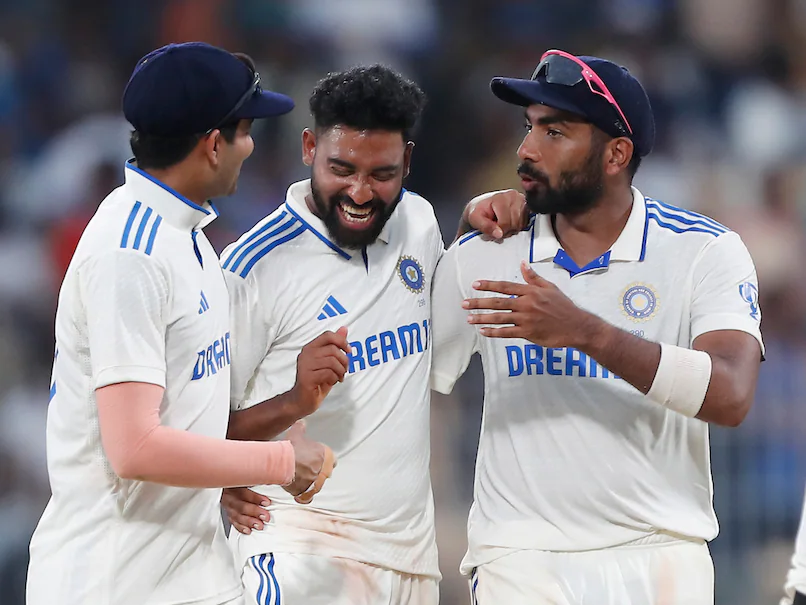
Amid the Rohit Sharma ODI World Cup saga, Ajit Agarkar faces potential removal as BCCI chief selector, with VVS Laxman tipped to take over as the board seeks to reset its ODI strategy before the 2027 World Cup.
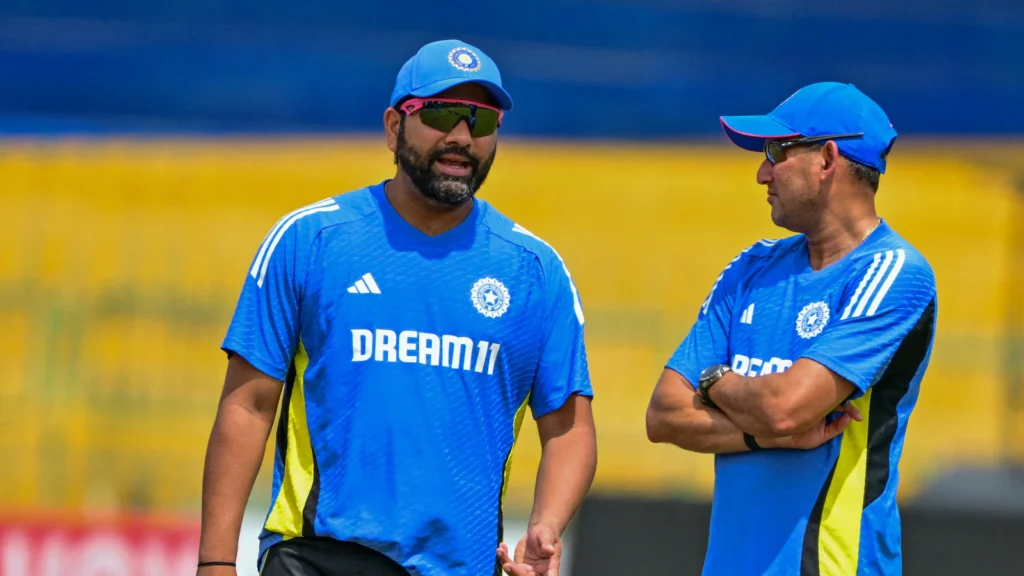
BCCI chief selector Ajit Agarkar, seen here during a press conference, is reportedly under pressure over the handling of Rohit Sharma’s ODI future. Image Credit: NDTV Sports
One of Indian cricket’s most contentious off-field stories is unfolding behind closed doors at the BCCI, where the job of chief selector Ajit Agarkar is said to be under threat following the high-profile Rohit Sharma ODI saga. According to multiple reports, the board’s top bosses are considering replacing Agarkar with India great VVS Laxman, currently the head of the Centre of Excellence in Bengaluru, as part of a broader push to reset the ODI setup ahead of the 2027 World Cup.
Agarkar’s contract was set to end in June 2026, but he was given a three-month extension by the board. It was expected that the former pace bowler would get another extension that would keep him in the chair until the conclusion of the 2027 ODI World Cup. However, the last few months have seen the situation get complex, especially with the drama around Rohit Sharma’s future in India’s ODI team, leading to fresh questions about the selection committee’s direction and authority.
Why Agarkar’s job is reportedly under threat
The trouble for Ajit Agarkar appears to stem from a combination of factors: the handling of Rohit Sharma’s ODI future, mixed results in recent white-ball series, and internal disagreements over team strategy.
According to a report in Dainik Jagran, the Agarkar-led selection committee had even spoken to the Gautam Gambhir-led team management about leaving Rohit out of subsequent assignments, with the understanding that the three-match ODI series against England would be Rohit’s last. However, an unexpected twist occurred when news broke that the third ODI between India and England at Lord’s would be Rohit’s last. The Hitman went on to slam a century in that final match, putting both the selectors and the team management on the back foot. This story was also covered by NDTV Sports.
Not long after the leak ahead of the third ODI, BCCI Secretary Devajit Saikia also released a statement, apparently without speaking to Chief Selector Agarkar, asserting that Rohit will play as long as he is part of the team’s plans. “Rohit is a regular member of the Indian ODI team, and he will continue to represent the country as long as he is in the scheme of things. In other words, the Lord’s ODI won’t be his last match,” Saikia told PTI.
This sequence of events—leaks about Rohit’s “last ODI”, a century that complicated the narrative, and a public statement from the BCCI secretary that seemed to undercut the selection committee—has reportedly left Agarkar in a difficult position. It has also fuelled speculation that the board wants a different approach to ODI planning, with VVS Laxman seen as a candidate who can bring a fresh perspective and stronger alignment with the coaching setup.
It has also been reported that those managing affairs in the Indian team do not want Rohit to play in the 2027 ODI World Cup, adding another layer of complexity to the selection debate.
Yeh issue kaafi important hai because it shows how selection decisions, leaks and public statements can create friction at the highest levels of Indian cricket.
VVS Laxman as a possible replacement
VVS Laxman, one of India’s most respected batsmen from the golden era, has been serving as the head of the Centre of Excellence in Bengaluru, where he oversees talent identification, coaching frameworks and player development pathways. His reputation for calm decision-making, strong technical understanding and ability to work with young players makes him an attractive option for the BCCI.
If the board does move to replace Agarkar, Laxman would inherit a selection committee that has faced criticism for inconsistent ODI team combinations, perceived over-reliance on certain players and a lack of clear long-term planning. His appointment would signal a desire to bring more structure to the ODI setup, especially with the 2027 World Cup on the horizon.
That said, moving from a development role to the chief selector’s chair is a significant step. Laxman would need to navigate not only on-field selection calls but also off-field politics, media pressure and the expectations that come with one of the most visible jobs in Indian cricket.
Statements and reported positions
While neither the BCCI nor Ajit Agarkar has officially confirmed any plan to replace the chief selector, media reports and insider accounts suggest that the board is unhappy with the current trajectory. The Dainik Jagran report, citing sources, claims that the Agarkar-led committee had discussed phasing out Rohit from ODI assignments, only for the narrative to change after the Lord’s century and the BCCI secretary’s statement.
BCCI Secretary Devajit Saikia’s comment to PTI—”Rohit is a regular member of the Indian ODI team, and he will continue to represent the country as long as he is in the scheme of things”—was seen by many as a public correction of the “last ODI” story. Whether intentional or not, it highlighted a disconnect between the selection committee’s reported position and the board’s official line.
Gautam Gambhir, as head coach, has not publicly commented on the selection issue, but his alignment with the board’s broader strategy will be crucial if Laxman or any other new chief selector is appointed.
Background and context
Ajit Agarkar took over as chief selector with a mandate to bring more transparency and long-term thinking to India’s selection process. His tenure has seen India reach the final of the 2023 ODI World Cup but also suffer some high-profile white-ball setbacks, including series losses and questionable team combinations.
The Rohit Sharma question has been particularly sensitive. As a former captain and one of India’s most successful ODI batsmen, Rohit’s place in the team is not just a selection issue but also a political and emotional one. The idea that he might be phased out before the 2027 World Cup has divided opinion among fans, former players and administrators.
The BCCI had scheduled a review meeting for the eight losses out of ten matches in Ireland and England, but it has not yet taken place. The meeting was supposed to be held after the England tour, but the team has already travelled to Sri Lanka for the two-match Test series without the review being completed. This delay has added to the sense that the board is still figuring out its white-ball strategy.
Timeline
June 2026: Ajit Agarkar’s initial contract as chief selector ends; he is given a three-month extension by BCCI.
Recent months: Reports emerge that the selection committee discussed leaving Rohit Sharma out of future ODI assignments; the “last ODI at Lord’s” narrative leaks.
Third ODI vs England, Lord’s: Rohit Sharma scores a century, complicating the “last ODI” story.
Shortly after: BCCI Secretary Devajit Saikia tells PTI that Rohit will continue as long as he is in the team’s plans.
Now: Reports suggest Agarkar could be replaced by VVS Laxman as chief selector; review meeting for Ireland-England losses is still pending.
Also Read: Mumbai Indians Shut Down Hardik Pandya Trade Talks, Deny Negotiations with IPL Franchises
Why This Matters
This matters because the chief selector’s role is central to India’s cricketing future. The person in this job influences team composition, transition planning and the balance between experience and youth. If Agarkar is removed mid-stream, it signals dissatisfaction with the current direction and a desire for a reset.
It also matters for Rohit Sharma’s legacy. The debate over whether he should play the 2027 ODI World Cup is not just about runs and strike rates; it is about how India manages its senior stars in the twilight of their careers. A misstep here can lead to fan backlash, dressing-room friction and a loss of clarity in the squad.
For the BCCI, the challenge is to present a united front. When the secretary’s statement appears to contradict the selection committee’s reported stance, it creates confusion and undermines trust. In simple Hinglish, jab board aur selection committee ki baat alag hoti hai, toh team ka focus bhi hat jaata hai.
India angle
For Indian readers, this story is directly relevant because the Indian cricket team is a national obsession. Selection decisions, especially involving marquee players like Rohit Sharma, are debated in homes, offices and social media across the country.
The India angle also includes the 2027 ODI World Cup cycle. With a home World Cup approaching, the pressure to get the squad right is immense. Any perception of internal conflict or poor planning can quickly become a national talking point.
There is also the governance dimension. The BCCI is one of the most powerful sports bodies in the world, and its internal dynamics affect not just the men’s team but also women’s cricket, domestic tournaments and coaching structures. How it handles this situation will be watched closely by stakeholders across the ecosystem.
Analysis
My opinion is that the reported move to replace Agarkar is less about one series or one leak and more about a broader desire to realign the ODI setup. If the board believes that the current selection committee is not on the same page as the coaching staff or its own long-term plan, a change at the top becomes a logical, if harsh, option.
I also think the Rohit Sharma angle is being used as a proxy for a larger debate: how aggressively should India transition its ODI squad before 2027? If the answer is “very aggressively”, then a new chief selector with a clear mandate makes sense. If the answer is “gradually”, then continuity might be better.
What Next
The immediate next step will be the BCCI’s decision on whether to extend Agarkar’s contract beyond the current three-month extension or to appoint a new chief selector. If VVS Laxman is chosen, there will be an official announcement, followed by a restructuring of the selection committee to align with his vision.
The pending review meeting for the Ireland and England white-ball series may still take place, possibly with a new selector in charge. That meeting could set the tone for upcoming ODI assignments, including any changes to the core squad and the role of senior players like Rohit Sharma.
Longer term, the outcome will shape India’s ODI strategy leading into the 2027 World Cup. If the board perceives the change as successful, it could lead to more decisive transitions in other areas. If not, it could result in further churn and instability.
Conclusion
The reported threat to Ajit Agarkar’s job as BCCI chief selector, linked to the Rohit Sharma ODI saga and broader white-ball strategy, marks a critical juncture for Indian cricket’s administration. With VVS Laxman tipped as a possible replacement, the board appears to be weighing a reset of its selection leadership ahead of the 2027 ODI World Cup.
Whether this leads to a clearer, more unified ODI plan or further internal friction will depend on how the BCCI manages the transition, communicates its decisions and balances the interests of senior players, the coaching staff and the long-term vision. One thing is certain: in Indian cricket, selection is never just about picking a team—it is about power, narrative and the future of the game.
Written By A. Jack