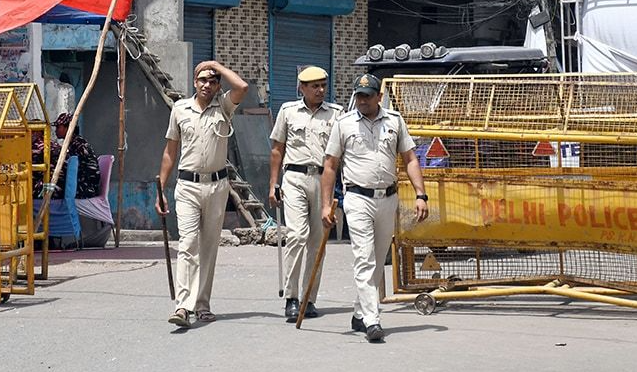
The acquittal of Brij Bhushan Sharan Singh and Vinod Tomar ends the magistrate-level trial in the women wrestlers’ sexual harassment case, but the prosecution may approach higher courts after reviewing the detailed judgment.
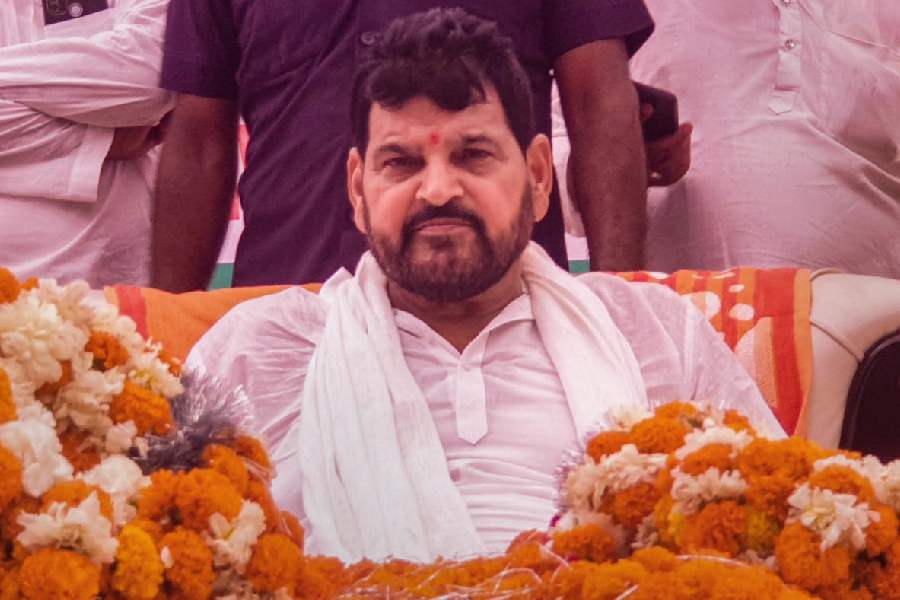
Former WFI chief Brij Bhushan Sharan Singh. Image Credit: The Telegraph india
Delhi Court: In a major development in one of India’s most high-profile sports-related sexual harassment cases, a Delhi court has acquitted former Wrestling Federation of India (WFI) chief and former BJP MP Brij Bhushan Sharan Singh and former WFI assistant secretary Vinod Tomar of all charges. The case stemmed from allegations of sexual harassment made by six women wrestlers, following which Delhi Police registered an FIR against the ex-BJP MP and his associate.
Additional Chief Judicial Magistrate (ACJM) Ashwini Panwar of the Rouse Avenue Courts pronounced the verdict on Monday after reserving the order on July 2, following the conclusion of final arguments. The trial was conducted in-camera, with the media barred from the courtroom. Singh’s counsel confirmed the acquittal shortly after the order was pronounced, while a detailed copy of the judgement is awaited.
Why and how the case reached acquittal
The case against Brij Bhushan Sharan Singh and Vinod Tomar was registered after six women wrestlers, including several medallists at international competitions, accused Singh of sexual harassment and mental harassment during their time in the national camp. The allegations, which surfaced publicly in early 2023, triggered widespread protests by wrestlers at Jantar Mantar in Delhi, with athletes demanding Singh’s removal from the WFI and a thorough investigation into the complaints.
Delhi Police subsequently registered an FIR and conducted an investigation, which included recording statements from the complainants, the accused and witnesses, as well as collecting digital and documentary evidence. The trial was then conducted in the Rouse Avenue Courts, known for handling high-profile criminal matters in the capital. This story was also covered by The Telegraph India.
The prosecution, led by public prosecutor Manish Rawat, presented its case over multiple hearings, cross-examining witnesses and submitting evidence. The defence, meanwhile, argued that the allegations were motivated, lacked corroborative proof and were insufficient to sustain a criminal conviction. After final arguments concluded on July 2, ACJM Ashwini Panwar reserved the order, which was delivered on Monday, acquitting both Singh and Tomar.
Yeh issue kaafi important hai because it involves powerful figures in Indian sports, the safety of women athletes and public trust in the justice system.
Statements from the accused and prosecution
Speaking to reporters outside the court, Singh welcomed the verdict. “On the first day, I had said that if any allegation against me was proved, I would hang myself. The court has now honourably acquitted me. I am happy and grateful to my lawyers,” he said.
“For now, this is all I can say. I will comment further after going through the court’s reasoned order,” the former BJP MP added, indicating that he would wait for the detailed judgement before making further statements.
Public prosecutor Manish Rawat said the prosecution would study the detailed judgement before deciding its next course of action. “After examining the detailed order, appropriate action would be taken before the higher courts,” he said, leaving open the possibility of an appeal in a higher court if the prosecution finds grounds to challenge the acquittal.
Background and context
The allegations against Brij Bhushan Sharan Singh emerged in early 2023, when several women wrestlers accused him of sexual harassment, mental harassment and creating a hostile environment within the WFI. The complainants included junior and senior athletes, some of whom had represented India at the Commonwealth Games, World Championships and other international events.
The wrestlers’ protests at Jantar Mantar drew national attention, with fellow athletes, opposition leaders and civil society groups supporting their demand for action. The Delhi Police registered an FIR, and Singh was questioned multiple times during the investigation. He consistently denied the allegations, calling them a conspiracy to tarnish his reputation and remove him from positions of power in Indian wrestling.
The WFI itself came under scrutiny, with the Sports Ministry and Indian Olympic Association intervening at various points. Elections to the federation were delayed, and an ad hoc committee was installed to oversee operations until a new body could be formed.
Timeline
Early 2023: Six women wrestlers publicly accuse Brij Bhushan Sharan Singh of sexual harassment; protests begin at Jantar Mantar in Delhi.
Mid-2023: Delhi Police registers FIR against Singh and Vinod Tomar; investigation begins.
2024–2025: Trial proceeds in Rouse Avenue Courts; in-camera hearings, witness testimonies and evidence submission.
July 2, 2026: Final arguments conclude; ACJM Ashwini Panwar reserves order.
Monday, August 2026: Court acquits Singh and Tomar; the prosecution says it will study a detailed order before deciding on appeal.
Also Read: Delhi Man Kills Wife After Children Leave, Banks On TV Show ‘The Staircase’ To Escape Arrest
Why This Matters
This matters because it touches on three critical issues: the safety of women athletes in India, the accountability of powerful sports administrators and the credibility of the legal process in handling sexual harassment cases. For years, there have been concerns about the culture within Indian sports federations, where a small group of officials wield significant control over athletes’ careers.
The wrestlers’ protests had raised hopes that systemic change was possible. An acquittal at this stage, while legally valid, may be seen by some as a setback for that movement. At the same time, others will argue that the court simply found insufficient evidence to convict, which is a fundamental principle of criminal law.
For the accused, the verdict is a vindication. For the complainants, it may feel like a denial of justice, even if the legal threshold for conviction was not met. In simple Hinglish, jab case ka result aata hai, toh har side apni kahani sunati hai.
India angle
For Indian readers, this story is directly relevant because it involves national icons—women wrestlers who have brought medals and pride to the country—and a powerful figure in Indian sports administration. The case has been followed closely by fans, fellow athletes and policymakers.
The India angle also includes the governance dimension. Sports federations in India have long been criticised for being opaque, politically connected and resistant to reform. This case forced a national conversation about whether athletes, especially women, can safely report misconduct without fear of retaliation.
There is also the legal dimension. Sexual harassment cases in India often hinge on corroboration, witness credibility and the interpretation of evidence. How higher courts view this acquittal—if the prosecution appeals—could influence future cases involving sports officials and other powerful figures.
Analysis
My opinion is that the verdict will be polarising. Supporters of the wrestlers may see it as a failure of the system to hold powerful men accountable. Supporters of Singh may see it as proof that the allegations were exaggerated or politically motivated.
I also think the prosecution’s decision to study the detailed order before appealing is significant. If they find specific legal errors or misinterpretations in the judgement, an appeal could keep the case alive. If not, the acquittal may stand, effectively closing the chapter at the trial level.
What Next
The immediate next step will be the release of the detailed judgement, which will outline the court’s reasoning, the evidence considered and the legal basis for the acquittal. The prosecution will review this document to decide whether to file an appeal in a higher court, such as the Sessions Court or Delhi High Court.
If an appeal is filed, the case could enter a new phase of legal arguments, potentially with additional evidence or challenges to the trial court’s findings. If no appeal is filed, the acquittal will stand, and Singh and Tomar will be free from criminal liability in this case.
Longer term, the outcome may influence how sports federations handle internal complaints, how athletes perceive reporting mechanisms and how the public views the intersection of sports, power and justice in India.
Conclusion
The acquittal of Brij Bhushan Sharan Singh and Vinod Tomar by a Delhi court marks the end of the magistrate-level trial in the sexual harassment case filed by six women wrestlers, but it may not be the final word if the prosecution chooses to appeal. For Singh, the verdict is a personal and political vindication; for the complainants, it raises difficult questions about evidence, belief and justice in high-stakes cases.
As the detailed judgement is examined, the next steps will determine whether this case closes or continues in higher courts. Either way, the trial has already left a lasting impact on Indian sports, forcing a national reckoning with issues of power, safety and accountability in the world of wrestling.
Written By A. Jack