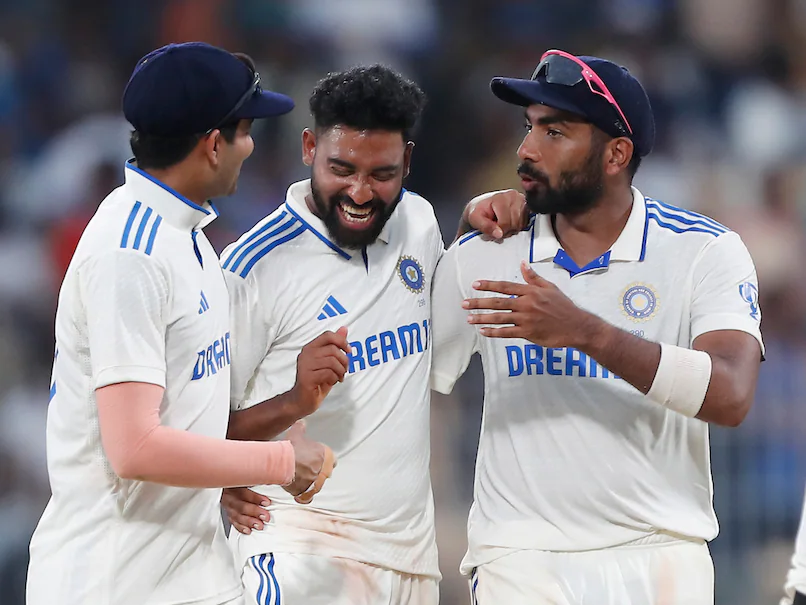
India posted 170 for four after a solid opening stand but Australia’s experience and firepower proved decisive in the chase. The loss could also raise deeper questions about India’s leadership and batting approach in big matches.
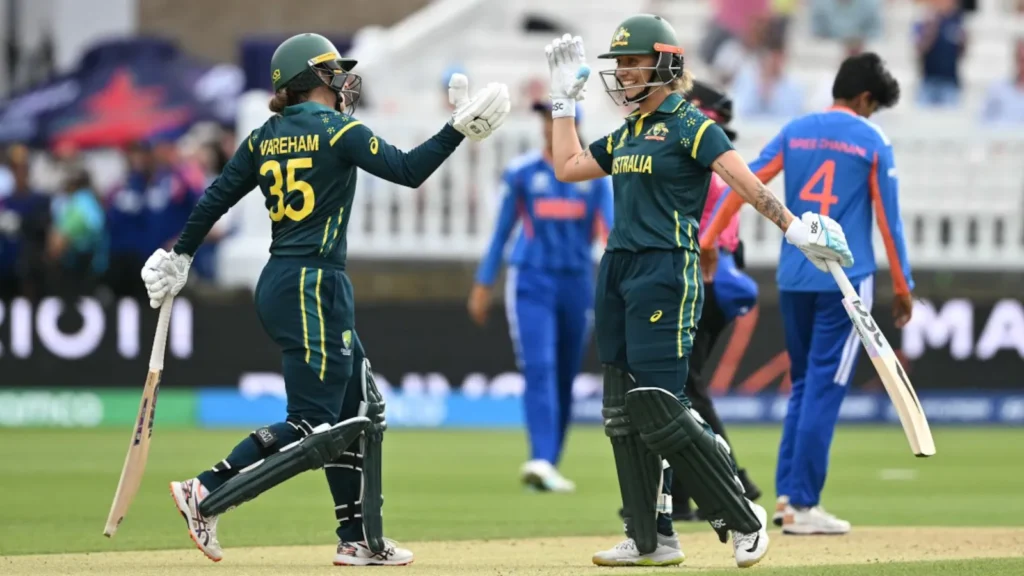
Australia celebrates after chasing down India’s 171 in the Women’s T20 World Cup 2026. Image Credit: NDTV Sports
India’s Women’s T20 World Cup 2026 campaign came to a painful end on Sunday as Australia beat them by six wickets in a high-pressure Group 1 clash. India, who needed a strong result to keep their semi-final hopes alive, were pushed out of the tournament after Australia chased down 171 in 19 overs at pace and with remarkable composure. Ellyse Perry and Ashleigh Gardner were the difference-makers, combining for a match-winning stand that exposed the gap in experience and execution between the two sides.
This was more than just a group-stage defeat. It was the kind of loss that can force a hard reset for a team and its leadership group. India had moments of promise with the bat, especially through Harmanpreet Kaur’s quickfire half-century, but Australia’s calm chase underlined why they remain one of the most feared sides in women’s cricket. For India, the result ended not just a World Cup run but perhaps also raised serious questions about what comes next.
Why India Lost
India’s total of 170 for four was competitive, but it may not have been enough against a side like Australia on a good batting surface. The innings began strongly enough, with Smriti Mandhana and Shafali Verma putting on 66 runs for the opening wicket. That platform gave India control early, but the tempo never truly accelerated the way it needed to in a high-stakes knockout-style group match. NDTV Sports has covered the full story.
The biggest issue was that India’s middle overs lacked sustained aggression. Shafali showed intent, hitting two sixes off Ashleigh Gardner, but her dismissal after a mistimed shot changed the momentum. Mandhana’s run-out added another setback, and although Jemimah Rodrigues and Harmanpreet Kaur contributed, the innings did not build the kind of late surge needed to fully pressure Australia.
Harmanpreet’s 56 off 27 balls was the standout. She was aggressive, positive and clearly aware of the urgency of the situation. But one good innings from the captain was not enough to compensate for the rest of the line-up’s inability to keep the scoring rate high throughout. India ended with a respectable total, but against Australia, “respectable” often becomes vulnerable.
How Australia Took Control
Australia’s chase was not perfect at the start, but their response showed why they are champions. They were reduced to 68 for three in 9.1 overs after India struck early, dismissing Phoebe Litchfield, Georgia Voll and Beth Mooney. At that point, India had real hope. But the issue was never just about taking wickets; it was about staying in control after taking them.
That is where Ellyse Perry and Ashleigh Gardner changed the game. Perry played the kind of innings that looks effortless but is built on years of pressure handling and shot selection. Gardner brought raw power and timing, hitting boundaries with authority and punishing loose bowling. Together, they added 100 runs for the fourth wicket and effectively shut India out of the contest.
Perry’s 56 off 38 balls was elegant and efficient. Gardner’s unbeaten 53 off 29 was muscular and decisive. Once those two settled in, India’s attack could not find a way back. The bowlers had done the hard work early, but Australia’s middle-order depth made the difference.
India’s Batting:
India’s innings had promise in the power play. Mandhana and Shafali scored freely enough to put India at 43 without loss after six overs, which is usually a decent foundation in T20 cricket. But the key problem was that the innings remained too cautious for too long. The scoring rate never quite exploded, and that allowed Australia to keep the game within reach.
Shafali’s dismissal was a turning point because it came at the exact moment India needed momentum. Mandhana’s run-out then added pressure. Rodrigues played useful cricket but could not quite maintain the pace, and her retirement before the final over showed India were still looking for someone to finish strongly rather than having already built that finishing position.
Harmanpreet, to her credit, provided the late burst India needed. Her three consecutive sixes in the final over were a reminder of her natural hitting power and match awareness. But by then, the innings had already gone through too many stop-start phases. In tournament cricket, timing matters. India got their acceleration too late.
Australia’s Experience Made the Difference
Australia were under pressure early in the chase, but they responded like a team that has seen every kind of pressure before. Perry and Gardner did not panic, did not rush, and did not gift India easy wickets. They absorbed the situation and gradually shifted the match back in their favor.
This is one of the reasons Australia remains so successful in women’s cricket. They rarely let one bad passage define the entire chase. Even when they were three wickets down, they trusted their depth and kept the batting order stable. That kind of self-belief is often the biggest gap between top teams and challengers.
The chase was also a reminder that experienced players read match conditions better. Perry, playing in her 10th World Cup, understood exactly when to attack and when to rotate strike. Gardner complemented her perfectly. Together, they made India’s bowling plans look less effective than they probably were for much of the innings.
Background and Context
India entered this match with semi-final hopes still alive, but the pressure was obvious. In a tournament of this kind, one poor result can end the campaign even if earlier performances were decent. Australia, by contrast, came in with an all-win record and the confidence that usually follows a strong group stage.
That difference mattered. Australia was already functioning like a team that knew exactly how to handle the big moments. India, meanwhile, was still searching for consistency in batting and control in the field. The gap was not massive in talent, but it was very visible in execution.
There is also the broader context of expectations. India’s women’s team carries growing public attention, and every World Cup run is now viewed as a major opportunity. That makes losses like this feel larger, because they do not just end a campaign—they trigger debate about leadership, preparation and future direction.
Timeline
Early India innings: Smriti Mandhana and Shafali Verma add 66 runs for the opening wicket.
Middle overs: India lose rhythm after a few key dismissals.
Final over: Harmanpreet Kaur finishes strongly with three sixes in a row.
India’s innings ends: India posts 170 for four.
Australia chase begins: India strike early and remove three top-order batters.
Middle chase: Ellyse Perry and Ashleigh Gardner add 100 runs for the fourth wicket.
Final result: Australia win by six wickets and qualify for the semi-finals.
Why This Matters
This matters because India’s exit from a World Cup always has a wider impact than the result itself. It affects player confidence, public discourse and future planning. Yeh issue kaafi important hai because Indian women’s cricket has reached a stage where people expect not just participation but serious knockout-stage success.
It also matters because Australia once again showed the standard India must reach to become a consistent tournament force. The difference was not just skill, but composure and depth. If India wants to go deeper in future editions, they need more reliable middle-order batting and stronger match management under pressure.
For the women’s game more broadly, this match is another reminder of how quickly standards are rising. Big teams now punish small lapses without mercy. That means India can no longer afford to depend on one or two star players if they want to win major matches.
India Angle
For Indian cricket fans, this defeat will sting because the team had enough talent to be competitive. Harmanpreet played a captain’s innings, Mandhana and Shafali gave a good start, and the bowling began well. But in Hinglish, seedhi baat yeh hai: jab match ka pressure badhta hai, tab finishing aur control sabse zyada matter karte hain.
There is also an emotional angle. India’s women’s team has built a loyal fan base, and with that comes expectation. Fans in India are increasingly invested in women’s cricket, so a World Cup exit feels like a national disappointment rather than just a sports result.
At the same time, this tournament can still serve as a learning point. Indian cricket has improved massively over the years, but to beat teams like Australia in knockout-pressure situations, the team needs a fuller batting plan and sharper bowling execution. That is the next step.
Analysis
My opinion is that the major takeaway is not just that India lost, but that the team still has a structural batting issue. Too often, the innings depended on one or two players to force acceleration late. Against Australia, that is risky. The world’s best sides do not usually hand back momentum once they get it.
The other big talking point is leadership. The report that this defeat could mean the end of Harmanpreet Kaur’s time as T20 skipper will likely dominate discussions in the coming days. Whether or not that change happens, the pressure for answers will be high.
What Next
India will now return home and face questions about squad balance, batting tempo and leadership decisions. The immediate future may involve reviews, selection debates and perhaps even a captaincy discussion.
Australia moves into the semi-finals with strong momentum and an unbeaten group-stage run. That makes them one of the favorites to lift the title again.
South Africa also advanced, which means the knockout picture is set, and the tournament will now shift from group-stage planning to high-pressure elimination cricket. For India, the focus turns to rebuilding and preparing for the next global event with clearer answers.
Conclusion
India’s Women’s T20 World Cup 2026 campaign ended in frustration as Australia’s class and experience proved too much in a six-wicket defeat. Harmanpreet Kaur’s quick fifty gave India something to defend, but Ellyse Perry and Ashleigh Gardner turned the chase with a masterclass in calm aggression. The result sends Australia into the semifinals and leaves India with hard questions about batting depth, pressure handling and future leadership. For Indian fans, this is a disappointing exit—but also a reminder of how far the team still needs to go to match the very best.
Written By A. Jack