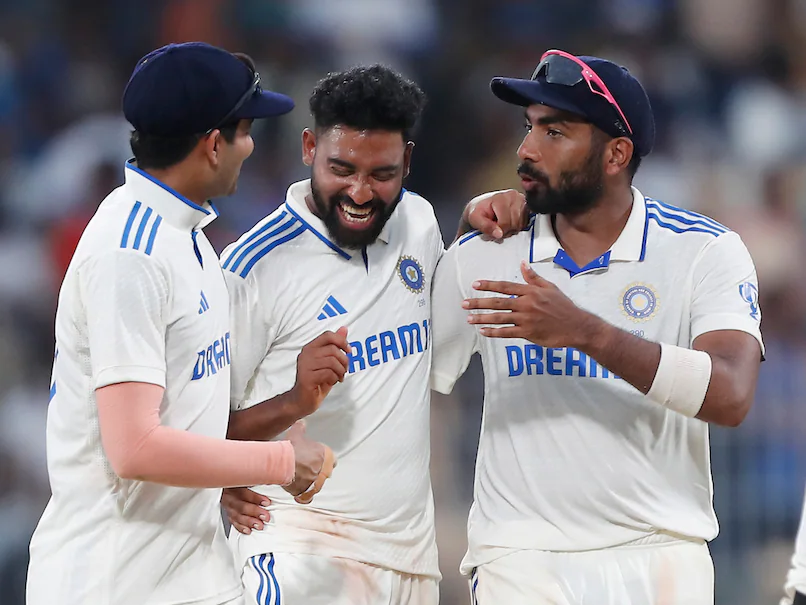
India were in chase of 155, and finished on 153 for 9 in a tight finish that went to the final over. The loss followed a 34-run defeat in the first match and it meant a thoroughly dispiriting Sunday for Indian cricket, for both the men’s and women’s teams.
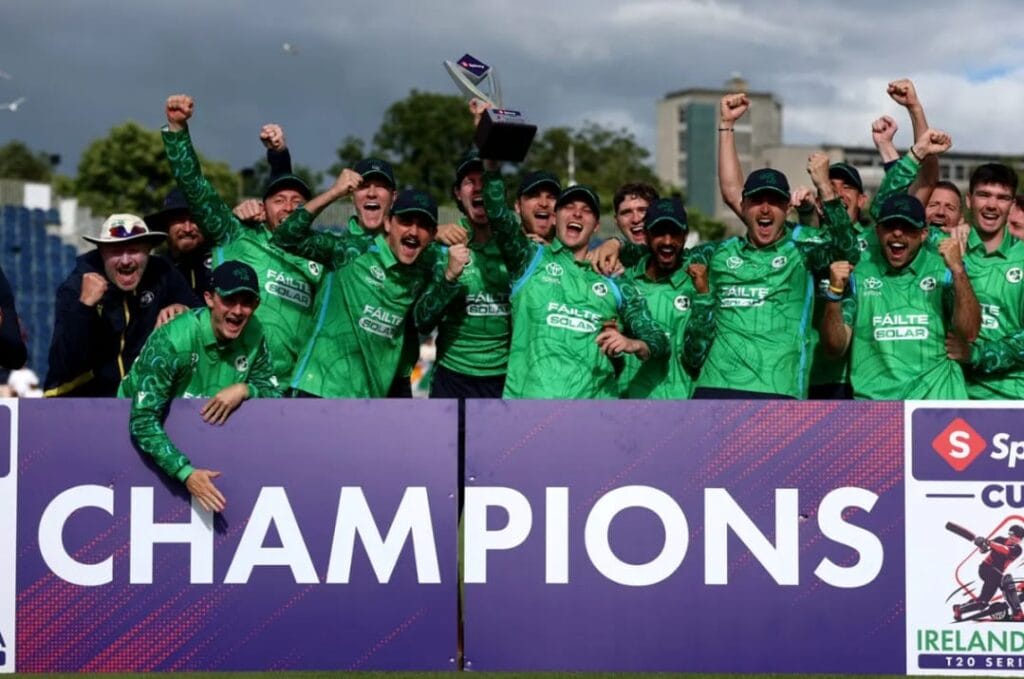
Ireland players celebrate after their dramatic one-run win over India in Belfast, a result that sealed a historic 2-0 series sweep. Image Credit: ESPNcricinfo
Ireland produced a memorable one-run victory over India in the second and final T20I in Belfast on Sunday, sealing a 2-0 clean sweep over the reigning T20 World Cup champions. Chasing 155, India were restricted to 153 for 9 in a nerve-shredding finish that ended their long streak of 16 unbeaten T20I series. The defeat came after India had already lost the first match by 34 runs, making this a rare and painful bilateral series collapse for the visitors.
This was not just another narrow loss. It was a result with history attached to it. Ireland has now beaten India in a bilateral series for the first time in any format, and they did it with discipline, aggression and belief. For India, the defeat highlighted batting concerns, missed opportunities and a worrying inability to close out tight chases under pressure. Yeh result kaafi important hai because it shows how even elite teams can be exposed when execution slips.
How Ireland Pulled It Off
Ireland’s win was built on a solid batting effort followed by disciplined bowling under pressure. They posted 154 for 8 after being put in to bat, with Harry Tector top-scoring on 53 and Ben Calitz adding a valuable 37 in the middle order. That total was competitive, especially in conditions where timing the ball required patience and application.
India’s bowling did well to keep the total within reach. Debutant Prince Yadav was outstanding with 3 for 22, while Arshdeep Singh and Shivam Dube took two wickets each. The bowling unit gave India a real chance, but the batting response never fully matched the pressure of the chase. NDTV Sports has covered the full story.
Ireland’s attack then targeted India early. According to reports from the match, India were quickly reduced to 19 for 3, which immediately put the chase on the back foot. That early damage proved decisive because it forced India to rebuild rather than control the chase. In tight T20 games, a slow start often becomes a psychological burden, and Ireland made sure India felt that pressure.
The chase never fully settled. Tilak Varma fought hard with a composed 55, and Harshit Rana’s late 21 off 10 balls briefly revived India’s hopes. But Ireland stayed calm at the death and held on by the narrowest margin. That ability to finish under pressure was the difference between a famous win and another narrow escape.
Why India Fell Short
India’s biggest problem was the lack of stability at the top and the inability to convert starts into a strong chase. With a target of 155, the chase should have been manageable if one of the top-order batters had stayed longer. Instead, the innings kept losing wickets at key moments.
A poor top-order start made the rest of the chase harder. Once the early wickets fell, India had to play catch-up cricket. Tilak Varma offered the most resistance, but the required rate kept rising, and the pressure became too much. In such situations, every dot ball feels bigger, every wicket feels heavier and every missed boundary hurts more.
India also seemed to struggle with the conditions at moments where Ireland handled them better. The Irish bowlers used the ground and the pitch smartly, and their fielders backed them up. In a close chase, that kind of intensity matters. India had chances, but they did not string enough partnerships together to get across the line.
Ireland’s Historic Achievement
For Ireland, this is a landmark moment. Beating India in a bilateral series for the first time in any format is a massive achievement, especially when it comes as a 2-0 sweep against the T20 World Cup champions. It will be remembered as one of those rare nights when everything clicked at the right moment.
This result also ends India’s unbeaten run of 16 T20I series. That streak had become a symbol of consistency and depth, so losing it in this fashion will sting. But from Ireland’s perspective, the victory is more than just a one-off upset. It is evidence that they can compete with major teams and close out games under pressure.
There is a larger cricketing context here too. Smaller nations often need one signature result to change the narrative around them. Ireland has now delivered that on a big stage. Their performance will likely be remembered alongside other famous upset wins in world cricket.
Background and Context
India had entered the series as favorites and that is why this result feels so sharp. The expectation around a strong Indian side is always high, especially after their success in global tournaments. But T20 cricket is unforgiving. Two or three poor overs can flip a game, and one bad chase can ruin a series.
Ireland, meanwhile, had little to lose and everything to gain. That kind of freedom often helps underdogs. With home conditions, crowd energy and belief on their side, they turned the second T20I into a pressure trap. Once India lost early wickets, the momentum slowly shifted away from them.
It is also worth noting that the result came on a poor Sunday for Indian cricket overall, with the women’s team also falling to Australia and exiting the Women’s T20 World Cup 2026. That made the day feel like a double blow for Indian fans. In sports, such days happen, but they do leave a mark.
Timeline
First T20I: India lose by 34 runs, giving Ireland early momentum in the series.
Second T20I begins: Ireland bat first and reach 154 for 8.
Indian bowling effort: Prince Yadav takes 3 wickets, while Arshdeep Singh and Shivam Dube take 2 each.
India chases 155: Early wickets leave the visitors under pressure.
Middle overs: Tilak Varma fights with a steady 55, while Harshit Rana adds a late spark.
Final overs: India fall short by 1 run, finishing on 153 for 9.
Series result: Ireland sweep the series 2-0 and end India’s 16-series unbeaten run.
Also Read: Ireland Script History; Shock India With First-Ever Win Across Formats in Belfast T20I
Why This Matters
This matters because India’s streak had become a sign of consistency, and losing it in a 2-0 sweep is a reminder that even strong teams can be vulnerable in T20 cricket. The margin was just one run, but the message is bigger: India needs sharper batting under pressure and better finishing in tight matches. Yeh issue kaafi important hai because small failures in T20s often become major setbacks.
It also matters because Ireland’s win is a morale boost for Associate and emerging cricket nations. Results like this help broaden the global game and show that competitive balance still exists. When a team like Ireland beats India in a bilateral series, it gives belief to other smaller nations too.
For Indian cricket, the loss raises questions about selection, batting order flexibility and game awareness. A one-run defeat can happen to any side, but repeated failures in pressure situations are harder to ignore. That is why this result will be discussed for much longer than a routine series defeat.
India Angle
For Indian fans, this is a hard result to digest because it came at the end of a day already made worse by the women’s team’s World Cup exit. In Hinglish, seedhi baat yeh hai: Sunday Indian cricket ke liye kaafi rough raha. When both senior teams struggle on the same day, fans naturally start asking bigger questions about depth and decision-making.
There is also a lesson here for Indian cricket development. Even in a game where India had enough talent to win, the lack of calm in the chase was costly. Indian cricket has been very successful in recent years, but these sorts of losses show that no team can take match situations for granted.
For young Indian fans and aspiring cricketers, the match is also a reminder that T20 cricket is about more than big names. It is about handling pressure, taking chances and staying composed in the last few overs. Ireland did that better, and that made the difference.
Analysis
My view is that the most important part of this result is not just the upset, but the pattern behind it. India lost both matches, and the second defeat was closer but still exposed the same issue: the batting unit did not control the chase when it mattered. Tilak Varma played well, but a chase in T20 cricket needs more than one steady innings.
Ireland deserves full credit because they played like a side that believed the series was there to be won. Their bowlers hit early, their batters built enough of a platform, and their fielding held up in the tense final overs. That is the blueprint for a famous home-series win.
The result will also fuel conversation around India’s approach in bilateral T20 series. Even with world-class talent, the side needs more flexibility and sharper finishing, especially in matches where the margin is slim. One-run losses often reveal more than comfortable wins.
What Next
India will now need to regroup quickly and review what went wrong in the series. The focus will likely be on top-order partnerships, middle-order stability and death-overs execution.
Ireland, meanwhile, will celebrate a historic moment that could become a reference point for years. The challenge now is to build on it and turn this one-off triumph into sustained progress.
For Indian cricket, the next step is response. The team will need to show that this defeat was a setback, not a pattern. For Ireland, the next step is confidence, because this win proves they can beat the best on their day.
Conclusion
Ireland’s one-run win over India was a historic result that completed a 2-0 series sweep and ended India’s 16-series unbeaten T20I run. India had chances, with strong bowling and a fighting fifty from Tilak Varma, but the chase never fully settled. Ireland held their nerve, backed up their batting effort with disciplined bowling, and delivered one of the biggest wins in their cricket history. For India, it is a disappointing loss; for Ireland, it is a landmark night that will be remembered for a long time.
Written By A. Jack