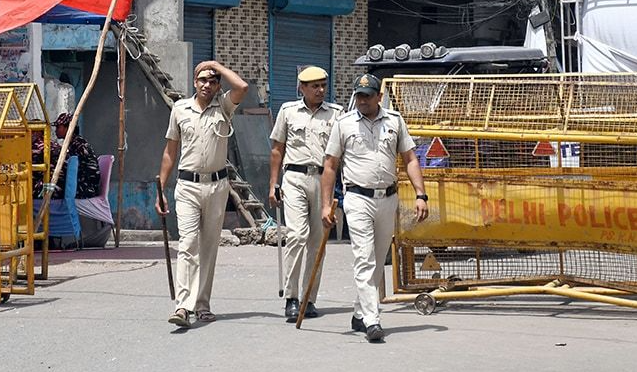
Sahil underwent one surgery at AIIMS Trauma Centre and awaits another as doctors describe his visual prognosis as “guarded”. His family says metal pellets were used, while Delhi Police deny personnel used pellet guns.
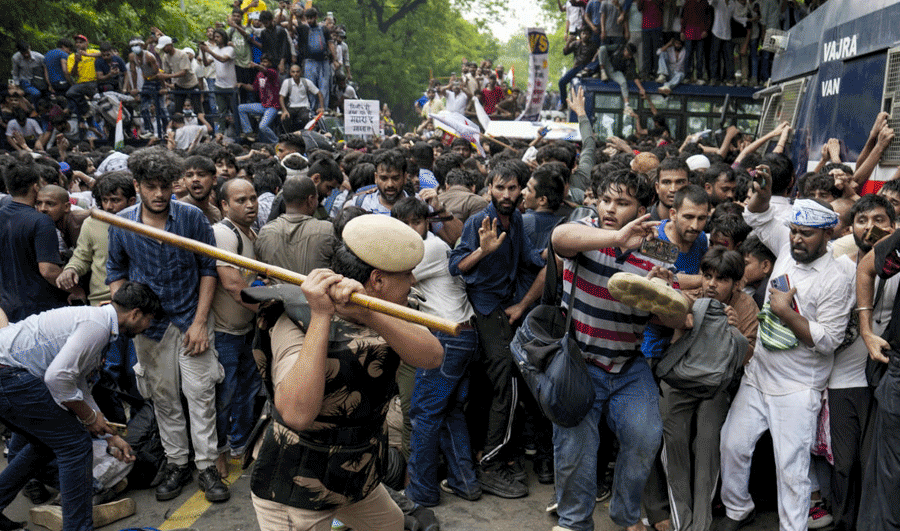
This image is only for illustrations. Image Credit: Telegraph India
Sahil Lochab, a 19-year-old student from Najafgarh in southwest Delhi, may lose sight in his right eye after being hit by a pellet during the Cockroach Janta Party (CJP) protest march toward Parliament on July 20. The teenager was among at least 60 protesters injured, according to Delhi Police estimates, but his case has drawn particular attention due to the severity of his injuries and the possibility of permanent blindness.
Sahil was first taken to Lady Hardinge Medical College, then to Safdarjung Hospital, before being shifted to the AIIMS Trauma Centre on July 21. He has undergone one surgery to repair the injured eye and remove pellets and is awaiting another procedure that will determine whether his vision can be restored. Doctors initially told the family there was only a “1 per cent chance” Sahil would regain his vision but later offered some reassurance, saying his chances may improve. However, they still describe his visual prognosis as “guarded”, meaning his chances of recovering his vision remain uncertain.
What Happened on July 20
The “Sansad Chalo” march, organised by the CJP over alleged examination irregularities and demanding the resignation of Union Education Minister Dharmendra Pradhan, erupted in chaos and clashes on July 20. Sahil, a student at Delhi University’s School of Open Learning, was preparing for the Staff Selection Commission Combined Graduate Level examination and had always wanted to become a police officer. He had attended the CJP protest earlier and went again on July 20, telling his family that it was important. This story was also covered by The Telegraph India.
According to his uncle, Ajay Duggal, Sahil was hit directly in his right eye by a pellet during the march. When asked what he could see from the eye, Sahil replied that there was nothing — no blur, no haze, only darkness. Duggal said, “Sahil said he was hit directly in his eye. From what we have been told, another operation involving the pupil will determine whether his vision will return.”
Sahil has multiple pellet injuries to his face, neck, chest, right shoulder and arm. A pellet was lodged in his right eye, causing corneal perforation – a full-thickness hole in the cornea – while another was found in his right lung and pericardial fat, a tissue surrounding the heart. The family said they were informed that the pellets that injured Sahil were made of metal.
Why the Injuries Are So Severe
Pellet guns fire cartridges loaded with up to 600 metal or rubber pellets, which disperse in a widespread manner at speeds of 1,000 feet per second. The standard operating procedure (SOP) is that the gun should be fired from a minimum distance of 500 feet, and the muzzle of the gun should always be targeted below the waist. However, in Sahil’s case, the pellets struck him in the face and eye, indicating that the gun may have been fired at close range or above the waist, violating the SOP.
Corneal perforation is a serious injury that can lead to permanent vision loss if not treated promptly and effectively. The cornea is the clear, dome-shaped surface that covers the front of the eye, and a full-thickness hole in it can cause severe complications, including infection, scarring and loss of vision. Sahil’s injury required immediate surgical intervention to remove the pellets and repair the cornea, but the damage to his pupil has left his visual prognosis uncertain.
The presence of a pellet in Sahil’s right lung and pericardial fat also raises concerns about the potential for further complications. While the pellet in his lung may not cause immediate problems, it could lead to infection or other issues if not monitored closely. The pellet in the pericardial fat, which surrounds the heart, is particularly concerning because of its proximity to vital organs.
Background and Context
The use of pellet guns in India has a controversial history. Pellet guns were first used in Kashmir in 2010 to curb violence but were discontinued by the then state government. They were used again in July 2016 when protesters went on a rampage following the death of banned Hizbul Mujahideen terror outfit’s poster boy Burhan Wani. The use of pellet guns in Kashmir has been widely criticised for causing severe injuries, including blindness, to civilians.
The circumstances surrounding Sahil’s injuries have raised questions about the alleged use of pellet guns during the CJP protest. Delhi Police has denied that its personnel used pellet guns against protesters during the march. The CRPF, whose Rapid Action Force (RAF) was also on the streets on the day, did not respond to questions about the alleged use of pellet guns.
However, medical records and testimonies from other injured protesters suggest that pellet guns were used. Sheikh Mansoori, a 25-year-old Gurugram resident, has allegedly suffered seven pellet injuries to his face, including to his nose, forehead, both eyes and cheeks. He was taken to Lady Hardinge Medical College, where he underwent surgery and is likely to require another procedure. At Ram Manohar Lohia Hospital, 21-year-old Sakshi, who suffered critical injuries in a stampede-like situation near Jantar Mantar and Tolstoy Marg, has been taken off ventilator support.
Timeline
June 20, 2026: The CJP protest begins at Jantar Mantar, demanding education reforms and the resignation of the Union Education Minister.
July 20, 2026: The “Sansad Chalo” march organised by CJP; clashes erupt between protesters and security forces.
July 20, 2026 (evening): Sahil Lochab is injured and taken to Lady Hardinge Medical College, then to Safdarjung Hospital.
July 21, 2026: Sahil is shifted to the AIIMS Trauma Centre and undergoes his first surgery to remove pellets and repair corneal perforation.
July 22, 2026: Doctors describe Sahil’s visual prognosis as “guarded”; family awaits news on second surgery.
July 23, 2026: Delhi Police denies use of pellet guns; CRPF does not respond to questions about alleged use.
Also Read: 17 Delhi Metro Stations To Remain Shut From 7.30 AM Today
Why This Matters
This matters because it highlights the human cost of crowd control measures and the potential for non-lethal weapons to cause severe, life-altering injuries. Sahil’s case is not just about one teenager; it is about the broader question of how security forces manage protests and the rules of engagement they follow. Yeh issue kaafi important hai because it affects not only the injured protesters but also public trust in law enforcement.
It also matters because the use of pellet guns in Delhi is a significant development. While pellet guns have been used in Kashmir, this appears to be one of the first known instances of their use against civilians in Delhi. The alleged violation of SOPs, such as firing above the waist and at close range, raises serious concerns about accountability and the potential for abuse.
For families across India, the issue is personal. Many have children or relatives who are studying for competitive exams or participating in protests. That makes the story relatable and emotionally powerful. It is not just about one activist; it is about the safety of young people who are exercising their right to protest.
India Angle
For Indian readers, this story matters because it touches on the right to protest, the use of force by security forces and the accountability of law enforcement. In Hinglish, seedhi baat yeh hai: jab protest hota hai, toh police ka kya role hona chahiye?
The case also highlights the growing youth movement in India demanding education reform and government accountability. The CJP protest has become a rallying point for the broader youth movement, which has drawn widespread support across the country. The alleged use of pellet guns has added to the sense of anger and frustration among protesters, who feel their safety is being compromised.
For families across India, the issue is personal. Many have children or relatives who are studying for competitive exams or participating in protests. That makes the protest relatable and emotionally powerful. It is not just about one activist; it is about the safety of young people who are exercising their right to protest.
Analysis
My opinion is that the alleged use of pellet guns in Delhi is a serious development that requires urgent investigation. The standard operating procedure for pellet guns is clear: they should be fired from a minimum distance of 500 feet and targeted below the waist. If these rules were violated, as Sahil’s injuries suggest, then there is a clear case for accountability.
I also think the case highlights the importance of transparency and accountability in crowd control measures. The Delhi Police’s denial of pellet gun use, despite medical evidence to the contrary, raises questions about the credibility of official statements. The CRPF’s silence on the matter is also concerning, as it suggests a lack of willingness to address the allegations.
From an editorial perspective, this is a strong story because it has a clear central event, human interest angle and broader public safety implications. It is not just about one protester; it is about the rules of engagement for security forces and the potential for non-lethal weapons to cause severe injuries. The challenge is to explain the story in a way that is both factual and accessible to readers who want to understand the big picture.
What Next
The next step will depend on the outcome of Sahil’s second surgery and whether his vision can be restored. If he loses sight in his right eye, his family may seek legal recourse against the security forces responsible for his injuries. The case could also lead to a broader inquiry into the use of pellet guns in Delhi and the rules of engagement for crowd control.
There may also be further legal challenges or appeals related to the alleged use of pellet guns or the state’s handling of the protest. The CJP movement is likely to continue its protests, and the safety of protesters will remain a key issue. The government’s response to the protest will also be closely watched.
For now, the situation remains fluid. Sahil’s family waits outside the hospital, holding on to the possibility that their child will regain full vision. The underlying issues that led to the protest remain unresolved, and the alleged use of pellet guns has added to the sense of anger and frustration among protesters.
Conclusion
The case of Sahil Lochab, a 19-year-old student who may lose sight in one eye after sustaining a pellet gun injury during the CJP protest, highlights the human cost of crowd control measures and the potential for non-lethal weapons to cause severe, life-altering injuries. Sahil underwent one surgery at AIIMS Trauma Centre and awaits another as doctors describe his visual prognosis as “guarded”.
His family says metal pellets were used, while Delhi Police deny personnel used pellet guns. The alleged violation of standard operating procedures raises serious concerns about accountability and the potential for abuse. Whether Sahil regains his vision or not, his case has become a symbol of the broader question of how security forces manage protests and the rules of engagement they follow.
Written By A. Jack