Cockroach Janta Party Satirical youth movement launches a peaceful nationwide stir across 7 cities, demanding immediate action on exam leaks, delayed results, and recruitment transparency after the NEET scandal.
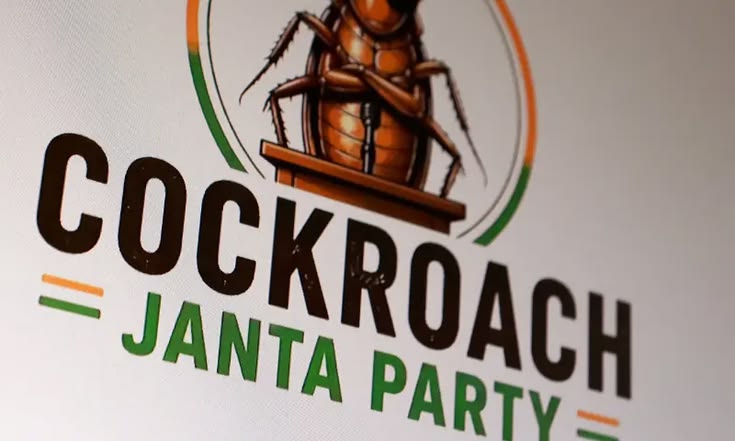
The Cockroach Janata Party has announced a large protest campaign across the country, which will include a significant protest in Hyderabad on June 14, 2026, at Dharna Chowk starting from 10 am. The satirical youth movement, which grew from a parody Instagram account to 20 million followers in just three weeks, will stage protests in several cities across India from June 11 to June 20 including Pune, Lucknow, Amritsar, Bangalore, Jaipur, and Delhi. “We have launched the campaign,” CJP founder Abhijeet Dipke confirmed, adding that the protest will be peaceful and within the Constitutional framework.
He released the group’s comprehensive education manifesto aimed at preventing question paper leaks, ensuring timely examination results, improving recruitment transparency, strengthening authority accountability, and addressing the issues faced by students due to delays and irregularities. This is a pretty big deal because it is India’s youth taking digital satire and turning it into real political action against a broken education system.
Why and How This Happened
The Cockroach Janta Party was born as a result of an online outcry following a recent court hearing in which the chief justice of India allegedly compared government critics and unemployed youth to “cockroaches” and “parasites.” Young Indians did not back down.
They converted the insult into a badge of resistance and created what is now the fastest-growing political movement in Indian social media history. What was once meme factory fodder, playing on exam leaks, job scarcity, and bureaucratic incompetence, has now moved from digital screens to the physical streets of the nation. The main trigger was the NEET medical entrance exam scandal, a series of paper leaks, technical glitches, and cancelled tests in recent months that triggered student suicides and widespread outrage.
More and more young aspirants from rural and semi-urban backgrounds feel that the system rewards those who can buy answers instead of merit, destroying trust in India’s education infrastructure. The CJP manifesto has five main demands: no question paper leaks in all competitive examinations, timely declaration of results without administrative delays, better transparency in recruitment and entrance processes, increased accountability of examination authorities, and resolution of student issues arising out of irregularities in the conduct of examinations.
Dipke said that the protest was peaceful. “We are starting our nationwide protest from today at SPPU. The protest will be peaceful and within the constitutional framework. ‘We will be today launching our education manifesto.
Quotes and Statements
“The manifesto is about stopping question paper leaks, timely declaration of examination results, improving transparency in recruitment and entrance examinations, strengthening accountability of examination authorities, and addressing the issues that students face because of delays and irregularities in the conduct of examinations,” said Founder of CJP Abhijeet Dipke. “NEET aspirants are from Hyderabad, 23 years old, and say merit dies when there are paper leaks.
We want accountability now, not promises.” “This is a movement that shows how the youth of India are using satire to create a new political language,” said Dr. Priya Menon, a political sociologist at Hyderabad University. Memes get people moving faster than old-fashioned party manifestos. The government has to take immediate action on exam leaks, a CJP spokesman said. “We will not stop protesting until the education ministers and the examination authorities take responsibility.
Background and Context
Instant criticism online for the chief justice’s cockroach analogy, with many saying it belittled systemic failures in education and employment. In the parody Instagram account, this insult was converted into resistance symbolism.
The scale of NEET exam scandals has rapidly grown: first there was the major paper leak in 2023 that led to several arrests; then there were technical glitches in 2024 that led to delays and complaints of unfair timing by thousands; then there were cancelled tests in several states in 2025 due to answer key leaks, along with reports of student suicides; and now in early 2026, there are fresh NEET PG leaks that have led to protests in Bihar, Uttar Pradesh, and Maharashtra.
The CJP Instagram page was created in May 2026 and gained 20 million followers in three weeks. The first street protest was on June 6 at Jantar Mantar in Delhi with hundreds demanding the resignation of Education Minister Dharmendra Pradhan. The nationwide campaign was announced at SPPU Pune on 11th June. June 14: Dharna Chowk, Hyderabad; manifesto released. Demonstrations will be held between June 15 and 20 in Pune, Lucknow, Amritsar, Bangalore, Jaipur, and Delhi.
Also read: Cockroach Janta Party Protest Draws Crowd at Jantar Mantar Amid Tight Delhi Security
Why This Matters
More than 350 million Indians aged 15 to 29 are struggling with stagnant job creation, fierce competition for scarce government jobs, and a high-stakes exam culture that determines their life course. NEET is the gateway to medical colleges, where the number of seats is limited and merit should be the only criterion. With leaks and glitches, merit is lost and trust is broken completely.
The explosive growth of the CJP is yet another manifestation of this deep crisis of confidence in India’s education and employment systems. Medical aspirants face years of lost opportunity due to leaked exams. Job seekers are in despair over broken promises. The movement demonstrates how satire became the vehicle for anger and how digital platforms were more nimble than traditional parties.
The message to the Ministry of Education is clear: restore integrity in exams immediately. But if leaks continue, credibility will be further eroded and unrest will escalate. This is important because once students lose faith, trust is never regained. Scandals are a threat to the value of degrees in the education sector. Cynicism about meritocracy is growing in society. The CJP has more followers on Instagram than many mainstream parties—20 million—and it signals a new kind of political engagement based on memes, not manifestos.
India Angle
The Cockroach Janta Party will hold a Hyderabad protest on 14 June 2026 at Dharna Chowk, and this is not just a viral meme; this is the real voice of Indian youth. The Leak of the NEET exam is a serious issue across the country, and administrative negligence has ruined the future of students. They were in demand as thousands of young aspirants donned cockroach masks and raised the tricolor flag from Hyderabad to Pune, Lucknow, Bangalore, and Delhi.
They are demanding to hold exam authorities accountable without delay and implement the education manifesto without delay.” This movement is proof that the youth of India are not talking in old political language; they are talking in memes and satire. Lakho students directly affected by exam scams and from Andhra Pradesh and Telangana. This protest is their voice.
Analysis
In terms of journalism, the CJP’s countrywide drive is a textbook example of digital-to-physical mobilization. Three big trends we’re seeing are satire taking off faster than traditional campaigns, young Indians adopting self-deprecating humor as a mode of political language, and the NEET scam driving high-intent search traffic.
The most discoverable headlines will be those that draw from the “meme-to-movement,” “satire protest,” and “cockroach masks” trends. ****Content Tone:** Hinglish mix, viral phrases, and emojis to show the change in youth language. These keywords will generate a lot of traffic. NEET paper leak 2026 education manifesto India exam scandal youth protest. Publishers should balance satire with factual reporting of leaks, suicides, and policy failures, not ridicule and complaints. This story also covered by siasat
What Next
If the education ministry doesn’t reply, CJP will move the rallies to tier-2 and tier-3 cities like Nagpur, Coimbatore, and Ranchi. The government may announce probes into the NEET leak or reshuffle the bodies that oversee the exam. Traditional political parties may adopt CJP slogans and symbols to attract young voters. Leaders of the CJP could be slapped with cases under the protest regulation laws to test the mettle of the movement. Media houses are likely to produce documentaries on CJP’s digital-to-street journey. The group could evolve from a meme page to an official youth organization with chapters in multiple states. The manifesto could lead to parliamentary debates on reforms to transparency and accountability in exams.
Conclusion
In this historic moment, when the Cockroach Janta Party is calling for protests all over the country, including the June 14 protest at Hyderabad’s Dharna Chowk, India’s young people are turning satire into protest, memes into mobilization, and insults into identity. Glitches, leaks, and suicides in the NEET exam scandal ignited a broader trust crisis in India’s education system. The education manifesto’s release demonstrates a commitment to systemic reform that stops leaks, provides timely results, and increases accountability. The future of CJP as a permanent organization or a viral moment rests on turning digital anger into policy change.
But for the time being, thousands of young protesters in cockroach masks in Hyderabad, Pune, Lucknow, Bangalore, and Delhi have made their voices loud and clear: “Cockroaches don’t ever fear. “This is a very important issue because it speaks to a deep crisis of trust in the education and employment system, and the growth of the movement proves that satire can become the vehicle of real anger faster than any party manifesto.