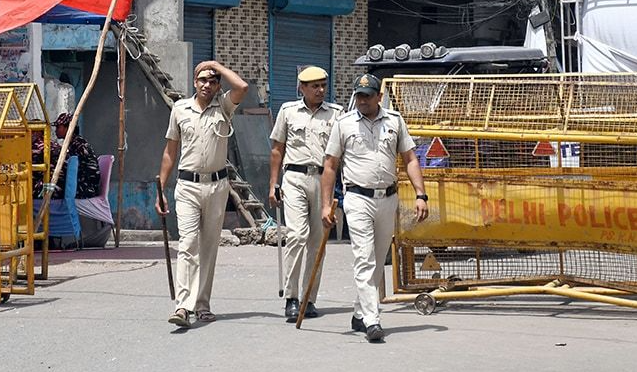
When a crowd gathered, supporters of the satirical Cockroach Janta Party led by Abhijeet Dipke pushed ahead with a peaceful protest at Jantar Mantar in New Delhi on Saturday. Security has been tightened across the capital amid demands for the resignation of Union Education Minister Dharmendra Pradhan over examination-related lapses.
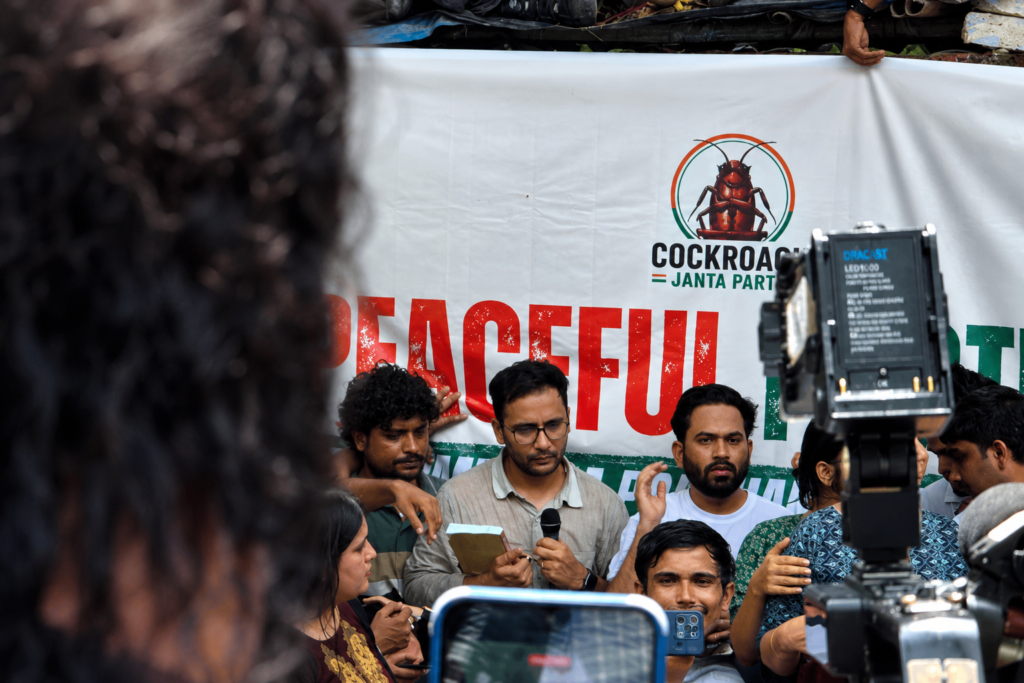
Protesters gather at Jantar Mantar in New Delhi as the Cockroach Janta Party movement, led by Abhijeet Dipke, stages a peaceful demonstration.
A fresh protest by the satirical online movement Cockroach Janta Party gathered momentum at Jantar Mantar in Delhi on Saturday, drawing attention from both supporters and security agencies. The protest, led by founder Abhijeet Dipke, is tied to demands that Union Education Minister Dharmendra Pradhan resign over examination-related lapses.
Dipke, who returned to India from Boston on June 6, said he was “looking forward to meeting all at Jantar Mantar” and urged supporters to keep the movement peaceful. With heightened security across the national capital, the demonstration has become more than just a social media-driven gathering; it is now a visible public test of how satire, activism, and political pressure are mixing in India’s crowded protest space.
What Happened
According to the reports, Abhijeet Dipke arrived in Delhi ahead of the protest and later reached Jantar Mantar, where protesters assembled to demand accountability from the Education Ministry. The group’s supporters have been calling for Dharmendra Pradhan’s resignation after examination-related lapses triggered public concern. The Hindu has covered the full story.
Dipke’s tone has remained explicitly non-violent. In a post on X, he said the movement should be led “with love and peace,” which suggests the protest is intended to stay within lawful and symbolic boundaries. That matters because Jantar Mantar has long been one of Delhi’s main protest spaces, but public demonstrations there still operate within a sensitive security and legal framework.
Police, meanwhile, had already increased vigilance across the city. Officers were deployed at the Indira Gandhi International Airport, border entry points, and other sensitive locations to manage any possible crowd movement or disruption. The security response indicates that authorities were treating the gathering as more than a routine social media event.
Who Is Abhijeet Dipke
Abhijeet Dipke, the founder of the Cockroach Janta Party, first came into wider public view after launching the satirical political outfit as a form of protest. On May 16, he reportedly posted a Google form on X inviting people to register for the movement, turning a joke-like digital concept into a real-world political conversation.
The party itself began as a satirical response to public debate, but it has now taken on the character of a movement. That shift is important. Satire in India often lives online as commentary, but Dipke’s effort seems to have crossed into the physical political sphere, where people gather, chant, and demand specific action. That transition gives the story a different kind of weight.
It also helps explain why the protest is drawing attention. A movement with a humorous name may sound light at first, but once it connects itself to serious issues like exam lapses and ministerial accountability, the tone becomes more political than comic.
Why the Protest Was Called
The central demand behind the gathering is the resignation of Union Education Minister Dharmendra Pradhan over examination-related lapses. While the exact nature of those lapses has not been detailed in the latest protest update, the issue appears to have been serious enough to mobilize supporters online and in person.
Education and exam-related controversies tend to resonate strongly in India because they affect millions of students and families. In a country where examinations often shape careers, public frustration builds quickly when people feel the system has failed them. That is why even a satirical movement can gain traction if it speaks to a real grievance.
Sonam Wangchuk, the education reformer and climate activist, has also said he would join the protest if Minister Pradhan does not step down by June 5. His possible participation adds credibility and seriousness to the campaign. It also shows that the movement is no longer just an internet joke or a niche digital stunt. It has enough public visibility to attract respected voices.
Security and Police Response
Delhi Police said they had not received a formal request for permission from the Cockroach Janta Party before the protest, even though more than 1,000 personnel were reportedly deployed in New Delhi. Officials said they first became aware of the planned gathering through social media posts and messages.
A senior police officer told PTI that the request would be examined if and when it is submitted. That position reflects a standard approach: police generally want formal communication before approving a public protest, even when they are already preparing for the possibility of one. In this case, the large security presence shows that authorities were not waiting passively.
The deployment at airport and border points also suggests that police were prepared for potential movement from outside Delhi, especially because Dipke had been in Boston and only recently returned. From a law-and-order perspective, the city appears to be trying to prevent any last-minute confusion while still allowing a peaceful protest to proceed.
Background and Context
The Cockroach Janta Party movement began as a satirical response to public discourse around governance and accountability. Its viral rise illustrates how digital political expression in India is changing. What once would have remained an online meme can now become a structured campaign with forms, supporters, and on-ground activity.
That shift matters because India’s political communication landscape is increasingly shaped by social media. Young citizens often respond first through humor, irony, and short-form digital content before translating their anger into public action. The CJP story sits right in that space—part satire, part protest, part performance, and part serious political messaging.
Jantar Mantar itself adds another layer. It is one of Delhi’s most recognized protest sites and has hosted countless demonstrations on issues ranging from farmer rights to student concerns. That makes it a natural venue for a movement seeking visibility. When activists gather there, they are not just protesting; they are placing themselves in the center of India’s democratic public square.
Timeline
May 16, 2026: Abhijeet Dipke posts a Google form online to build the Cockroach Janta Party movement.
Earlier this week: Dipke announces he will return from Boston on June 6 to launch a peaceful protest.
June 5, 2026: Sonam Wangchuk says he may join if the minister does not step down.
June 6, 2026: Dipke arrives in Delhi and heads to Jantar Mantar.
June 6, 2026: Crowd gathers at Jantar Mantar as security is tightened across the capital.
Also Read: Cockroach Janta Party Social Media Frenzy or Just Hype in India’s Digital Politics?
Why This Matters
This matters because it shows how protest politics in India is evolving. A movement that started as satire can still generate genuine public attention if the underlying issue touches on student anxiety, administrative failure, and public accountability. Yeh issue kaafi important hai because it proves that digital activism is no longer limited to hashtags and reposts.
It also matters for the education sector. When exam lapses become the focus of public protest, it signals deep frustration among students and parents. Those concerns can influence how ministries respond to credibility issues in the future. Even if the protest does not lead to immediate policy change, it can still shape the public narrative around responsibility.
There is also a democratic significance. A peaceful protest at Jantar Mantar is part of how public grievances are aired in India. The state’s job is to allow that space while maintaining order. When security is high but the protest remains peaceful, it suggests that both expression and law-and-order concerns can coexist.
India Angle
The India angle is strong because this is a Delhi protest with national political implications. Education, public exams, accountability, and youth anger are all issues that cut across states and communities. In Hinglish, seedhi baat yeh hai: agar students aur citizens ko lagta hai ki system fail ho raha hai, toh satire bhi protest ban sakta hai.
This story also reflects the power of young India’s online culture. A Google form, a social media post, and a symbolic party name have turned into a real-world crowd at Jantar Mantar. That is very modern India—digital first, street second, and politics always nearby.
For Indian readers, the protest also raises a familiar question: how quickly do institutions respond when public frustration grows? If the answer is too slowly, then such movements gain more energy. That is why this story has broader relevance beyond one event in Delhi.
Analysis
My opinion is that this protest is interesting not because of its satirical branding alone, but because it shows how public anger is being packaged in new ways. India’s protest culture has always been loud, but this generation is using humor and internet language to pull people in. That can be powerful because it lowers the barrier to participation. Still, the real test for any movement is whether it can stay peaceful, focused, and issue-based. If the protest remains disciplined, it could establish a new model for symbolic civic action.
If it turns noisy without a clear demand, it risks becoming just another viral moment. Right now, the movement appears to be trying to stay on the serious side of that line.
What Next
The immediate next step will be whether the protest remains peaceful and whether formal permission or communication is eventually filed with police. Authorities are likely to continue monitoring the area closely, especially if crowd numbers rise.
If the movement gains more support, the issue could move from Jantar Mantar into a wider national conversation about exam-related lapses and ministerial accountability. If Sonam Wangchuk or other public figures join, the protest may gain additional legitimacy and media attention. That would put more pressure on the government to respond, even if only politically at first.
The police will also likely review whether any traffic or crowd management measures are needed as the day progresses. For now, the situation appears controlled, but Delhi officials seem prepared for rapid changes.
Conclusion
The Cockroach Janta Party protest at Jantar Mantar is a striking example of how satire, social media, and public grievance can merge into a real political moment. What started as a digital joke has become a visible protest asking for accountability over examination-related lapses and ministerial responsibility.
With Abhijeet Dipke calling for peace, police deploying heavily, and the crowd gathering in Delhi, the event has become both symbolic and practical. It reflects a changing India where activism is increasingly shaped by online energy but still depends on old democratic spaces like Jantar Mantar to make itself heard.
Written By A. Jack