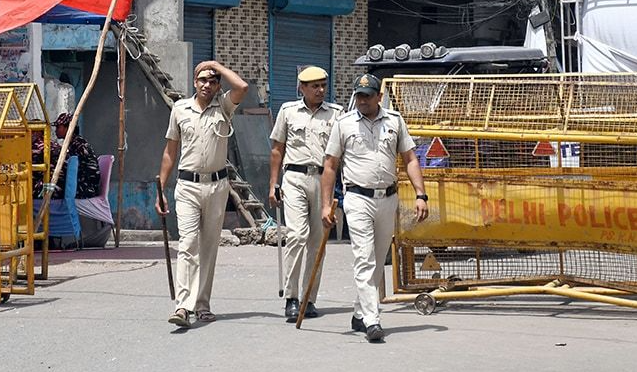
According to sources, Kumar reached Kerala House seeking access to a room reportedly booked in a friend’s name, but was told no room was vacant. The disagreement escalated, prompting the Resident Commissioner to call police and ask for his removal.
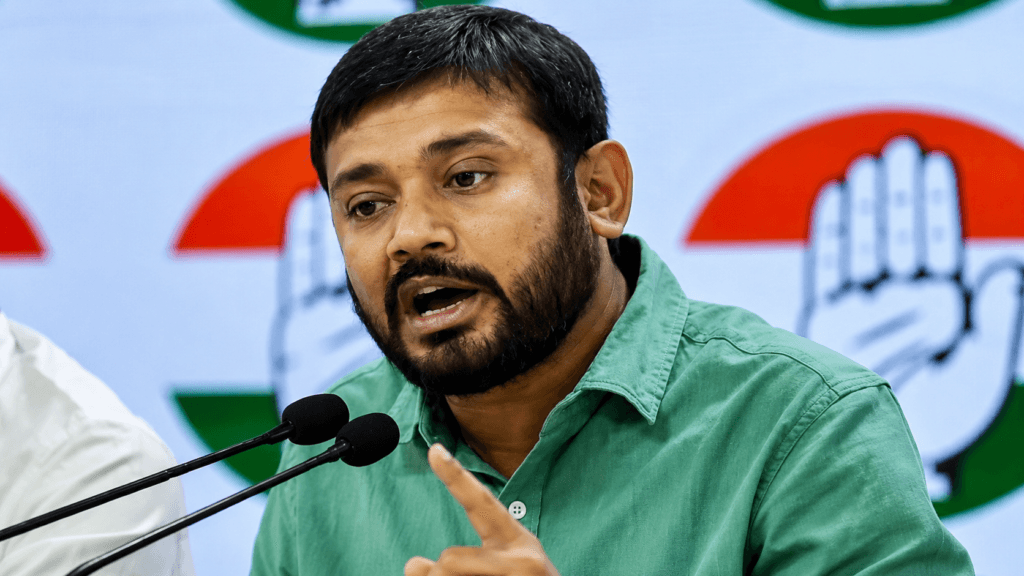
Congress leader Kanhaiya Kumar being taken away by Delhi Police from Kerala House after a dispute over room access and a complaint by the Resident Commissioner. This Image is only for illustrations.
Congress leader and AICC in-charge of the National Students’ Union of India (NSUI), Kanhaiya Kumar, was arrested by Delhi Police from the premises of Kerala House in Delhi on Friday, July 24, 2026. The arrest came after a complaint by Kerala’s Resident Commissioner, Puneet Kumar, following a dispute inside the government guest house on Jantar Mantar Road, where student protests have been taking place. Sources said the clash began after Kumar sought entry to a room reportedly booked in a friend’s name but was informed that no room was available. The situation then escalated into an altercation, leading to police intervention.
What Happened
The sequence appears to have started when Kanhaiya Kumar reached Kerala House and asked for access to a room that, according to a source, had been booked in the name of one of his friends. Officials at the premises reportedly told him that no room was vacant. He then approached the Resident Commissioner for clarification, which led to a verbal exchange.
The source said there was an altercation between the two, after which the Resident Commissioner called Delhi Police and asked them to remove Kumar from the premises. Police then arrested him based on the complaint. Since Kerala House is a state government facility in the national capital, any dispute inside the premises quickly becomes both a security issue and a political flashpoint. This story was also covered by The Hindu.
A source familiar with the matter said the authorities had told Kumar that no accommodation was available. That refusal, combined with the tense atmosphere around the ongoing protest zone nearby, appears to have intensified the confrontation. The exact legal sections under which he was detained have not been detailed in the material provided, but the police action was clearly triggered by the resident commissioner’s complaint.
Reported Statements
A source from Kerala House told The Hindu that Kumar came to the premises for a room booked in a friend’s name and was informed that no room was vacant. The source added that when Kumar sought clarification, “there was an altercation between both of them and the Resident Commissioner called the Delhi Police and asked them to remove Mr. Kumar from the premises.”
In similar coverage, Kumar was reported to have objected to how he was treated, allegedly asking whether the Kerala House was being run by the Governor and complaining about the conduct of the staff. Those remarks, if accurately reported, suggest that the dispute was not just about room allocation but also about perceived authority and access inside the facility.
Background
Kanhaiya Kumar is one of the most visible student-politics figures in the Congress ecosystem and currently serves as the AICC in charge of NSUI, the party’s student wing. That role keeps him closely linked to protests, student grievances and campus politics, making his presence at a protest-adjacent location politically significant. Kerala House itself has become a sensitive location because it sits on Jantar Mantar Road, where student demonstrations have been underway.
The location matters because Jantar Mantar has long been a symbolic protest site in Delhi. When a senior political figure is detained or removed from an area near an active protest zone, the incident often draws wider political attention. In this case, the dispute inside Kerala House has now become part of the larger student-protest narrative already dominating headlines.
Timeline
Friday, July 24, 2026: Kanhaiya Kumar arrives at Kerala House in Delhi.
He reportedly seeks access to a room booked in a friend’s name.
Kerala House authorities tell him no room is vacant.
A verbal altercation follows between Kumar and Resident Commissioner Puneet Kumar.
The Resident Commissioner calls Delhi Police and requests Kumar’s removal.
Delhi Police arrest Kumar from the premises.
The incident becomes public amid the ongoing student protests near Jantar Mantar.
Also Read: PM Modi Promises ‘More Strict Actions Against Paper Leaks’ Amid CJP Protests
Why This Matters
This matters because it combines politics, protest, and administrative authority in one high-visibility incident. When a senior Congress leader is arrested from a government guest house, the event is likely to be interpreted politically, whether or not the original dispute was simply about room access. In India’s current climate, even a small administrative argument can become a national talking point very fast, yeh issue kaafi important hai.
It also matters because Kerala House is not just any building; it is a state-run facility in Delhi, and disputes there can raise questions about protocol, access, and whether the rules were followed evenly. For students and protesters outside, the arrest may be seen as part of a broader pattern of tighter control around dissent. For the administration, it is likely to be framed as a matter of order and procedure.
India Angle
For Indian readers, this story matters because it sits at the intersection of protest politics and institutional discipline. In simple terms, log isko ek normal room dispute ki tarah nahi dekhenge, because Kanhaiya Kumar is a national political figure and the arrest happened right in the middle of a protest-heavy zone. That gives the story a much larger public meaning than a routine guest-house disagreement.
It also connects to the broader mood around student movements in India, especially at a time when protests are already under scrutiny. Any action involving a Congress student leader is likely to be read through a political lens, especially by supporters and critics alike. In Hinglish, seedhi baat yeh hai: jab opposition leader ko police le jaati hai, toh matter sirf ek building ka nahi rehta, it becomes a political signal.
Analysis
My reading is that the original issue may have been administrative, but the optics are what make it powerful. A room dispute alone would have been a small matter, but the arrest of a prominent Congress face changes the narrative completely. The political response will likely depend on whether the Congress frames this as unfair targeting or as an exaggerated reaction to a simple disagreement.
There is also a practical point here: public buildings and guest houses are expected to follow fixed procedures, and if documents or bookings were not in order, the authorities may feel justified. But if the complaint escalates too quickly into arrest, that can raise questions about proportionality. That balance between procedure and perception is where this story gets its real weight.
What Next
The immediate next step will depend on what the Delhi Police record in the case and whether Kanhaiya Kumar or his team challenge the arrest. If the matter is treated as a simple law-and-order issue, the story may settle quickly. If Congress raises it as political targeting, it could turn into a larger confrontation.
There is also a chance that Kerala House authorities issue a formal clarification on the booking, the room availability, and the sequence of events. That would be important because the public version of the incident may depend on whether the room was actually booked, whether documents were produced, and whether the altercation was initiated by one side or escalated by both.
For now, the incident is likely to remain in the news cycle because it involves a familiar opposition leader and a sensitive protest backdrop. The next 24 to 48 hours will determine whether this remains a local administrative dispute or grows into a bigger political flashpoint.
Conclusion
Kanhaiya Kumar’s arrest from Kerala House in Delhi has added a fresh political twist to an already tense protest atmosphere. What began as a dispute over room access reportedly escalated into an altercation with the Resident Commissioner, followed by a police complaint and Kumar’s detention. Since the incident happened near Jantar Mantar, where student protests are ongoing, it has quickly taken on wider political significance. The real story now lies in the official clarification, the police record, and how both Congress and Kerala House choose to frame the incident.
Written By A. Jack