Police said the car likely lost control at a sharp turn near the Nangal Dewat traffic signal on a slippery road before veering off and overturning inside the drain. The injured woman, who owns the car, is said to be a resident of Vasant Kunj.

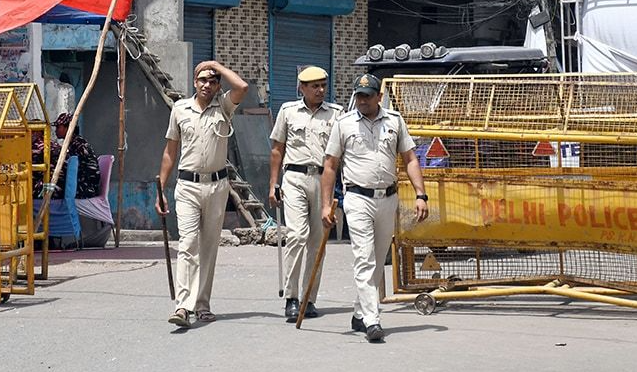
A car overturned inside a drain in Delhi’s Vasant Kunj area after the vehicle lost control at a sharp turn near Nangal Dewat. This Image is only for illustrations.
A tragic road accident in southwest Delhi’s Vasant Kunj on Friday morning claimed the life of a 20-year-old student, Yashvendra, who had come to India while pursuing higher education in the United States. Police said the car he was driving lost control at a sharp turn near the Nangal Dewat area and fell into a drain, turning turtle on impact. Yashvendra, the son of an Indian Army officer, was critically injured and later succumbed during treatment. A female friend travelling with him survived the crash but sustained injuries.
What Happened and How
According to police, the accident took place near the Nangal Dewat traffic signal, where the road is said to be slippery and the turn unusually sharp. A team from Vasant Kunj South Police Station found the car overturned inside the drain, indicating that the vehicle likely skidded before plunging off the road. The injured woman was travelling in the car that belonged to her, and police said the pair were heading to her residence when the crash occurred.
The preliminary version of events suggests a combination of speed, road conditions and the curve at the turning point may have played a role. While police have not publicly confirmed the exact speed of the car, the presence of a slippery surface and the sudden bend make the route particularly dangerous for drivers unfamiliar with the stretch. In accidents like this, even a brief loss of control can turn fatal within seconds. This story was also covered by NDTV.
A police officer said the car overturned after Yashvendra likely failed to negotiate the turn safely. That matches the physical evidence at the spot, where the vehicle was found upside down in the drain. The officer also noted that the road conditions may have contributed to the crash, though the investigation is still in its early stage.
Reported Statements
A police officer said, “Preliminary investigation revealed that Yashvendra and his friend, a resident of Vasant Kunj, were headed towards her residence when the accident took place.” The officer added that the car likely veered off the road after the driver lost control at a sharp turn near the traffic signal.
Another police source said the road near the accident site was slippery, which may have caused the vehicle to skid before falling into the drain. Officials have not yet indicated whether the car will be examined for any mechanical fault, but such checks are usually part of standard crash investigations. For now, the immediate focus remains on establishing the exact sequence of events and preserving any physical evidence from the site.
Background
Yashvendra had been studying in the United States and had returned to India for a visit, according to reports. He and the injured woman were said to be students of the same educational institution in the US, where they had become friends. That detail adds a deeply personal layer to the tragedy, because this was not just a road accident but the sudden loss of a young life that had strong academic and family ties.
The location also matters. Nangal Dewat and the surrounding Vasant Kunj belt are known for traffic movement, mixed road conditions and stretches where drains and uneven edges can pose risks if a vehicle loses balance. Delhi road accidents often become more dangerous at night or early morning when visibility, road grip and speed control can all become factors. In this case, police said the crash happened on Friday morning, when the road may still have been slick.
Timeline
Friday morning, July 25, 2026: Yashvendra and his friend set out in a car in southwest Delhi.
The vehicle approaches a sharp turn near Nangal Dewat traffic signal.
Police say the road appears slippery, and the car loses control.
The car veers off the road and falls into a drain.
A police team from Vasant Kunj South Police Station finds the overturned vehicle.
Yashvendra is critically injured and later dies during treatment.
His friend survives but suffers injuries.
Also Read: Congress leader Kanhaiya Kumar Arrested in Delhi After Kerala House Row
Why This Matters
This matters because it is another painful reminder of how quickly road conditions can turn deadly in a city like Delhi. A young student with an academic future, a defence family background and strong personal ties lost his life in seconds, and that is something that hits hard. Yeh issue kaafi important hai because road safety is not just about traffic rules; it is about saving young lives.
It also matters because such incidents often expose the risks hidden in ordinary stretches of road. A sharp turn, a slippery surface and an open drain may not sound dramatic on paper, but together they can become a lethal combination. For residents, students and daily commuters, the accident is a warning that local road design and maintenance can have life-or-death consequences.
India Angle
For Indian readers, this story feels especially personal because it involves a young man from an Army family and a student who had gone abroad for higher education. In Hinglish, seedhi baat yeh hai: ek chhota sa control loss bhi kitna bada tragedy bana sakta hai. Families across India, especially those with children studying in India or overseas, will relate to the shock of a routine drive ending in such loss.
The case also highlights a broader urban issue: dangerous road edges, open drains and poor surface conditions in parts of Delhi. For many commuters, especially young drivers and students, road safety often depends not just on skill but on whether the city’s roads are actually safe. That makes this incident relevant beyond one family and one accident.
Analysis
My opinion is that the biggest takeaway here is the fragility of road safety in urban India. A stretch of road can look manageable, yet a combination of speed, slippery conditions and poor infrastructure can make it extremely dangerous. If open drains or unsafe turns are left unattended, the city keeps inviting preventable tragedy.
There is also a sobering emotional angle. Yashvendra was not just a “victim in a road crash”; he was a son, a student and a friend travelling with someone he knew well. That makes the incident feel even more heartbreaking, because the loss is sudden, young and deeply personal. From an editorial perspective, this is the kind of story that readers remember because it combines grief, risk and a broader civic question.
What Next
The next step will likely be the police investigation into the crash site, the vehicle and the exact circumstances of the accident. Investigators may check whether road signage, drainage barriers and the slippery surface contributed to the fall and whether the car suffered any mechanical issue. If needed, they may also record statements from the injured friend and nearby witnesses.
There could also be attention on whether the accident spot needs safety improvements, such as better barricading, warning signs or drain protection. That would be the most practical outcome, because preventing a repeat is just as important as understanding what happened. For the family, though, the immediate future is about grief, treatment of the injured friend and the painful process of coming to terms with the loss.
Conclusion
The death of 20-year-old Yashvendra in a car crash near Nangal Dewat in Delhi is a heartbreaking reminder of how fragile life can be on unsafe roads. Police say the vehicle likely lost control at a sharp, slippery turn before plunging into a drain, leaving one young man dead and his friend injured. The fact that Yashvendra was the son of an Army officer and a student pursuing higher education in the US adds another layer of sorrow to the tragedy. Beyond the immediate loss, the incident raises a larger question about road safety in Delhi and the need to fix dangerous stretches before more lives are lost.
Written By A. Jack