With student protests growing across the country, the Prime Minister has promised “more strict” action against paper leaks and the draft Bill will be discussed in the Cabinet on Friday and tabled in Parliament during the Monsoon Session.
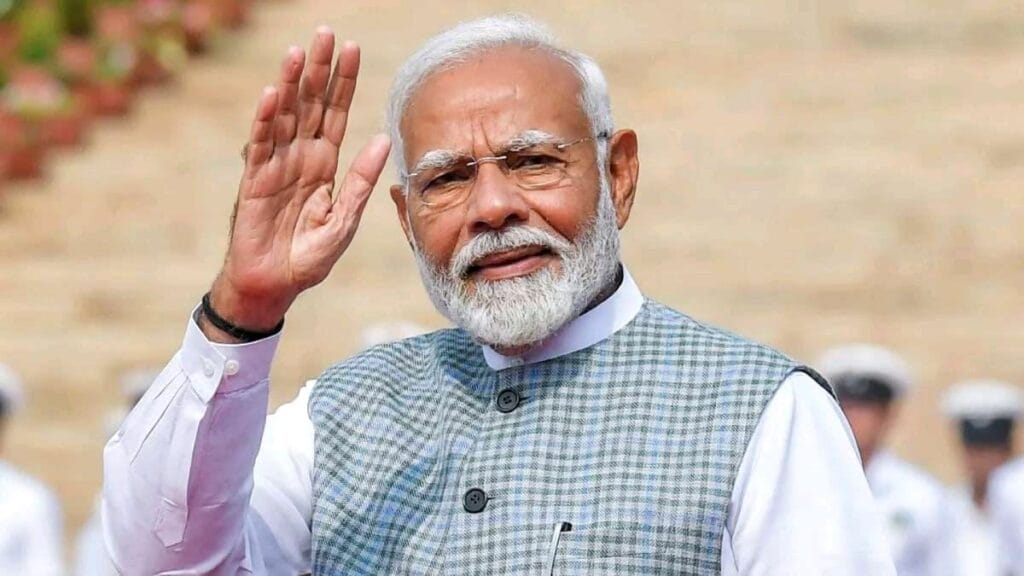
Prime Minister Narendra Modi addresses the nation in a self-recorded video. The image is only for illustrations.
PM Modi Vows Strict Action Against Paper Leaks: In a significant development amid the ongoing CJP-led protests over alleged NEET-UG 2026 paper leaks, Prime Minister Narendra Modi on Thursday (July 23, 2026) announced that the Union Cabinet will take up a draft Bill providing for Fast-Track Courts and stringent punishment for offenders.
In a self-recorded video shared on X, the PM said he has issued directions to departments to set up Fast-Track Courts, adding that the draft Bill will be discussed in Friday’s Cabinet and tabled in Parliament during the Monsoon Session. The announcement comes as student protests intensify across the country, with thousands gathering at Jantar Mantar in Delhi and other cities demanding accountability and the resignation of Union Education Minister Dharmendra Pradhan.
What Happened and Why
Prime Minister Narendra Modi, in his video message, said, “I have issued directions to departments to set up Fast-Track Courts.” He added that the departments worked hard and provided him with the draft Bill late at night, which will be discussed in the Cabinet on Friday. “After the advice of the Cabinet members, it will be given its final form. And from Monday, when the second week of the Parliament starts, we will try to get that bill passed in the Senate as soon as possible,” the PM said. This story was also covered by the Hindu.
The Prime Minister emphasised that paper leaks are a grave sin and that those who play with the future of the youth will not be spared. “It is very painful for lakhs of students and their families. That is why many steps have been taken in the last two and a half months. The culprits have been caught and are in jail,” he said. The PM also assured that strict action would be taken against “those who play with the future of the youth” of India, adding that the government is on a ‘war footing’ to deal with the crisis.
Detailed Breakdown of the Announcement
The Prime Minister’s announcement includes several key measures aimed at addressing the issue of exam paper leaks:
Fast-Track Courts: The draft Bill provides for the establishment of Fast-Track Courts to ensure swift justice in cases of exam paper leaks. These courts will be dedicated to handling such cases and will aim to deliver verdicts within a specified timeframe.
Stringent Punishment: The Bill includes provisions for stringent punishment for offenders involved in paper leaks, including longer prison terms and heavier fines. The exact nature of the punishment will be finalised after discussions in the Cabinet.
Systemic Reforms: The government is also working on strengthening the entire system of conducting examinations, including better security measures, improved monitoring mechanisms and enhanced coordination between the Centre and states.
Immediate Action: The PM highlighted that 13 people have already been arrested and sent to jail in connection with the NEET paper leak case and that a re-examination was successfully held to protect the future of NEET aspirants.
Quotes and Statements
In his video message, Prime Minister Narendra Modi said, “I assure the youth of our country, this government will not spare those who cheat and scam you.” He added, “Action is being taken to hold accountable those who jeopardise the future of our youth.” The PM also stressed that the strongest possible action should be taken against those responsible and urged state governments to work together to ensure that such paper leaks do not occur in the future.
Union Parliamentary Affairs Minister Kiren Rijiju, briefing journalists after an NDA meeting, said the prime minister told MPs that the government acted immediately after reports of the paper leak surfaced, and 13 people were arrested and sent to jail. “The government’s measures were aimed at preventing such incidents from happening again,” Rijiju said, adding that strict punishment for those involved would act as a deterrent and help protect the integrity of public examinations.
Background and Context
The NEET-UG 2026 paper leak controversy has sparked widespread protests across the country, with students demanding accountability and the resignation of Union Education Minister Dharmendra Pradhan. The CJP-led agitation at Jantar Mantar in Delhi has drawn thousands of supporters, including students, professionals and families who feel the education system is failing them.
The controversy began when reports surfaced of irregularities in the NEET-UG 2026 examination, including allegations of paper leaks and unfair advantages for some candidates. The government responded by arresting 13 accused and conducting a re-examination to protect the future of NEET aspirants. However, the protests have continued, with students demanding stronger action and systemic reforms.
Prime Minister Narendra Modi has previously addressed the issue, calling paper leaks a “ghor paap” (grave sin) and assuring strict action against those involved. In a Rajya Sabha speech in July 2024, the PM said, “I assure the youth of our country, this government will not spare those who cheat and scam you.” The government has also enacted a strong law against paper leaks, but the recent controversy has highlighted the need for further reforms.
Timeline
June 2026: Reports surface of irregularities in the NEET-UG 2026 examination, including allegations of paper leaks.
June 2026 (mid): Government arrests 13 accused and conducts re-examination to protect NEET aspirants.
July 2026: CJP-led protests begin at Jantar Mantar in Delhi, demanding accountability and resignation of the education minister.
July 20, 2026: PM Modi addresses NDA meeting, calls paper leaks a “ghor paap” and assures strict action.
July 23, 2026: PM Modi announces draft Bill for Fast-Track Courts and stringent punishment in video message.
July 24, 2026: Union Cabinet to discuss draft Bill.
July 27, 2026 (Monday): Bill to be tabled in Parliament during Monsoon Session.
Why This Matters
This matters because it addresses a critical issue that affects the future of millions of students across India. Exam paper leaks undermine the integrity of the education system and rob deserving candidates of their opportunities. The Prime Minister’s announcement of Fast-Track Courts and stringent punishment is a significant step toward ensuring swift justice and deterring future leaks. Yeh issue kaafi important hai because it touches on the trust that students and families place in the examination system.
It also matters because the ongoing protests have highlighted the growing anger and frustration among students, who feel that their voices are not being heard. The government’s response, including the arrest of accused and the conduct of a re-examination, has been seen as a positive step, but the protests have continuedthe accusedating that more needs to be done to address the underlying issues.
For families across India, the issue is personal. Many have children or relatives who are studying for competitive exams and facing the uncertainty of paper leaks. That makes the story relatable and emotionally powerful. It is not just about one examination; it is about the future of millions of young people and the integrity of the education system.
India Angle
For Indian readers, this story matters because it touches on the right to education, the accountability of the government and the future of the youth. In Hinglish, seedhi baat yeh hai: jab exam paper leak hota hai, toh students ka kya hoga?
The case also highlights the growing youth movement in India demanding education reform and government accountability. The CJP protest has become a rallying point for the broader youth movement, which has drawn widespread support across the country. The government’s response, including the announcement of Fast-Track Courts and stringent punishment, is a significant step toward addressing the protesters’ demands.
For families across India, the issue is personal. Many have children or relatives who are studying for competitive exams and facing the uncertainty of paper leaks. That makes the protest relatable and emotionally powerful. It is not just about one activist; it is about the safety of young people who are exercising their right to protest.
Analysis
My opinion is that the Prime Minister’s announcement of Fast-Track Courts and stringent punishment is a significant step toward addressing the issue of exam paper leaks. The establishment of Fast-Track Courts will ensure swift justice, while the stringent punishment will act as a deterrent to future leaks. However, the effectiveness of these measures will depend on their implementation and the willingness of the government to enforce them.
I also think the case highlights the importance of transparency and accountability in the examination system. The government’s response, including the arrest of accused and the conduct of a re-examination, has been seen as a positive step, but the protests have continued, indicating that more needs to be done to addressthe accusedderlying issues.
From an editorial perspective, this is a strong story because it has a clear central event, human interest angle and broader education implications. It is not just about one examination; it is about the future of millions of young people and the integrity of the education system. The challenge is to explain the story in a way that is both factual and accessible to readers who want to understand the big picture.
What Next
The next step will depend on the outcome of the Union Cabinet’s discussion on the draft Bill and whether it is tabled in Parliament during the Monsoon Session. If the Bill is passed, it will lead to the establishment of Fast-Track Courts and the implementation of stringent punishment for offenders involved in exam paper leaks.
There may also be further legal challenges or appeals related to the charges against the accused or the state’s handling of the protest. The CJP movement is likely to continue its protests, and the safety of protesters will remain a key issue. The government’s response to the protest will also be closely watched.
For now, the situation remains fluid. The Prime Minister’s announcement of Fast-Track Courts and stringent punishment is a significant development, but the underlying issues that led to the protest remain unresolved. Whether the government responds to the CJP’s demands or the movement gains further momentum will determine the next phase of the protest.
Conclusion
Prime Minister Narendra Modi’s announcement of a draft Bill providing for Fast-Track Courts and stringent punishment for offenders involved in exam paper leaks marks a significant development in the ongoing CJP-led protests over alleged NEET-UG 2026 irregularities. The Prime Minister’s video message, in which he assured that “more strict” action would be taken against paper leaks, comes as student protests intensify across the country.
The draft Bill will be discussed in Friday’s Cabinet and tabled in Parliament during the Monsoon Session, with the aim of ensuring swift justice and deterring future leaks. Whether the Bill is passed and implemented effectively will determine the next phase of the government’s response to the issue and the impact on the integrity of the education system.
Written By A. Jack