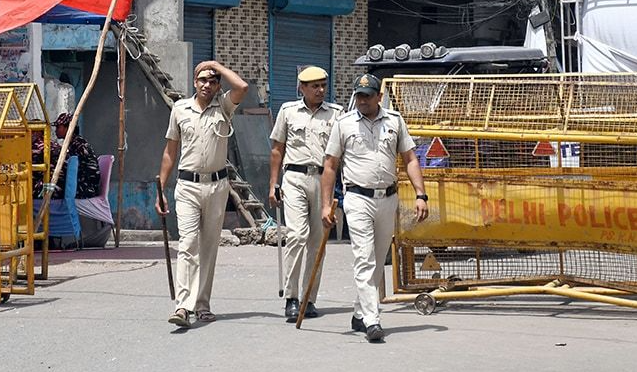
A newly married woman, identified as Aakriti Sutar (28), allegedly fell from a third floor building in South Delhi’s Lodhi Colony on Saturday evening. Her family has accused her husband and in-laws of murder and dowry harassment. The case has added to growing concern over dowry-related deaths in India and police are investigating all angles.
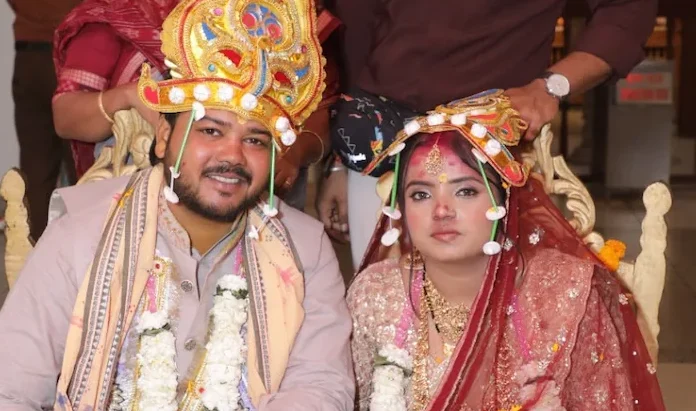
Newlywed Aakriti Sutar was found critically injured following an alleged fall from the third floor. Image Credit: NDTV
A mystery death in South Delhi’s Lodhi Colony has triggered serious allegations of dowry harassment and murder after 28-year-old Aakriti Sutar was found critically injured near the NDMC Flats at Palika Kunj on Saturday evening. She was taken to AIIMS Trauma Centre, where doctors declared her dead. While police say they are examining all possible angles, the victim’s family has strongly rejected the possibility of suicide and alleged that she was killed by her husband and in-laws.
The case has drawn attention not only because of the circumstances of Aakriti’s death, but also because it comes just weeks after marriage. Police said she had married Arastu Sikka on April 24, and the two had known each other for years before tying the knot. Her family’s allegations of a Rs 20 lakh dowry demand have now turned the matter into a major criminal investigation. Yeh case kaafi sensitive hai because it touches on domestic violence, dowry pressure and the safety of married women in India.
What Happened
According to police, Aakriti was found injured around 9 pm on Saturday by residents who called authorities. She had allegedly fallen from the third floor of the NDMC Flats complex in Lodhi Colony, which is about 10 km away from her marital home. The exact reason she was at that location is not yet known, and police have said that every aspect of the incident is being verified. NDTV has covered the full story.
What makes the case more disturbing is the condition in which she was found. Police said there was no blood on the ground, but her body had bruises and other injuries. That detail may become important in the forensic investigation because it can help determine whether the fall was the only cause of injury or whether something else happened before or after she hit the ground.
A police officer said proceedings under Section 196 of the Bharatiya Nagarik Suraksha Sanhita, 2023, have been initiated and the Sub Divisional Magistrate has been informed for inquest proceedings. A postmortem examination is also underway. In plain terms, the authorities are still gathering facts and have not yet concluded whether this was suicide, accident or homicide.
Family’s Allegations
Aakriti’s family has taken a firm stand. They say she was murdered and that her husband Arastu Sikka and his family had been pressuring her for dowry. According to them, the in-laws demanded Rs 20 lakh and allegedly subjected her to repeated harassment and threats after the marriage.
That allegation changes the nature of the case significantly. In India, dowry-related cruelty is not just a family dispute; it is a serious criminal matter. If the allegations are backed by evidence, the case could move from a suspicious death to a prosecution for dowry harassment and murder. But for now, these are still allegations, and police will need to verify them through witness statements, digital evidence, postmortem findings and financial records if any.
The family has also rejected the suicide theory suggested by the husband’s side. In many such cases, competing narratives emerge early, and investigators must reconstruct the final hours carefully. That is why every call record, message, location detail and injury pattern matters. The story is tragic, but the truth has to be established through evidence.
Background on the Marriage
Police said Aakriti Sutar worked as a Sales Executive with a private company in Chhatarpur. She had married Arastu Sikka on April 24, and the two reportedly knew each other for around eight years. A relative said it was a love marriage, and Aakriti had first become friends with Arastu’s sister, Agastika Sikka, before developing a relationship with Arastu.
That background makes the case even more complicated emotionally. Love marriages are often seen as partnerships built on trust and choice, which is why allegations of dowry harassment in such a relationship can appear especially shocking. It also suggests that the relationship had a long history before marriage, which may become relevant if investigators look for signs of conflict or changes after the wedding.
Aarastu Sikka is currently unemployed, while his father is reportedly a government servant. According to the family account in the report, he did not clearly disclose details about his work. These details may seem small now, but in dowry-related cases, family status, financial dependence and social expectations often become part of the larger picture.
Timeline
April 24, 2026: Aakriti Sutar marries Arastu Sikka.
After marriage: Her family alleges that dowry demands and harassment begin.
Saturday evening: Aakriti is found critically injured after an alleged fall from the third floor of NDMC Flats at Palika Kunj, Lodhi Colony.
Around 9 pm: Residents call the police after finding her lying on the ground.
Soon after: She is taken to AIIMS Trauma Centre and declared dead.
Following the incident: Police initiate inquest proceedings and begin verifying all angles.
Current stage: Postmortem and investigation are ongoing.
Why This Matters
This matters because dowry deaths remain one of the most troubling forms of violence against women in India. Even in 2026, the issue continues to surface in urban areas, not just rural ones. Yeh issue kaafi important hai because it shows that education, city life and modern jobs do not automatically eliminate old social abuses.
It also matters because newlywed deaths are especially alarming. When a woman dies within weeks of marriage, families and police immediately look at the possibility of cruelty, pressure and abuse. These cases are emotionally loaded, but they also carry legal urgency. A prompt and transparent investigation is essential so that the truth is not buried under speculation.
For society, this story is a reminder that domestic spaces are not always safe spaces. If dowry pressure or emotional abuse exists behind closed doors, it can remain hidden until a tragedy forces it into the public eye. That is why such cases demand serious attention and not just short-lived outrage.
Also Read: Delhi Man Allegedly Kills Wife Over Phone Call Suspicion and Dies by Suicide After Consuming Poison
India Angle
For Indian readers, this case will feel painfully familiar because dowry harassment continues to cast a long shadow across families, even in big cities like Delhi. In Hinglish, seedhi baat yeh hai: shaadi ke baad agar ladki par paise ka pressure ho, toh problem sirf ghar tak limited nahi rehti — yeh ek crime ban sakta hai. That is why this case resonates so strongly.
It also reflects a wider urban truth. Delhi has high awareness, access to police and legal systems, yet cases like this still emerge. That means the issue is not only about law, but about attitude, family pressure and power imbalance inside marriage. A modern city can still carry old social burdens.
The case will likely prompt public debate about how quickly relatives, neighbours and police should respond when a newly married woman reports harassment or when warning signs appear. In many Indian cases, the signs are there, but action comes too late. That pattern needs to change.
Analysis
My opinion is that the most important editorial line here is caution. The family’s allegations are serious, but the investigation is still ongoing. The right approach is to present the facts clearly while keeping a firm distinction between what is alleged and what has been established. That is especially important in a case that could have criminal and emotional consequences.
At the same time, the details already raise legitimate questions. A woman found injured after an alleged fall, no blood at the scene, bruises on the body, and a family alleging long-running harassment — all of that makes this more than a routine accidental death. Police will need to examine whether the injury pattern is consistent with a fall and whether there is evidence of prior abuse or coercion.
I also think the case matters because it reveals how dowry-related cruelty can persist in educated, urban, and seemingly modern households. A love marriage does not automatically protect someone from abuse. Power imbalance can still exist, especially when families, money and social expectations enter the picture. That is the uncomfortable truth this case brings back into focus.
What Next
The next step is the postmortem report, which will be crucial in understanding the cause and nature of injuries. Police will also speak to family members, neighbours and anyone who may have seen Aakriti before her death. If there are call records, messages or previous complaints, those may become important evidence.
Investigators are likely to look closely at the relationship timeline, the circumstances under which she went to the NDMC Flats, and whether there were signs of violence or coercion before the incident. If the dowry allegations are supported, the case may expand into a more serious criminal proceeding.
The husband and in-laws will also likely face deeper questioning if the inquiry finds inconsistencies. Until then, the case remains open and under verification. In a matter this sensitive, speed matters, but so does accuracy.
Conclusion
Aakriti Sutar’s death in Lodhi Colony has become a deeply disturbing case of suspected dowry harassment and possible murder, just two months after her wedding. Her family says she was killed and that there is no question of suicide, while police continue to examine every angle. As the investigation moves forward, the case has already become another painful reminder that dowry cruelty remains a live issue in India, even in metropolitan areas. The coming days will be crucial in determining whether this was a tragic fall, a suicide, or something far more serious.
Written By A. Jack