Rail movement was stopped on one of the most important intercity routes in Maharashtra following a landslip near Thakurwadi and another between Khandala and Monkey Hill. Safety concerns led to suspension and several cancellations, Central Railway officials said.
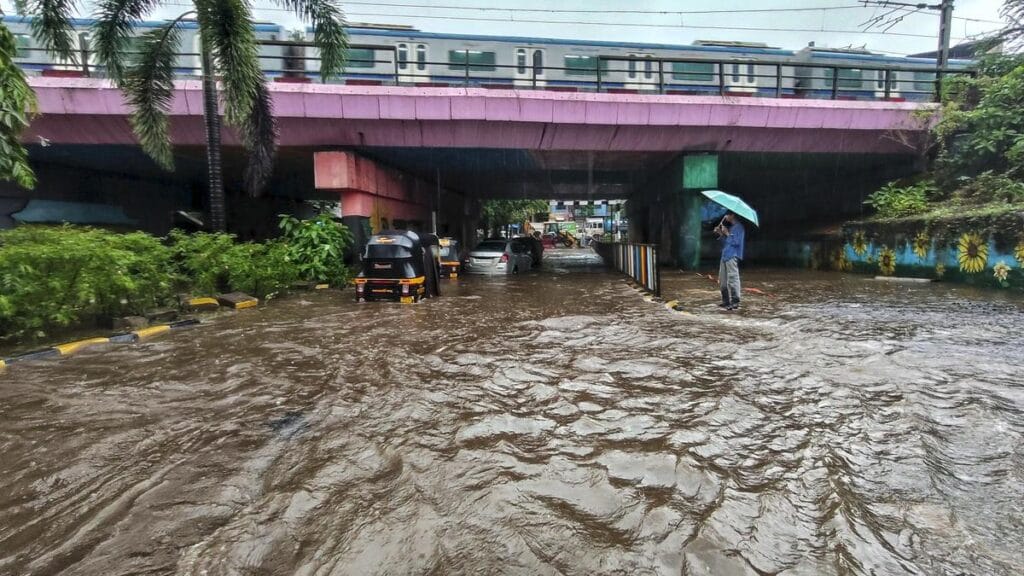
Heavy monsoon rains suspended Mumbai-Pune train services. Image Credit: The Hindu
Heavy rainfall triggered landslides in the Karjat-Lonavala Bhor Ghat section early Monday, forcing Central Railway to suspend train services on the Mumbai-Pune route. According to officials, one landslide occurred near Thakurwadi, while another was reported on the middle line between Khandala and Monkey Hill around 3.05 am. The disruptions led to the cancellation of multiple trains, including the CSMT-Pune Indrayani Express, Intercity Express, Deccan Express, Deccan Queen, Pragati Express and Dhule Express.
This is a major blow for daily and long-distance travellers who depend on the Mumbai-Pune rail line, one of Maharashtra’s most important transport corridors. The Bhor Ghat section is especially vulnerable during the monsoon because of its steep terrain and exposure to rain-triggered slope failures. Yeh disruption kaafi serious hai because it affects thousands of passengers and shows how quickly weather can shut down critical infrastructure.
What Happened
The immediate cause was clear: heavy rain loosened soil and triggered landslides in the ghat section. The first landslide near Thakurwadi was followed by another on the middle line between Khandala and Monkey Hill, making it unsafe for train movement. When landslides occur on a railway stretch like this, the risk is not limited to train delay alone. Falling debris can damage tracks, block lines and create unsafe conditions for both passengers and railway staff. The Hindu has covered the full story.
Central Railway’s Chief Public Relations Officer Swapnil Nila confirmed the incidents to PTI. The decision to suspend services was taken as a safety measure, which is standard practice in such conditions. Railways cannot take chances in ghat sections because even a small collapse can lead to derailment or other serious incidents.
The cancellations included some of the most popular and heavily used trains on the route. That means the impact was not limited to one segment or one train. It spread across the broader Mumbai-Pune travel network, affecting commuters, office travellers, students and tourists.
Why the Bhor Ghat Section Is Vulnerable
The Karjat-Lonavala stretch, especially the Bhor Ghat section, is known for steep slopes, rocky terrain and monsoon-related disruptions. Every year, this corridor faces some level of weather-related risk because the soil and rock formations become unstable when rainfall is intense and continuous.
This is why landslides in this region are not treated as routine delays. They are treated as safety emergencies. Rail engineers and officials must inspect the track, clear the debris and verify whether the slope remains stable before resuming operations. If the line is reopened too early, another landslide could happen or hidden structural damage could put trains at risk.
The monsoon also creates a chain reaction. Once one part of the route is compromised, trains have to be held back, rerouted or cancelled. That causes congestion, timetable collapse and passenger frustration across the entire network. In practical terms, one landslide can disrupt an entire day of operations.
Trains Affected
The disruption led to the cancellation of several important services, including:
CSMT-Pune Indrayani Express.
Intercity Express.
Deccan Express.
Deccan Queen.
Pragati Express.
Dhule Express.
These are not minor services. They are key links for regular travellers between Mumbai and Pune, as well as for people connecting to other regional destinations. The cancellation of the Deccan Queen in particular will be felt strongly by frequent commuters because it is one of the route’s best-known trains.
For many passengers, train travel is the preferred option because it is relatively reliable, affordable and comfortable compared with road travel during monsoon conditions. When the railway line is disrupted, people are often pushed toward road transport, which may already be slowed by rain, traffic and low visibility. That adds another layer of stress.
Official Response and Safety Measures
Railway authorities quickly assessed the situation and suspended services to prevent any unsafe movement through the landslide-hit stretch. That is the right call in a ghat section, where the priority has to be safety rather than speed. A railway line can always reopen later, but a preventable accident can have lasting consequences.
Once a landslide occurs, the railway team usually has to inspect the track, remove the debris and check the stability of the surrounding slope. They may also monitor whether more material is likely to fall from above, especially if the rain continues. In monsoon weather, clearance is not just about one visible patch of debris; it is about confirming that the whole section is stable enough for operations.
This is a good example of why rail systems must remain flexible during the rainy season. The immediate inconvenience to passengers is real, but so is the danger of moving trains through unstable terrain. That balance often defines monsoon railway management in India.
Background and Context
The Mumbai-Pune route is one of Maharashtra’s most important rail corridors. It connects two major urban centres and handles both daily commuter traffic and intercity travel. Because of that, even a short suspension has a disproportionate effect on passengers and logistics.
The Bhor Ghat section has long been a known trouble spot during the monsoon. Landslides, falling stones and waterlogged patches are recurring issues in ghat terrain. While railways often put preventive mechanisms in place, extreme rainfall can still overwhelm them. This makes the region a regular test case for monsoon readiness.
Such disruptions are also part of a bigger Indian transport story. Every year, monsoon weather exposes infrastructure weaknesses across the country, from highways and flyovers to rail tracks and drainage systems. The Mumbai-Pune suspension is one more reminder that weather resilience is now as important as route capacity.
Timeline
Early Monday, July 6, 2026: Heavy rainfall triggers a landslide near Thakurwadi in the Karjat-Lonavala Bhor Ghat section.
Around 3.05 am: Another landslide is reported on the middle line between Khandala and Monkey Hill.
Soon after: Central Railway suspends train movement on the Mumbai-Pune route.
Following the disruption: Several trains, including Deccan Queen and Indrayani Express, are cancelled.
After assessment: Railway teams begin safety checks and clearance work in the affected section.
Also Read: Mumbai Rains Trigger Road Collapse in Bhandup as Vehicle Falls Into Excavation Pit
Why This Matters
This matters because the Mumbai-Pune rail line is more than a local route. It is a lifeline for business, education, tourism and intercity movement in Maharashtra. When it stops, the consequences ripple far beyond the tracks. Yeh issue kaafi important hai because one landslide can disrupt an entire region’s travel rhythm.
It also matters because it reflects the broader challenge of operating infrastructure in a monsoon-prone country. India’s transport systems must deal with weather that is increasingly unpredictable and often intense. That means rail safety, slope monitoring and emergency response need to stay ahead of the rain, not just react after the damage is done.
For passengers, the immediate impact is frustration and delay. For railways, the larger issue is preparedness. If repeated monsoon disruptions keep hitting the same stretch, the conversation may need to shift from temporary response to long-term slope stabilisation and weather protection measures.
India Angle
For Indian readers, this story is highly relatable because monsoon rail disruptions are part of life in many parts of the country. In Hinglish, seedhi baat yeh hai: jab baarish zyada ho aur ghat section already risky ho, toh trains chalana simple nahi hota. The Mumbai-Pune route is especially important because it serves a huge number of people every day.
This disruption also shows how dependent Indian commuters are on a few key transport corridors. When one major route stops, the alternative options become crowded and stressful. Road travel during heavy rain is not always a comfortable fallback, so rail closures create a genuine travel problem.
The story is also relevant for infrastructure policy in India. Better drainage, slope monitoring and preventive maintenance are not just engineering details; they are public convenience issues. Passengers notice reliability first, but reliability begins with safety work that happens long before the train arrives.
Analysis
My opinion is that the railway’s decision to suspend services was the correct one. In a landslide-prone ghat section, speed should never come before safety. A cancelled train is inconvenient; a derailment or serious incident would be far worse. That practical reality should always guide operational decisions during the monsoon.
I also think the repeated vulnerability of the Bhor Ghat section underlines a larger infrastructure challenge. If this corridor remains one of the most sensitive during heavy rain every year, then more investment in slope management and early warning systems may be necessary. Temporary clearance work solves today’s problem, but long-term resilience solves next year’s.
The cancellation list also tells its own story. When trains like Deccan Queen and Indrayani Express are affected, this is not just a small operational hiccup. It is a major route disruption with wide commuter fallout. That makes the story important for both routine travellers and readers who follow transport updates closely.
What Next
The next step will be restoration work in the landslide-hit section, including debris removal and detailed inspection of the track and slope. Railway teams will need to confirm that the area is safe before services can restart. That may take time if rains continue or if more debris is likely to fall.
Passengers should expect more schedule changes, possible delays and updated advisories as the situation develops. The railway may resume operations in phases once conditions improve and the track is cleared.
Longer term, this incident may trigger renewed discussion about monsoon preparedness on the Mumbai-Pune route. If similar disruptions keep recurring, authorities may need to consider stronger preventive measures in the Bhor Ghat corridor.
Conclusion
The suspension of Mumbai-Pune train services after landslides in the Karjat-Lonavala section is a reminder of how vulnerable key transport corridors become during the monsoon. Heavy rain triggered landslides near Thakurwadi and between Khandala and Monkey Hill, forcing Central Railway to cancel several major trains for safety reasons. While the disruption is inconvenient for passengers, the decision was necessary. In a steep and rain-hit ghat section, caution is not a delay — it is a protection.
Written By A. Jack