A social media post shaming a passenger sleeping on a bench at Delhi airport has evoked a huge online backlash, with users calling the writer rude and unfair. The incident has sparked a broader discussion on civic sense, airport etiquette and how travelers on long layovers make use of public spaces.
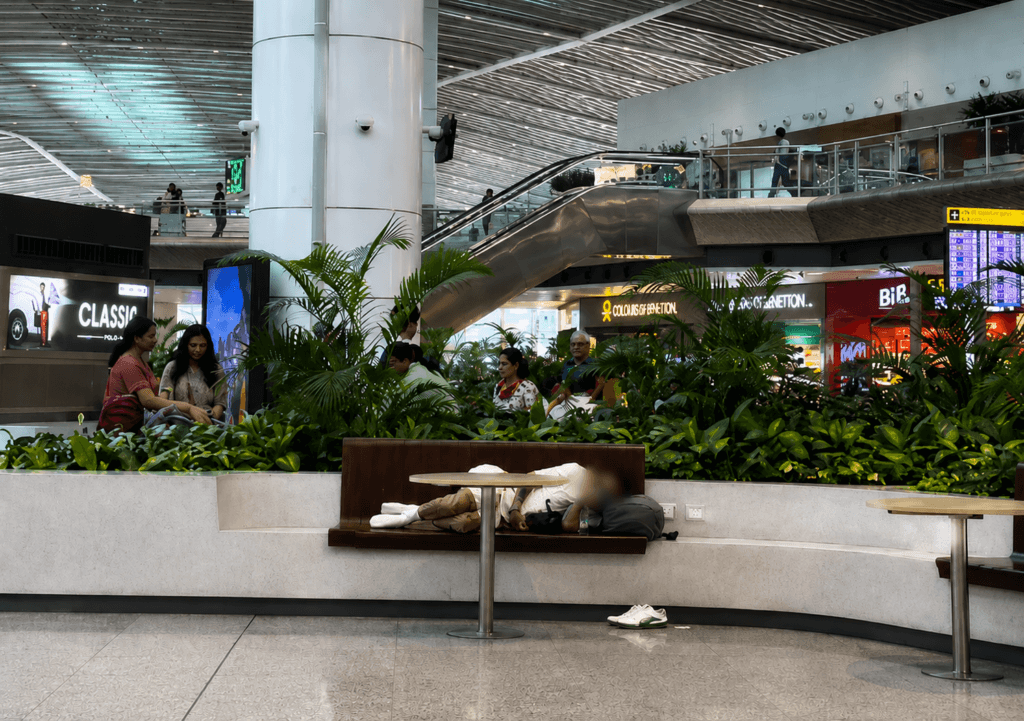
A Delhi airport bench became the center of an online debate after a passenger was criticized for sleeping there during a layover.
A Delhi airport scene has unexpectedly turned into a social media controversy after one man publicly criticized a passenger for sleeping on a bench and described the behavior as “uncivilized,” “pathetic,” and “shameful.” The post, which showed a traveller resting with a cabin bag as a pillow, quickly drew strong reactions online.
Instead of agreeing with the criticism, many social media users defended the passenger and said sleeping at airports is normal, especially during long layovers and transit waits. What began as a complaint about public behavior has now become a larger debate about entitlement, empathy, and how Indians perceive civic sense in shared spaces. Yeh issue kaafi important hai because it reflects not just one airport moment but also a much bigger conversation about public manners and social judgment in India.
What Happened
The controversy began when a user identified as Pulkit Sharma shared a picture on X showing a passenger asleep on a Delhi airport bench. In his post, Sharma described the traveler’s behavior in harsh terms and argued that “no government could bring civic sense to Indians.” He also compared local travelers to monkeys and demanded stronger policing at the airport. NDTV has covered the full story.
The language of the post drew immediate criticism. Many users felt that the passenger had done nothing wrong and was simply resting in a public area during what may have been a long layover or transit wait. In airports around the world, sleeping on benches, floors, carpets, and terminal seating is common. Travelers often spend hours waiting for connecting flights, delayed departures, or early morning boarding times.
That is why the online reaction did not go in Sharma’s favor. Instead of applauding the civic-sense complaint, users pushed back and said the post itself was unnecessary, insulting, and disconnected from normal travel behavior. In short, the internet did not see the passenger as the problem. It saw the public shaming as the real issue.
Why the Post Backfired
The post appears to have backfired because it crossed a line between criticism and humiliation. A complaint about public behavior can be legitimate, but when it uses aggressive language and demeaning comparisons, people often respond by defending the person being targeted.
Here, the sleeping passenger was not shown creating disorder, littering, arguing, or blocking movement. The photo simply showed someone resting with a bag for a pillow. For many users, that made the criticism look exaggerated. Airports are not ordinary public parks, but they are still transit spaces where travelers spend long hours and often need to rest.
Another reason for the backlash is that the post seemed to generalize about Indians as a whole. Comments like “no government can bring civic sense to Indians” tend to provoke anger because they frame a single moment as evidence of a national character flaw. That kind of blanket statement rarely wins support, especially online, where people are quick to call out hypocrisy or overreaction.
Public Reaction
The responses on social media were overwhelmingly in favor of the passenger. Users pointed out that sleeping in airports is a global practice and not something unusual. One person noted that travelers sleep on benches and carpets all over the world, while another said the passenger had simply removed his shoes and was minding his own business.
Several users also argued that long layovers can make resting necessary. If someone is waiting four or five hours between flights, sitting upright the entire time is unrealistic. Airports increasingly provide better seating, rest zones, and sleeping pods, but not every passenger has access to them. In those situations, travellers make do with what is available.
The broader tone of the response was clear: many people felt Sharma was policing a harmless act while ignoring the realities of travel. A few users even turned the criticism back on him, saying the real problem was unnecessary online judgment. That shift in public sentiment shows how quickly social media can punish what it sees as pretentious moralizing.
Background
This is not the first time airport behavior has sparked debate online. In India and elsewhere, travelers have frequently been criticized for putting feet on seats, sleeping on floors, eating messily, or occupying multiple seats. Sometimes those complaints are valid, especially when behavior is clearly disruptive. But not every act of resting in public should be treated as a civic offense.
Delhi Airport, like other major airports, handles a huge volume of travelers every day. Many are passengers on connecting flights, overnight journeys, or delayed departures. For them, the terminal becomes a temporary living space. That means some level of resting, stretching out, and sleeping is inevitable.
The debate also touches on a familiar Indian social pattern: public shaming often appears more quickly than public empathy. A person sitting awkwardly, sleeping in a waiting area, or eating in a slightly messy way can become an instant target. But in many cases, the behavior reflects fatigue, not disrespect. That distinction matters a lot.
Timeline
The photo is taken: A passenger is seen sleeping on a bench at Delhi airport.
Social media post appears: Pulkit Sharma publicly criticizes the traveler and uses harsh language.
Post gains traction: Users begin responding strongly.
Backlash builds: Most replies defend the passenger and call sleeping in airports normal.
Conversation expands: The issue becomes a broader debate on civic sense, travel culture, and online shaming.
Also Read: Delhi University Professor Found Murdered in Locked Vasundhara Enclave Flat
Why This Matters
This matters because it shows how quickly social media can turn a small public moment into a national argument. A sleeping passenger at an airport should normally be a routine sight. But once the image was posted with insulting commentary, it became a debate about manners, class, entitlement, and public judgment. Yeh issue kaafi important hai because it reminds us that online criticism can easily become disproportionate.
It also matters because airport behavior is part of a larger discussion about how Indian public spaces are used. Airports are cleaner and more organized than many other transit areas, but they still serve tired passengers who need a place to sit, wait, and rest. If every normal act is treated as a sign of uncivilized behavior, then the idea of civic sense loses meaning.
There is also a human side to this. Traveling is exhausting. Not every passenger has lounge access, money for a hotel, or the comfort of a business-class itinerary. For many people, a bench is not a luxury choice; it is the only practical option. Recognizing that reality is part of basic empathy.
India Angle
The India angle here is especially strong because discussions around civic sense in India often become moral lectures rather than practical conversations. People are quick to complain about public behavior but less willing to consider context. In this case, the passenger was simply sleeping, likely because he was tired or in transit.
In Hinglish, seedhi baat yeh hai: agar koi airport bench par so raha hai aur traffic block nahi kar raha, toh usse “monkey” kehna overreaction hai. This incident shows how Indians on social media are increasingly rejecting harsh, elitist judgments about ordinary behavior. It also reflects a growing awareness that not every public inconvenience is a sign of bad character.
For Indian readers, the story is a reminder that public spaces are shared spaces. There is a difference between disrespect and necessity. Sleeping while waiting for a flight is generally the latter, not the former.
Analysis
My opinion is that the backlash was predictable because the original post sounded more judgmental than constructive. If someone wants to talk about public manners, they need to focus on actual nuisance, not normal fatigue. Airports are designed for transit, not comfort in the hotel sense. People sleep there because flights are delayed, arrivals are early, and waiting periods are long. Public shaming in such situations often reveals more about the critic’s attitude than the passenger’s conduct. The lesson here is simple: if a behavior is harmless and common across the world, then outrage rarely helps. In fact, it usually makes the critic look out of touch.
What Next
The most likely next step is that the controversy will fade as quickly as it started, but the debate it triggered will remain relevant. Social media users may continue using the post as an example of unnecessary moral policing. If anything, it could make people more cautious about posting candid photos of tired travelers and turning them into public lectures.
At a broader level, airport authorities may continue improving seating, waiting areas, and rest facilities for transit passengers. That is a practical solution to a real travel need. The more comfort airports provide, the less likely it is that passengers will have to improvise with benches and bags.
The incident may also encourage more thoughtful conversation online about what really counts as civic sense. If public criticism is to be meaningful, it needs to be fair, proportionate, and respectful.
Conclusion
The Delhi airport bench controversy is less about one sleeping passenger and more about the way people use social media to judge everyday behavior. A man’s harsh criticism of a resting traveller backfired because most users saw the act as completely normal and harmless.
At the heart of the debate is a simple question: when does criticism become unnecessary shaming? In this case, the public answered clearly. Resting during a layover is not a moral failure. The louder lesson is that empathy is often more useful than outrage. Yeh issue kaafi important hai because it reminds us that public spaces are shared, travel is tiring, and not every tired passenger deserves a lecture.
Written By A. Jack