A major emergency response was launched in central Delhi after a fire broke out in an electric panel and rapidly spread to temporary labour rooms. Safety concerns have been reignited by another fire incident in a slum in the capital, as officials attempt to assess the extent of the damage.
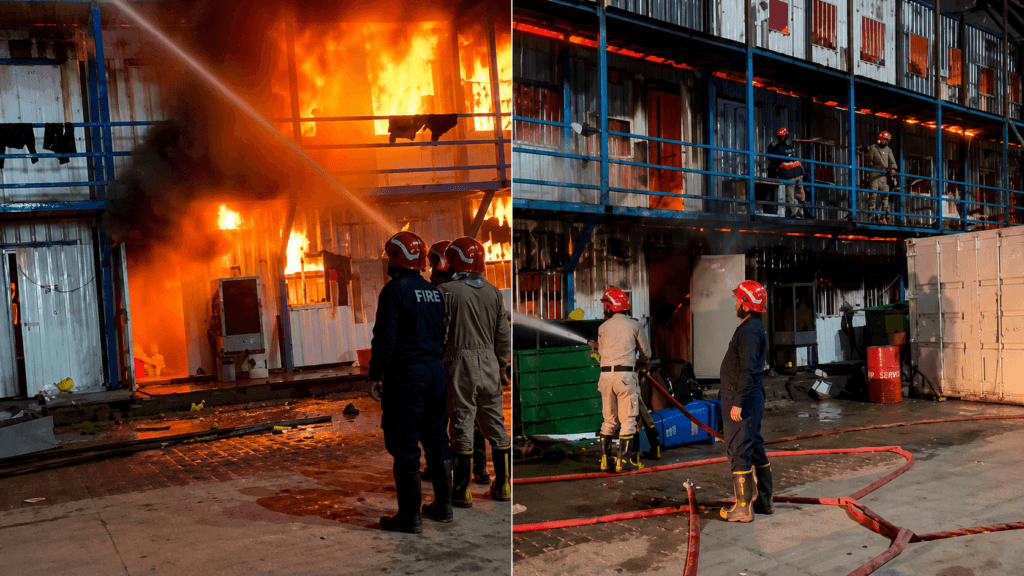
Firefighters work to contain a major blaze in labor slums near Udyog Bhawan in Delhi. Image Credit: NDTV
A massive fire broke out in labor slums near Udyog Bhawan in Delhi on Wednesday morning, sending 20 fire engines to the scene as firefighters raced to stop the flames from spreading further. According to officials, the blaze started after an electric panel caught fire and then moved into temporary labor rooms in the area. The Delhi Fire Service said the fire was surrounded by 5:10 am and an “under control” message was issued by 5:30 am, with no casualties or injuries reported so far.
How the Fire Spread
The fire appears to have spread quickly because the area was made up of temporary structures, which are often more vulnerable to heat, sparks and electrical faults. Once the electric panel caught fire, the flames likely found easy fuel in the surrounding materials, allowing the blaze to grow before firefighters could fully contain it. In places like labour settlements, this risk is higher because makeshift housing often uses lightweight, flammable materials and has limited fire barriers. NDTV has covered the full story.
Delhi Fire Service officials said around 20 fire tenders were rushed to the site, showing that the incident was treated as a serious emergency from the beginning. The speed of response likely prevented the fire from becoming even more destructive. Still, the fact that a fire in a temporary settlement near such a high-security and high-traffic zone could escalate so quickly is a reminder of how fragile these areas can be.
A fire safety expert would usually point out that electric panel failures are among the most common ignition sources in dense informal settlements. When wiring is exposed, overloaded or poorly maintained, a single fault can lead to a chain reaction. Yeh issue kaafi important hai because in crowded spaces, even a small spark can turn into a large blaze within minutes.
Official Response
Officials said firefighters managed to surround the fire at 5:10 am and then declared it under control at 5:30 am. That rapid containment suggests a coordinated response, but it also shows how fast the situation had to be handled. The Delhi Fire Service did not immediately report any deaths or injuries, which is an important relief in a fire of this scale.
Authorities are now assessing the extent of the damage. That will determine how many temporary rooms were affected, whether belongings or food supplies were destroyed and whether the families living there will need emergency relocation. The next few hours will matter a lot for those who were living in the slum cluster.
Background and Context
This latest fire comes just days after another major blaze in a slum cluster behind Maulana Azad Medical College in the Balmiki Basti area of Takia Kale Khan in Delhi. In that incident, the fire was reported late on Monday night, and the number of fire tenders eventually rose to 24 as flames spread through slums and storage structures containing plywood and wooden material. Officials said that fire, too, was brought under control without reports of casualties so far.
Taken together, the two incidents highlight a disturbing pattern in Delhi’s vulnerable settlements. Slum clusters and labor camps often have narrow lanes, close-packed structures and ad hoc electricity connections, all of which can turn a local fire into a large emergency. The presence of stored materials such as plywood, wood and other combustible goods adds even more risk.
Timeline
Early Wednesday morning: A fire breaks out in labor slums near Udyog Bhawan after an electric panel catches fire.
Shortly after ignition: Flames spread to temporary labour rooms in the area.
Around 5:10 am: Firefighters manage to surround the blaze.
Around 5:30 am: The fire is declared under control.
At least 20 fire tenders: Are deployed to the scene.
No casualties reported: Officials say there are no confirmed injuries or deaths so far.
Earlier this week: Another large fire breaks out in slums behind Maulana Azad Medical College, requiring 24 fire vehicles.
Why This Matters
This matters because fire in densely packed labour settlements can destroy homes, documents, belongings and livelihoods in a matter of minutes. For families living there, even if no one is hurt, the damage can be life-changing. A fire like this can mean lost wages, temporary displacement and uncertainty about where to go next.
It also matters because such incidents expose the vulnerability of informal housing near the heart of the capital. Delhi is one of India’s most important cities, and when repeated slum fires happen in and around central areas, it raises uncomfortable questions about safety standards, electrical infrastructure and emergency preparedness. The issue is not just about firefighting — it is about prevention.
There is also a public policy angle. If labour settlements continue to face electrical faults and fire risks, authorities may need to look at wiring upgrades, fire access lanes and stricter monitoring of temporary structures. Without those steps, the same pattern can repeat again and again. In simple terms, yeh sirf ek fire nahi hai; yeh warning sign bhi hai.
India Angle
For Indian readers, this story connects to a much larger issue that appears in many cities: the safety of informal settlements. Across India, labour colonies and slum clusters often house the workers who build, clean, cook and maintain urban life. Yet these communities are frequently the least protected when disaster strikes.
In Hinglish, seedhi baat yeh hai: jo log city ko chalate hain, unki safety pe sabse kam attention milti hai. That is why this incident should matter beyond Delhi. Cities like Mumbai, Bengaluru, Chennai and Kolkata also have similar settlement patterns, and fire risk in such areas is a nationwide concern.
The response also shows the importance of a strong municipal emergency network. Delhi Fire Service’s quick mobilization likely prevented fatalities, but prevention is always better than response. Indian cities need better wiring checks, safer temporary housing and clearer evacuation pathways if they want to reduce these dangerous fires.
Reported Statements
Officials said the fire started in an electric panel before spreading to nearby temporary labour rooms. That detail is important because it points to an electrical trigger rather than, for example, an open flame or cooking accident.
A fire official would likely say that the dense layout of the settlement made the fire harder to manage. In clusters like these, access for tenders can be difficult and flames can move from one structure to another with surprising speed. That is why so many vehicles were needed so quickly.
The fact that no casualties have been reported so far is the most reassuring part of the update. But even without injuries, the human impact can still be severe if homes, savings and basic possessions are lost.
Analysis
My opinion is that the most striking part of this incident is not only the size of the response but also the speed with which it escalated. Twenty fire tenders in the early morning is a major deployment, and it reflects the serious risk posed by temporary housing near central Delhi. The repeat pattern with the Maulana Azad Medical College area fire adds weight to the issue.
From a governance perspective, the story suggests that fire safety in informal settlements needs more proactive planning. Waiting until a panel catches fire is too late. Regular inspections, safer electrical connections and clearer emergency access could make a huge difference.
What Next
The next step will be the damage assessment. Officials will need to determine how many temporary units were affected, whether the electric fault has been fully isolated and what support is needed for the displaced families. If the settlement is still liveable, restoration work may begin quickly; if not, temporary shelter arrangements may be required.
Authorities may also examine whether the electrical panel fault was caused by overload, poor maintenance or unsafe wiring. That investigation will matter because it could influence future fire prevention measures in similar settlements. If a pattern is found, Delhi may need broader action plans for labour colonies and slum clusters.
For residents, the immediate concern is recovery. For the city, the bigger question is whether these repeated fire incidents will lead to real safety upgrades or just another temporary emergency response.
Conclusion
The fire near Udyog Bhawan in Delhi was brought under control quickly, but it has again exposed how vulnerable labour slums can be when an electric fault turns into a large blaze. With 20 fire tenders on the scene and no casualties reported so far, the emergency response appears to have prevented a tragedy from becoming worse. Still, the incident adds to growing concern over repeated slum fires in the capital and the urgent need for better fire safety in informal settlements.
Written By A. Jack