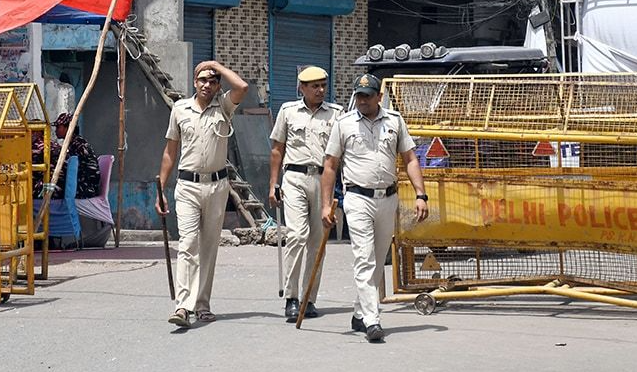
A tragic drainage accident in north Delhi’s Mukundpur area has led to the death of a child and immediate action against a Junior Engineer in the Irrigation and Flood Control Department. Delhi Chief Minister Rekha Gupta called the incident “extremely distressing and alarming” and ordered strict accountability.
An open drain in north Delhi’s Mukundpur area after a child died in a fatal accident, triggering immediate departmental action and safety checks across Delhi.
Delhi Child Dies
A child died on Tuesday after falling into an open drain in Mukundpur, in north Delhi’s Bhalswa Dairy area, officials said. The incident has triggered swift administrative action, including the removal of a contractual Junior Engineer from the Irrigation and Flood Control Department with immediate effect.
The tragedy has once again exposed the dangers posed by uncovered drains in urban neighbourhoods, especially where children live and play nearby. Delhi Chief Minister Rekha Gupta described the incident as “extremely distressing and alarming,” while promising strict action and wider safety inspections across the city.
What Happened
According to officials, the child fell into the open drain in Mukundpur on Tuesday and could not be saved. The exact circumstances of how the child reached the drain were not detailed in the initial information, but the incident was serious enough to prompt immediate departmental action. NDTV has covered the full story.
The Irrigation and Flood Control Department removed the Junior Engineer responsible for the area from service the same day. Authorities have also directed all departments in Delhi to identify open drains and other hazardous spots and fix them without delay. This means the government is treating the case not just as a local tragedy but as part of a larger safety failure.
In simple terms, this was not just an accident. It was the result of an unsafe public space where a hazard remained open long enough to become deadly. That is why the response has been so fast and so sharp.
Why The Incident Happened
While the exact technical reason for the drain remaining open has not been publicly explained in the provided details, the broader cause is clear: negligence in urban safety maintenance. Open drains are among the most preventable hazards in city infrastructure, yet they continue to cause deaths when proper covers, warning barriers, or inspection systems are missing.
Such incidents usually happen when routine monitoring breaks down, when maintenance work is delayed, or when responsibility is unclear between departments and contractors. In many Indian cities, this becomes a recurring problem because even small lapses can turn into life-threatening risks in crowded residential zones.
The Delhi government’s response suggests that officials believe this case points to a systemic gap rather than a one-off mistake. That is why a citywide safety check has now been ordered to map dangerous spots and carry out urgent repairs.
CM’s Statement
Chief Minister Rekha Gupta expressed deep sorrow over the child’s death and said the incident was “extremely distressing and alarming.” She also said that such negligence is unacceptable under any circumstances.
Her remarks matter because they set the tone for the government’s response. When the chief minister publicly calls an incident unacceptable, it usually signals that departmental accountability will be pursued quickly. Gupta also assured the family that the government stands with them and said preventing such incidents would be the “true tribute” to the child’s memory.
That statement reflects both grief and a warning. It says the government does not want this to be treated as just another file case or routine compensation matter. Instead, the emphasis is on fixing the hazard and assigning responsibility.
Background And Context
Open drains have been a long-standing civic safety issue in Delhi and other Indian cities. They are often overlooked because they blend into the urban landscape, but they can be deadly for children, pedestrians and even motorists during rain or low visibility. When drains are not properly covered or fenced, one small slip can become a fatal accident.
This is not the first such case in the capital. Officials have acknowledged that similar incidents have been reported in recent years, including a recent death in north Delhi where a young child fell into an open drain near her home. Residents in those cases reportedly said complaints had been made earlier but not acted upon.
That recurring pattern is exactly what makes this story so troubling. Every time a similar death happens, the city is reminded that basic civic safety is still a work in progress. Yeh issue kaafi important hai because these are not unavoidable disasters; they are usually preventable failures.
Timeline
Tuesday: A child dies after falling into an open drain in Mukundpur, Bhalswa Dairy, north Delhi.
Same day: The Irrigation and Flood Control Department removes a contractual Junior Engineer with immediate effect.
Shortly after: Delhi departments are told to identify open drains and other hazard points.
Following the incident: A citywide safety check is ordered to locate and repair risky spots.
Also Read: Delhi Traffic Challans Get Stricter: New Digital Rules
Why This Matters
This matters because public infrastructure is supposed to protect people, not endanger them. When a child dies because of an open drain, it raises serious questions about maintenance, inspection, and the speed of official response. Such deaths are not only personal tragedies but also signs that urban safety systems are failing.
It also matters because children are among the most vulnerable members of any neighbourhood. If a drain is left uncovered in a residential area, the danger is not abstract — it is immediate and real. For parents, this creates fear. For the government, it creates a responsibility to act before another life is lost.
There is also a larger governance lesson here. A city cannot call itself safe if basic hazards remain unaddressed in plain sight. Public trust depends on visible action, not just statements after the damage is done.
India Angle
This story will resonate strongly across India because open drains, broken footpaths and unguarded civic hazards are common in many towns and cities. People often complain about these problems for months before anything changes, and that delay can cost lives.
For Indian readers, especially families in congested urban areas, the message is simple: civic negligence can be deadly. In many localities, children walk or play near drains, construction sites, and roadside pits every day. A tragic accident in Delhi becomes a warning for the rest of the country too. In simple Hinglish, safety ka basic kaam hi sabse important hai, aur usme lapse bahut heavy pad sakta hai.
Analysis
My analysis is that the most important part of this story is not just the sackings or official statements but the repeat nature of the problem. A single open drain can be fixed quickly, but recurring deaths suggest deeper issues in inspection, contractor monitoring and accountability. If the city does not build a stronger prevention system, the same kind of tragedy may happen again elsewhere.
The CM’s sharp response is politically important too, because it shows the administration wants to project a zero-tolerance stance on civic negligence. But public confidence will ultimately depend on follow-through: covered drains, verified repairs, and clear monitoring of risk zones.
What Next
The next steps will likely include a detailed safety audit of open drains and other dangerous spots across Delhi. Departments have already been told to identify hazards and repair them immediately, so residents should expect more inspections and possible emergency work in affected areas.
There may also be internal accountability measures within the Irrigation and Flood Control Department, especially if negligence is found at the local level. The family of the deceased child may also seek further action, compensation or legal follow-up depending on how the case progresses.
The real test, however, will be whether this tragedy leads to permanent fixes or only temporary attention. If the city treats this as a serious wake-up call, it could prevent future deaths. If not, the same cycle of outrage and regret may repeat again.
Conclusion
The death of a child after falling into an open drain in north Delhi is a heartbreaking reminder that civic negligence can have fatal consequences. The immediate sacking of a Junior Engineer and the order for a citywide safety check show that the government has moved quickly, but the deeper issue is how such hazards were allowed to remain open in the first place.
Rekha Gupta’s strong reaction reflects the seriousness of the moment, but the true measure of response will be seen in the repairs, inspections and accountability that follow. For Delhi, and for cities across India, the lesson is clear: basic safety is not a minor administrative task — it is a matter of life and death.
Written By A. Jack