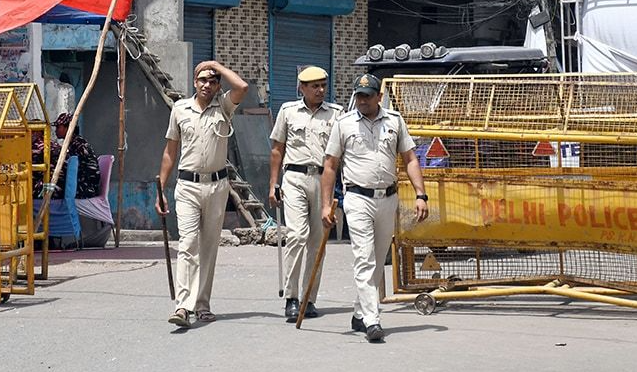
NAREDCO says Delhi’s fixed November-February construction restrictions could damage cash flows, employment and housing supply, while the government maintains that predictable curbs are necessary to control winter air pollution.
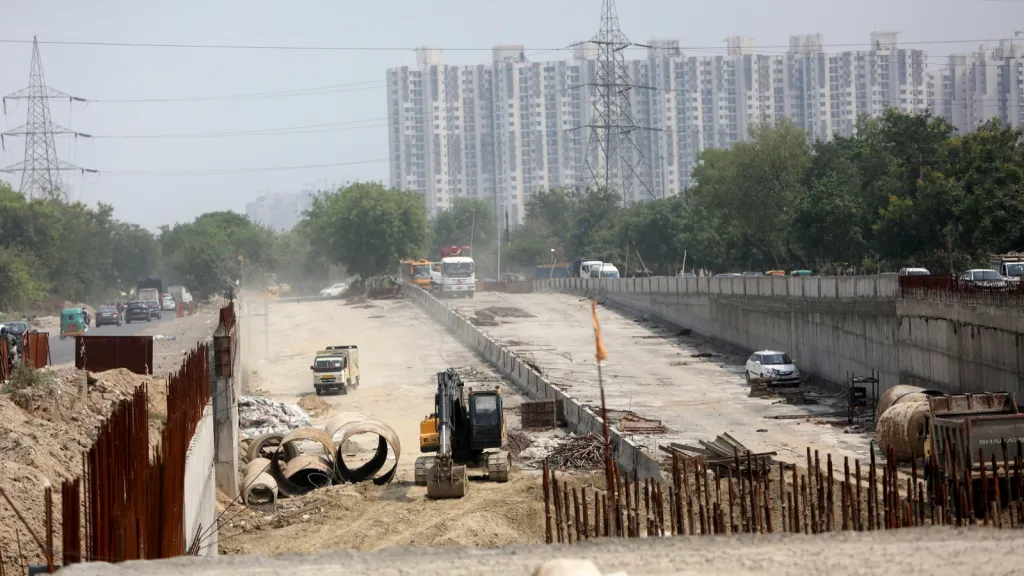
This image is only for illustrations. Image Credit: Indian Express
Delhi’s new winter pollution framework has triggered a direct confrontation between the government’s air-quality strategy and the construction industry’s financial concerns. Private developers have asked Chief Minister Rekha Gupta to reconsider the construction curbs scheduled to take effect every year from November 1 to February 28, arguing that a blanket shutdown could hurt the real estate sector and place a heavy burden on contractors, workers and small businesses.
The Delhi government notified its winter action plan last month as a permanent framework to address seasonal air pollution. Unlike the earlier system, in which construction restrictions were linked to the prevailing Air Quality Index (AQI), the new measures will apply automatically during the winter period. The plan includes construction curbs, restrictions on vehicles carrying construction materials, staggered office timings and other pollution-control measures.
In a letter to Chief Minister Rekha Gupta on Tuesday, NAREDCO Delhi president Harsh Vardhan Bansal said the construction industry supported “all scientific, practical and effective measures aimed at improving Delhi’s air quality”. However, he argued that a prolonged halt would create significant financial and operational difficulties.
What the winter construction rules say
Under the government’s plan, demolition and open civil construction activities that generate dust will be prohibited from November 1 to January 31. Essential public infrastructure projects will be exempted, while finishing work, plumbing and electrical installations inside construction sites will be allowed, provided dust-control measures are followed. This story was also covered by The IndianExpress.
The restrictions become stricter between December 10 and January 20, which is generally treated as the peak period for Delhi’s winter pollution. During that window, only government projects considered indispensable for public utility or emergencies will be permitted to continue. Vehicles carrying construction materials will also be barred from entering Delhi.
The broader winter framework will remain in force every year from November 1 to February 28. It also includes measures related to vehicle use, parking charges, office attendance and pollution monitoring. The government’s stated objective is to create a predictable annual mechanism instead of issuing emergency restrictions only after pollution levels become severe.
Why NAREDCO is opposing a blanket ban
NAREDCO has not opposed pollution control in principle. Instead, the industry body has questioned the decision to impose the same restrictions every winter regardless of the actual AQI, weather conditions or pollution contribution from individual sites.
Under the previous approach, restrictions were generally activated in response to worsening pollution levels and government orders. The new system will impose restrictions on a fixed calendar basis, even if air quality is relatively better in a particular period.
NAREDCO says this could create several problems:
Developers will continue paying interest on loans and EMIs for heavy machinery.
Equipment lease rentals and security expenses will continue during shutdowns.
Workers and contractors may lose wages during the restricted period.
Small and medium-sized businesses may face severe cash-flow pressure.
Delays could increase project costs and push back delivery deadlines.
Subcontractors and material suppliers may be unable to recover outstanding payments.
Harsh Vardhan Bansal said repeated annual shutdowns during the peak construction season could push MSMEs, contractors, subcontractors and vendors into financial distress.
The concern is particularly serious for projects that have fixed completion schedules. A delay of several months can affect financing costs, regulatory approvals, customer handovers and contractual obligations. In large developments, even a partial stoppage can create a chain reaction across dozens of linked businesses.
Yeh issue kaafi important hai because the debate is not simply about developers versus pollution control. It also involves workers’ income, housing costs, infrastructure delivery and the city’s long-term development.
Industry seeks consultation, not exemption.
NAREDCO’s letter reportedly asks the Delhi government to hold consultations with developers, contractors, labour representatives, environmental experts and civic agencies before implementing the restrictions.
The industry body says a consultation could help the government design a more targeted system. Instead of a total ban, authorities could consider site-specific rules based on pollution risk, construction technology, dust-control compliance and real-time AQI conditions.
Possible alternatives include:
Allowing compliant sites to continue limited work.
Permitting construction when air quality remains within specified limits.
Introducing staggered work schedules rather than full shutdowns.
Creating special permissions for projects with strong dust-control systems.
Using real-time monitoring to identify non-compliant sites.
Allowing essential private housing or public utility works to continue under supervision.
NAREDCO’s position is that an activity-based and compliance-based model would punish violators without halting the entire industry.
Why the government introduced fixed restrictions
Delhi experiences a sharp deterioration in air quality during winter because of several combined factors. Low wind speeds and temperature inversion trap pollutants close to the ground. Vehicle emissions, industrial pollution, road dust, waste burning and regional crop-residue burning add to the problem.
Construction and demolition contribute to particulate pollution, particularly when sites do not cover materials, use water sprinklers or prevent dust from spreading onto public roads. The government’s plan is intended to reduce one major source of dust during the months when Delhi’s atmosphere is least able to disperse pollutants.
A permanent calendar-based policy also gives authorities a predictable enforcement structure. Government departments, developers and residents know in advance when restrictions will apply, rather than waiting for emergency orders.
However, the government’s critics say predictability alone does not prove effectiveness. They argue that the policy should be assessed using measurable pollution data and should distinguish between compliant and non-compliant sites.
Statements and competing concerns
NAREDCO Delhi president Harsh Vardhan Bansal said the industry supports practical and effective measures to improve air quality but warned that prolonged restrictions would impose a “heavy financial burden” on developers and businesses.
The government has presented the winter plan as a comprehensive effort to tackle Delhi’s recurring pollution crisis. The framework includes construction restrictions along with measures such as staggered office timings, work-from-home arrangements, parking-cost changes and tighter vehicle-related controls.
The central disagreement is therefore about proportionality. The government wants a broad, predictable framework that can operate before pollution reaches emergency levels. The industry wants restrictions to be based on scientific monitoring and the actual pollution contribution of each project.
Background and context
Delhi has historically relied on graded, pollution-linked measures to control emissions. Construction bans were generally triggered or intensified under the Graded Response Action Plan when pollution levels entered severe or emergency categories.
The new policy changes that approach by making several measures automatic from November 1 to February 28. According to the reported framework, demolition and dust-generating outdoor construction will be prohibited from November 1 to January 31, while the most stringent restrictions will operate from December 10 to January 20.
The move reflects the government’s frustration with repeated winter pollution emergencies. Delhi frequently becomes one of the world’s most polluted capital cities during the winter months, prompting school closures, traffic restrictions and emergency construction bans.
At the same time, the real estate sector has become a major source of employment and economic activity. Construction supports architects, engineers, transporters, labourers, suppliers, equipment operators, security staff and small contractors. Any long shutdown therefore affects more people than developers alone.
Timeline
July 1, 2026: The Delhi government notifies a permanent winter pollution framework.
November 1: Annual construction and pollution restrictions are scheduled to begin.
November 1 to January 31: Demolition and dust-generating open construction activities to remain prohibited, except for essential public infrastructure.
December 10 to January 20: Stricter phase; only indispensable government projects and emergency public-utility works to continue.
February 28: Winter framework scheduled to end each year.
August 4: NAREDCO Delhi writes to Chief Minister Rekha Gupta seeking review and stakeholder consultations.
Also Read: Petrol Bomb Attack at Shakib Al Hasan’s House After Sheikh Hasina’s Delhi Presser
Why This Matters
This matters because Delhi must improve air quality without creating unintended economic damage. A policy that reduces dust but causes widespread unemployment, project delays and financial distress may require adjustment to remain sustainable.
It also matters for homebuyers. If construction schedules are repeatedly delayed, project completion dates could shift, raising costs for buyers who are paying rent and home-loan instalments simultaneously. Delays may also reduce the availability of new housing and place further pressure on property prices.
For workers, the consequences can be immediate. Daily-wage labourers may lose several weeks of income during the winter restriction period, while migrant workers could be forced to return to their villages or seek employment elsewhere.
For the environment, however, the construction industry cannot ignore its responsibilities. If sites continue to release dust in a city already facing dangerous pollution, residents bear the health cost. In simple Hinglish, pollution control bhi zaroori hai, lekin policy practical aur fair honi chahiye.
India angle
For Indian readers, Delhi’s construction debate is relevant because several major cities face the same conflict between infrastructure growth and air quality. Mumbai, Bengaluru, Hyderabad, Kolkata and cities across the National Capital Region also struggle with dust from construction, road works and demolition.
The issue is especially important for rapidly urbanising India. The country needs housing, roads, metro systems and commercial infrastructure, but it also needs cleaner air and healthier cities. A policy that treats these goals as mutually exclusive may not work in the long term.
Delhi’s approach could become a model for other state governments. If the fixed winter restrictions reduce pollution without causing major economic disruption, other cities may adopt similar annual frameworks. If the plan causes severe project delays without a measurable improvement in air quality, governments may prefer more targeted, AQI-based measures.
Analysis
In my view, the government is right to target dust-generating construction during Delhi’s most polluted months. But a blanket prohibition may be too blunt if it does not account for local conditions, project compliance or daily AQI levels.
A better system could combine automatic baseline restrictions with real-time exemptions. Projects that meet strict dust-control standards could be allowed to continue limited work, while non-compliant sites face immediate suspension and penalties. This would reward responsible developers instead of treating every project in the same manner.
The government should also publish data showing how much construction contributes to Delhi’s seasonal pollution compared with vehicles, road dust, industry and regional emissions. Without such data, the industry’s claim that the policy lacks scientific backing will continue to gain attention.
What Next
The immediate next step will be the Delhi government’s response to NAREDCO’s letter. Officials may invite the industry body for consultations or defend the plan as necessary for public health.
The government could consider clarifying the definition of “essential” projects, establishing a permission process for compliant sites and creating a mechanism for exemptions during days when pollution levels are relatively low.
NAREDCO and other industry bodies may also seek legal or administrative intervention if the restrictions remain unchanged. They could submit data on employment losses, project costs and the number of workers likely to be affected.
Before November 1, authorities will also need to issue detailed enforcement guidelines. Developers will want clarity on penalties, permitted finishing work, material transport, worker safety and the documentation required for exemptions.
Long term, Delhi may need to invest in cleaner construction technologies, prefabricated components, enclosed material handling and better dust-monitoring systems. These measures can reduce dependence on seasonal shutdowns.
Conclusion
NAREDCO’s appeal to Chief Minister Rekha Gupta to reconsider Delhi’s blanket winter construction restrictions has opened an important debate about how the capital should fight air pollution. The government’s fixed November-February framework offers predictability and seeks to prevent construction dust before pollution reaches dangerous levels. However, the industry warns that prolonged shutdowns could hurt developers, contractors, workers and MSMEs.
The best solution may lie between the two positions. Delhi needs strict action against dust-generating and non-compliant sites, but it should also allow responsible projects to continue under transparent, scientifically defined conditions.
As the November deadline approaches, stakeholder consultation will be crucial. The success of the policy will ultimately depend not only on whether construction is stopped but also on whether Delhi’s air actually becomes cleaner without sacrificing livelihoods and housing delivery.
Written By A. Jack