Shakib Al Hasan’s family residence in Magura was targeted around 8:45 pm, shortly after Sheikh Hasina announced her plan to return to Bangladesh in December; no injuries were reported and police launched an investigation.
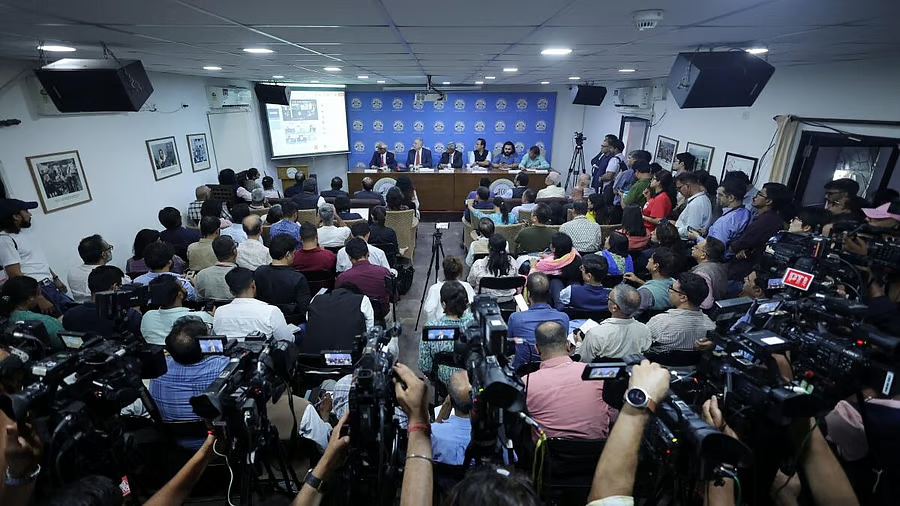
This image is only for illustration. Image Credit: Deccan Herald
The ancestral home of former Bangladesh cricket captain Shakib Al Hasan was attacked in Magura on Wednesday evening, hours after the celebrated cricketer appeared virtually at a press conference alongside former Prime Minister Sheikh Hasina. The incident occurred at around 8:45 pm local time in the Keshabmor area of Magura town, where unidentified attackers allegedly threw bricks and stones, damaged windows and attempted to set fire to the property.
The Awami League described the incident as a petrol bomb attack and linked it directly to Shakib’s participation in the Delhi event. However, local police have offered a more cautious account, saying preliminary findings suggested that petrol had been poured on the house’s iron gate before it was set alight. Police said they had not found evidence confirming that a petrol bomb was used. No injuries or deaths were reported, and security personnel were deployed after the incident.
The attack came shortly after Sheikh Hasina announced that she plans to return to Bangladesh in December despite facing a death sentence in absentia. Her appearance with Awami League figures, including Shakib Al Hasan, has further sharpened the political divide surrounding the former ruling party.
What happened in Magura?
According to reports, a group of unidentified people attacked Shakib Al Hasan’s ancestral home in the Keshabmor area of Magura. Several windowpanes were reportedly broken and parts of the residence were vandalised. Police said the attackers also attempted to ignite the property.
The Awami League alleged that a petrol bomb had been thrown at the house. In a statement, the party described the incident as the “cost” of attending an Awami League press conference and accused political opponents of creating an atmosphere of fear.
Police have not confirmed that account. Magura Sadar Police Station Officer-in-Charge Abdullah Al Mamun said preliminary findings indicated petrol had been poured on the house’s iron gate and set on fire. Authorities were still investigating who carried out the attack, whether the incident was politically motivated and whether it was directly connected to Shakib’s virtual appearance alongside Hasina. This story was also covered by NDTV.
This distinction matters. A petrol bomb attack would indicate the use of an improvised incendiary weapon, while an attempt to set fire to a gate involves a different pattern of criminal conduct. Until forensic investigators examine the scene, the exact nature of the attack remains unconfirmed.
Why Shakib’s appearance became significant
Shakib Al Hasan appeared virtually at the Foreign Correspondents’ Club of South Asia event in New Delhi alongside Sheikh Hasina and other Awami League leaders. His participation was politically significant because he is not only one of Bangladesh’s most famous sporting figures but also a former Awami League lawmaker from Magura.
During the event, Hasina said she intended to return to Bangladesh in December, even if she faced arrest, imprisonment or death. “My return is not about power, it’s about putting Bangladesh back on track of development, secularism and prosperity,” she said.
She also stated that she was aware of the risks awaiting her. “I know, they may put me in jail or kill me,” Hasina said, adding that she had decided to return home and be with her people.
The timing of the attack on Shakib’s family home has therefore raised suspicion among Awami League supporters that it was intended as a warning to party members and public figures associated with Hasina. However, that remains an allegation. Investigators have yet to establish a direct link between the Delhi event and the Magura attack.
Yeh issue kaafi important hai because political violence against a public figure’s family home can spread fear far beyond one individual and affect the wider democratic environment.
Statements from the Awami League
The Awami League strongly condemned the attack and described it as part of what it called a campaign against party activists and supporters.
“Torched residences: the cost of attending Awami League press conferences. Neo-fascism engulfs Bangladesh,” the party said in a statement.
The party claimed that the attack was connected to Shakib’s appearance alongside Hasina and alleged that opponents were attempting to intimidate Awami League members. It also accused the Bangladesh Nationalist Party, Jamaat and the National Citizen Party of threatening media outlets ahead of the press conference.
Those allegations have not been independently established. The police investigation will need to determine whether the assailants acted because of Shakib’s political association, whether the attack was organised or spontaneous, and whether anyone directed or financed it.
The police response has so far focused on identifying the attackers, securing the property and collecting evidence. No arrests had been reported at the time of the initial reports.
Hasina, Shakib and the Awami League
Sheikh Hasina has been living in India since August 5, 2024, when she fled Dhaka after the collapse of her government following months of anti-government protests. The uprising began as a student movement but grew into a broader challenge to her government after a deadly security crackdown.
In November 2025, a special tribunal in Dhaka sentenced Hasina to death in absentia over alleged crimes against humanity linked to the crackdown. Bangladesh has repeatedly sought her extradition from India since the verdict. Hasina has rejected the allegations and described the proceedings as politically motivated.
The Awami League, which led Bangladesh for much of Hasina’s tenure, has faced restrictions under the country’s interim administration. Party leaders and activists have been arrested or prosecuted, while the organisation’s political activities have been curtailed.
Shakib’s association with the party made him a politically visible figure even before the attack. He was elected as a lawmaker from Magura-1 in the 2024 parliamentary election and had been closely associated with the Awami League’s public image. His cricket career, however, made him a national icon whose popularity extended well beyond party politics.
The attack on his ancestral home is therefore significant not only because of his political affiliation but also because it targets a figure recognised across Bangladesh and internationally.
Timeline
August 5, 2024: Sheikh Hasina leaves Bangladesh after her government collapses amid mass protests.
November 2025: A Dhaka tribunal sentences Hasina to death in absentia over alleged crimes against humanity.
Wednesday afternoon: Hasina addresses a virtual press conference from India and announces her intention to return to Bangladesh in December.
Wednesday, around 8:45 pm: Shakib Al Hasan’s ancestral home in Keshabmor, Magura, is attacked and vandalised.
Later that night: Police deploy personnel, examine the site and begin investigating the alleged arson attempt.
Thursday: Questions remain over whether the attack involved a petrol bomb or petrol poured on and ignited at the gate.
Also Read: Ex-PM Sheikh Hasina Announces December Return to Bangladesh Despite Death Sentence
Why This Matters
This matters because it shows how Bangladesh’s political conflict is reaching the homes and families of public figures. Attacking a residence sends a message designed to intimidate not only the individual concerned but also relatives, supporters and political associates.
It also matters because the incident occurred shortly after a major political event involving Sheikh Hasina. Even if investigators ultimately find that the attack was unrelated, the timing has already connected it to the country’s wider political crisis.
The attack raises concerns about the safety of Awami League supporters, media workers and public personalities who participate in political discussions. If people believe that appearing at a press conference can expose their families to violence, public debate becomes narrower and more fearful.
For Bangladesh, the central challenge is to ensure that allegations are investigated through evidence rather than political claims. In simple Hinglish, agar har incident ko bina proof ke political revenge bana diya jaaye, toh situation aur dangerous ho sakti hai.
India angle
For India, the incident is directly relevant because it followed an event hosted in New Delhi and involved a former Bangladesh prime minister living in India. Sheikh Hasina’s presence on Indian soil remains a sensitive issue in India-Bangladesh relations, particularly because Dhaka has sought her extradition.
New Delhi must balance several interests: its diplomatic relationship with Bangladesh, Hasina’s security, the legal process against her and the potential consequences of allowing political communication from India. Any attack connected to her public appearance could place additional pressure on Indian authorities.
India also shares a long and sensitive border with Bangladesh. Instability in Bangladesh can influence border security, trade, migration and regional cooperation. Political violence in Magura may not directly spill over into India, but prolonged unrest could create complications for states bordering Bangladesh.
The incident also has a sports angle for Indian audiences. Shakib Al Hasan is one of the best-known cricketers in South Asia, and any attack on his home attracts attention beyond Bangladesh’s political sphere. It demonstrates how athletes who enter politics can become targets in conflicts that extend far beyond sport.
Analysis
The timing is suspicious enough to warrant a full investigation, but it would be premature to state as fact that the attack was ordered because Shakib joined Hasina’s press conference. The Awami League has made that claim, while police have confirmed only that an attack and attempted fire occurred.
The police distinction over the petrol bomb is also important. Headlines can quickly turn an arson attempt into a confirmed bomb attack, especially when political groups use strong language. Investigators should release forensic findings and CCTV evidence so that the public can distinguish verified facts from partisan claims.
The attack could also be a deliberate attempt to provoke a larger political reaction. If so, the best response would be a transparent investigation and swift action against the attackers, regardless of their political affiliation.
What Next
The immediate next step will be the police investigation into the attack. Authorities are likely to collect CCTV footage, examine damage to the house, recover any remnants of incendiary material and question local witnesses.
Investigators will also examine whether the attackers targeted the house because of Shakib’s participation in the Delhi press conference. If a political motive is established, the case could have wider implications for the security of Awami League figures and supporters.
The Awami League is likely to use the incident to strengthen its claim that political repression is continuing in Bangladesh. The interim authorities, meanwhile, will face pressure to show that they can protect citizens and public figures while maintaining accountability for past violence.
Sheikh Hasina’s planned December return will make the situation even more sensitive. If she returns, authorities may arrest her under the existing judgement. If she remains in India, the question of extradition and bilateral relations will continue to dominate diplomatic discussions.
Conclusion
The attack on Shakib Al Hasan’s ancestral home in Magura, hours after he appeared alongside Sheikh Hasina at a Delhi press conference, has added a dangerous new dimension to Bangladesh’s political crisis. The house was vandalised and an attempt was made to set it on fire, but police have not yet confirmed the Awami League’s claim that a petrol bomb was used.
The incident highlights the risks faced by public figures associated with the former ruling party and raises serious questions about political violence, accountability and freedom of expression. It also places India-Bangladesh relations under additional strain because Hasina made her announcement from New Delhi.
The priority now must be a credible, evidence-based investigation. Bangladesh cannot restore public confidence if attacks are allowed to become political weapons or if allegations are treated as established facts without proof. For Shakib Al Hasan, the episode is a stark reminder that his political association has made his family a target in a deeply divided country.
Written By A. Jack