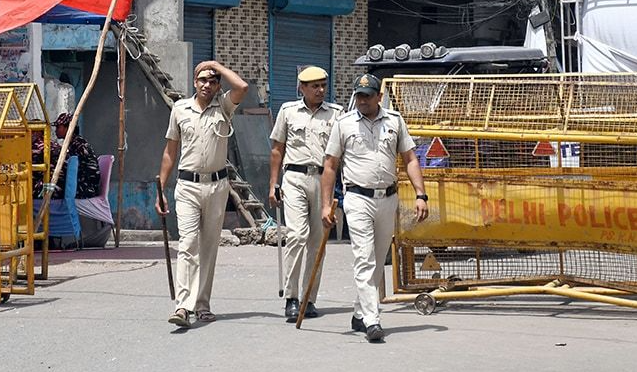
Police said the woman was found injured at NDMC flats in Palika Kunj and was declared dead on arrival at AIIMS Trauma Centre. Her mother has alleged that Akriti was beaten with a belt and was pressurised to quit her job and was asked to bring Rs 20 lakh.
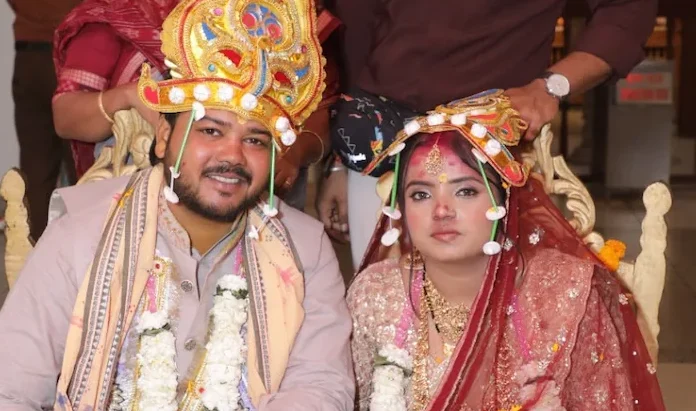
Akriti was found injured and later declared dead at AIIMS. Image Credit: NDTV
Delhi Dowry Death Case: A case that began as a suspicious death has now become a major dowry and domestic violence investigation in Delhi. Akriti, a 28-year-old sales executive, was found dead on Saturday evening in the Lodhi Colony area, only 72 days after marrying Arastu Sikka, and police have arrested her husband in connection with the case. The incident took place at the NDMC flats in Palika Kunj, where she was found injured on the ground and later declared dead at AIIMS Trauma Centre.
What makes this case especially shocking is the family’s allegation that Akriti had been facing continuous harassment since her marriage on April 24, 2026. Her mother has claimed that the woman was forced to endure dowry pressure, abuse, and threats, including an alleged belt beating on June 17 and repeated demands for Rs 20 lakh. Yeh case kaafi serious hai because it combines suspicious death, alleged dowry harassment and questions about what happened in the final hours before her death.
What Happened
According to police, Akriti was found injured at the NDMC flats in Palika Kunj and was rushed to the Trauma Section of AIIMS, where doctors declared her dead on arrival. The police suspect that she may have fallen from a three-storey building, but the exact sequence of events is still under investigation. A postmortem examination is underway, and authorities are not yet concluding whether this was an accident, suicide or homicide. This story is also covered by NDTV.
A dowry case has been registered by Delhi Police and proceedings under Section 196 of Bharatiya Nagarik Suraksha Sanhita have been initiated. The matter is now with the Sub-Divisional Magistrate. A dowry case has been registered by Delhi Police and proceedings under Section 196 of Bharatiya Nagarik Suraksha Sanhita have been initiated. The matter is now with the Sub-Divisional Magistrate.
Investigators are reviewing CCTV footage from the residential complex to determine whether Akriti came alone or with someone else and what happened before she was found injured. The presence of injuries on her left arm and thigh has added more complexity to the case, since police are still trying to establish whether these injuries were caused by the fall or were inflicted earlier.
From the family’s point of view, the death was not sudden or isolated. They believe it was the outcome of a pattern of abuse that had already turned dangerous. That is why this case is drawing so much attention: the death itself is tragic, but the allegations leading up to it are what make the story deeply disturbing.
Family’s Allegations
Akriti’s mother, Anu Say Sutar, has made a detailed complaint to the police alleging that her daughter was murdered by her husband and in-laws. She has said the harassment started soon after the marriage and intensified over time. According to the complaint, Akriti had made it clear before marriage that she wanted to continue working because she needed to support her younger brother, and the groom’s family had agreed.
However, the family now alleges that those assurances changed after marriage. The complaint says Akriti was pressured to quit her job, burdened with household work and mentally and physically tortured. Her mother claims that when Akriti tried to return to work, she was told to stay at home and was repeatedly made to feel unwelcome if she left the house or spoke to her maternal family.
One of the most disturbing allegations is that Akriti called her mother on June 17 and said Arastu had beaten her with a belt because her phone was on silent and she missed his call. The family says he accused her of having an illicit relationship and that this suspicion became a tool for abuse. The complaint also alleges that Akriti was pressured to bear a child and that her in-laws, including her sister-in-law Augustika, kept interfering in her personal life.
The mother further claimed that on June 29 Akriti told her she feared her husband might kill her. That warning, if accurate, is one of the most heartbreaking parts of the case because it suggests that the victim may have sensed danger well before her death. In many such cases, the signs are visible only in hindsight, which is exactly why domestic violence awareness matters.
Dowry Demand Allegation
Akriti’s family says they had already spent around Rs 7 lakh to Rs 8 lakh on the wedding, but that the demands did not stop there. Speaking to NDTV, her mother and uncle alleged that Arastu Sikka and his relatives were demanding Rs 20 lakh as dowry and repeatedly threatening and mistreating her. The family has rejected the possibility of suicide and says the death was “preplanned murder”.
This allegation is central to the case because dowry-related abuse remains one of the most serious social crimes in India. The law clearly prohibits dowry demands, yet families continue to report coercion, financial pressure and harassment after marriage. When a death happens within such a short marriage period, the dowry question becomes even more urgent.
The family’s statements also reflect a common pattern seen in many domestic violence cases: the victim is isolated from support, pressured to hide abuse and warned not to speak to her parents. According to the complaint, Akriti was even threatened after her mother tried to intervene, and her brother was allegedly targeted with threats of being harmed or getting his job affected. This is not just a family dispute; if proven, it would point to sustained intimidation.
Police Investigation
The Delhi Police say they are examining all possible angles and not ruling out any hypothesis at this stage. They have confirmed that an investigation is continuing and that the victim’s family’s allegations are being thoroughly examined. CCTV footage from the Palika Kunj apartments is being reviewed to determine whether Akriti was accompanied by someone, arrived alone, or moved differently before the incident.
The fact that police initiated proceedings under the BNSS and involved the SDM suggests that the case is being treated with seriousness and procedural care. In suspicious death cases, especially those involving matrimonial allegations, such steps are standard but important. They ensure that both medical and administrative angles are documented properly.
The postmortem report will be crucial. It may help determine whether injuries are consistent with a fall, physical assault before the fall or some other cause. Until then, the case remains open, and the legal process will depend heavily on forensic findings. In many cases like this, one report can shift the direction of the entire investigation.
Background and Context
Akriti worked as a sales executive in Chhatarpur and got married to Arastu Sikka, the brother of her childhood friend Augustika, on April 24, 2026. According to the family, the couple had been in a relationship for about two years before marriage. On the surface, that may have seemed like a familiar and trusted match, but the allegations now suggest that the situation inside the marriage deteriorated quickly.
The death came only 72 days after the wedding, which is why the case is getting intense public attention. Early marriage deaths often trigger immediate suspicion in India because they sometimes reveal patterns of abuse that were previously hidden. A short marriage period does not prove guilt by itself, but it does force investigators to ask hard questions.
This is also happening in a city like Delhi, where issues of women’s safety, domestic abuse and dowry violence are already under close public scrutiny. Such cases often become symbols of a larger social problem rather than one family’s tragedy alone. Yeh sirf ek ghar ka matter nahi lagta—yeh ek wider social problem ka hissa bhi hai.
Timeline
April 24, 2026: Akriti marries Arastu Sikka.
June 17, 2026: The family says Akriti reported being beaten with a belt for missing a call.
June 29, 2026: She allegedly tells her mother she fears her husband may kill her.
July 3, 2026: Her mother says she calls Arastu’s father to intervene in the domestic conflict.
July 4, 2026: Akriti leaves for work in the morning; her phone is switched off later.
Saturday evening: She is found injured at NDMC flats in Palika Kunj.
Saturday night: She is declared dead on arrival at AIIMS.
Monday: Delhi Police arrest the husband and file a dowry case.
Also Read: Delhi Newlywed Aakriti Sutar Found Dead in Lodhi Colony, Family Alleges Dowry Harassment and Murder
Why This Matters
This matters because it highlights how domestic abuse can escalate inside marriage, especially when dowry pressure is alleged. A young woman’s death within 72 days of marriage is not just a private tragedy; it is a public warning sign. Yeh issue kaafi important hai because if harassment is ignored, it can turn into irreversible harm very quickly.
It also matters because families often struggle to get attention before a tragedy occurs. In many cases, the victim speaks up, but the danger is not acted on until after something terrible happens. That is why prompt response to complaints, threats and signs of abuse is so important.
For society, the case is a reminder that dowry is not a “tradition” — it is a harmful practice with real consequences. Every such death reinforces why stronger enforcement and faster intervention are needed.
India Angle
For Indian readers, this case will feel painfully familiar because dowry-linked harassment remains a stubborn issue in many parts of the country. In Hinglish, seedhi baat yeh hai: shaadi ke baad agar pressure, threats aur beating start ho jaye, toh matter sirf personal nahi rehta — woh safety issue ban jata hai. This is especially relevant in urban areas too, not just rural ones.
The story also matters because Akriti was working and wanted to continue her job, which is a common point of conflict in some marriages. In modern India, a woman’s career should be supported, not used as a reason for control. That makes this case a strong reminder that empowerment and safety must go together.
It is also a wake-up call for families and friends. If someone says they are scared, that warning should be taken seriously. In Indian households, people sometimes hope things will “settle down”, but warning signs should never be dismissed.
Analysis
My opinion is that the case is already tragic enough without speculation, but the allegations are serious enough to demand a thorough investigation. The fact that the mother allegedly received direct warnings from her daughter before the death makes the story even more urgent. If those details are supported by evidence, they could become central to the case.
I also think the police response will be watched closely because suspicious matrimonial deaths often spark public concern about delayed action. The family is clearly pushing the murder angle, while police are still examining the evidence. That gap between allegation and proof is where careful reporting and due process matter most.
From an SEO perspective, this story will also attract readers because it touches a broader debate on women’s safety, dowry violence and domestic abuse in India. But beyond search performance, the real value of the article is to explain what is known, what is alleged and what is still being investigated clearly and responsibly.
What Next
The next major step will be the postmortem report, which could clarify whether the injuries suggest a fall, an assault or both. CCTV footage from the housing complex may also help determine the sequence of events and who was present at the location. Police may question more family members and neighbours as part of the ongoing probe.
If the evidence supports the family’s allegations, the case could deepen into a more serious criminal investigation involving dowry harassment and possible murder charges. If not, the legal findings may follow a different path. In either scenario, the final outcome will depend on forensic evidence, witness statements and digital material.
The case may also renew public pressure on authorities to treat dowry complaints more urgently. That could become one of the broader social outcomes of the tragedy.
Conclusion
Akriti’s death after just 72 days of marriage has become a deeply troubling Delhi case involving dowry allegations, reported beatings and a husband’s arrest. Her family says she was harassed for money, pressured to quit work and warned that she might be killed, while police continue to investigate whether she fell, was assaulted or both. Until the postmortem and CCTV evidence are clear, the case remains under active scrutiny. But even now, it stands as a painful reminder of how quickly marriage can turn dangerous when abuse is ignored.
Written By A. Jack