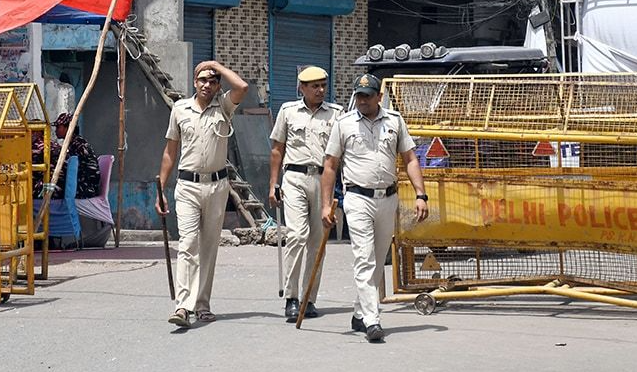
The Home Department issued the order on July 30, 2026, saying that protest participants will not face punitive or retaliatory action but those with prior criminal records will be excluded from the protection.
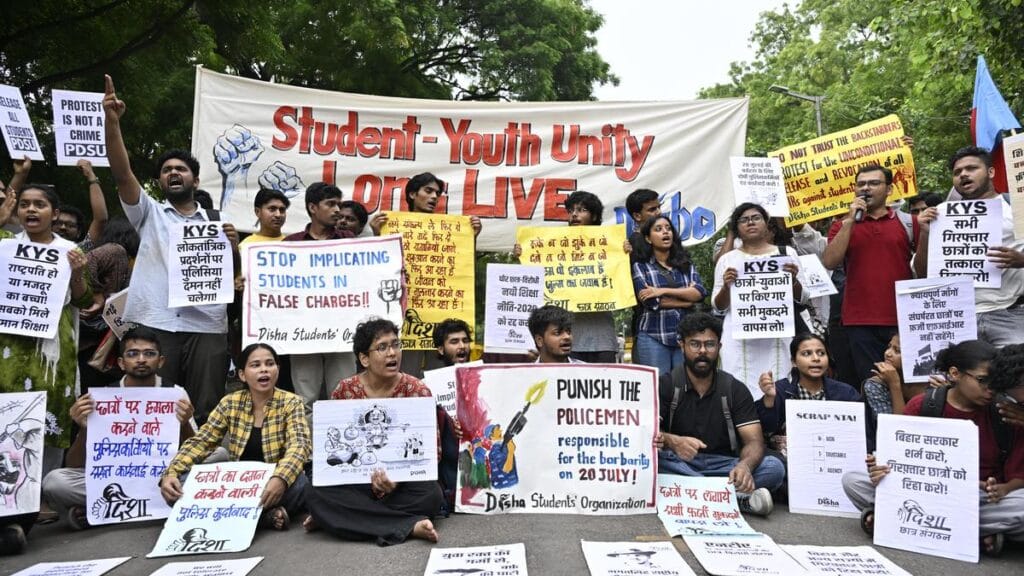
The Delhi government has announced that no adverse legal action will be taken against CJP protesters involved in the NEET-UG paper leak agitation. Image Credit: The Hindu
In a significant move aimed at de-escalating tensions around the NEET-UG paper leak protests, the Delhi government on Thursday, July 30, 2026, issued an order stating that no adverse legal action will be taken against people involved in the agitation. The Home Department said the protection applies to protest participants, but it will not extend to persons having criminal antecedents, as mandated in the order of the Supreme Court.
The decision comes after weeks of legal pressure, detentions and FIRs against demonstrators who took part in the Cockroach Janta Party (CJP)-led protests over alleged irregularities in the NEET-UG examination. For many students and activists, the order is a clear signal that the government is willing to move past the confrontation and reduce the legal burden on protesters.
What the government order says
The Home Department’s order makes two key points. First, it says that no adverse legal action — punitive or retaliatory — will be taken against individuals who participated in the protests. Second, it explicitly excludes persons with criminal antecedents from this protection, in line with Supreme Court guidelines.
That distinction is important because it shows the government is trying to balance relief for genuine protesters with the need to maintain law and order. People with prior criminal records will not automatically benefit from the withdrawal, which means the protection is targeted rather than blanket. This story was also covered by TheHindu.
In practical terms, this means that many protesters who were booked under various provisions may now see their cases withdrawn or not pursued further. However, those with existing criminal cases or histories may still face legal scrutiny.
Why the decision was taken
The decision appears to be a response to the growing political and social pressure around the NEET-UG protests. The agitation had drawn large crowds, led to multiple FIRs and created a tense atmosphere in parts of Delhi. Once the issue gained national attention, the government faced questions about whether the response to protesters was proportionate.
By announcing that no adverse action will be taken against participants, the government is effectively saying that it does not want to keep punishing people for taking part in a movement tied to exam fairness. That is a significant shift, especially after a period of detentions and legal notices.
Yeh issue kaafi important hai because it affects not just legal records but also the trust between students and the administration. If protesters feel they are being treated fairly, the chances of renewed agitation decrease.
Background and context
The NEET-UG paper leak controversy has been one of the biggest education-related stories in the country, triggering protests across several states. In Delhi, the CJP-led agitation became especially visible, with demonstrations at Jantar Mantar and other locations.
Over time, the protest evolved from a demand for exam accountability into a broader political issue, with FIRs and detentions adding another layer of controversy. When states like Bihar and Assam announced similar withdrawals, pressure increased on Delhi to follow suit.
The Supreme Court’s mandate on criminal antecedents is also relevant here. Courts have repeatedly said that persons with serious criminal records should not receive automatic protection in protest-related withdrawals. That is why the Delhi government has included that exclusion in its order.
Timeline
Earlier: NEET-UG paper leak allegations spark protests across India, including Delhi.
During agitation: Multiple FIRs and detentions of CJP protesters in Delhi.
July 30, 2026: Delhi Home Department issues order saying no adverse action against protesters.
Same day: Government clarifies that persons with criminal antecedents are excluded from protection.
Also Read: Amid CJP Warning of Fresh Protests, Delhi Police Welds Barricades at Jantar Mantar
Why This Matters
This matters because it reduces the legal uncertainty faced by many students and activists. When FIRs hang over people’s heads, it affects their studies, jobs and mental well-being. Withdrawal of such cases can provide significant relief.
It also matters because it signals a shift in the government’s approach. Instead of continuing to prosecute protesters, the administration is choosing to close the chapter and move forward. That can help restore some trust between the state and the youth.
For Delhi’s political landscape, the move is also significant. It shows that the government is responsive to public pressure and willing to adjust its stance when a protest gains momentum. That can influence how future agitations are handled.
India angle
For Indian readers, this story is directly relevant because the NEET-UG issue has touched lakhs of families across the country. In simple Hinglish, yeh sirf Delhi ka matter nahi hai — yeh poore desh ke students ki chinta se juda hua hai.
The India angle also includes the broader conversation about protest rights and legal accountability. When governments withdraw cases after large agitations, it sets a precedent for how similar situations may be handled elsewhere.
There is also the Supreme Court angle. The exclusion of persons with criminal antecedents reflects a national standard that is being applied across states. That ensures that protest relief does not become a shield for those with serious prior offences.
Analysis
My opinion is that the government has taken a balanced approach. It is offering relief to genuine protesters while maintaining that those with criminal records will not automatically benefit. That is a defensible position both legally and politically.
I also think the timing is important. Coming after similar moves in Bihar and Assam, the Delhi order completes a pattern of states stepping back from prosecution of NEET-UG protesters. That suggests a broader political calculation rather than an isolated decision.
What Next
The immediate next step will be the formal process of withdrawing cases and informing police stations of the new directive. Depending on how many FIRs were registered, this could take some time to implement fully.
Protesters who were previously facing legal action may now seek official confirmation that their cases are being closed. Student organisations are likely to monitor the implementation closely to ensure that no new notices are issued.
Longer term, this episode may influence how future protest-related withdrawals are structured. The exclusion of criminal antecedents is likely to become a standard clause in similar orders across states.
Conclusion
The Delhi government’s order that no adverse legal action will be taken against CJP protesters in the NEET-UG agitation is a major relief for demonstrators, but it comes with a clear exclusion for persons with criminal antecedents. The move signals a shift from confrontation to reconciliation, while maintaining that prior criminal records will not be overlooked.
For students and activists, the order reduces legal uncertainty and sends a message that the government is willing to move past the protest phase. For the administration, it is a way to de-escalate tensions and restore trust. The real test will be how quickly and effectively the withdrawal is implemented on the ground.
Written By A. Jack