
Student organisations allege that the gap between the government’s decision and police action is undermining trust. While the state has directed the Home Department to withdraw cases, officers say they need clear instructions before stopping ongoing procedures.
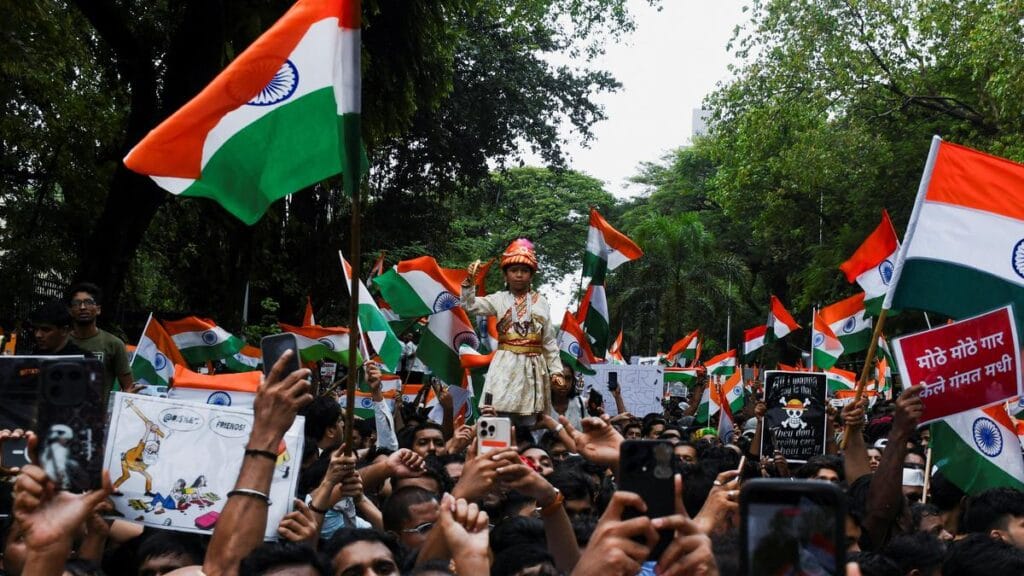
Protesters in Maharashtra react to the government’s announcement on FIR withdrawal. Image Credit: TheHindu
In a move that has sparked both relief and confusion, the Maharashtra government has decided to withdraw First Information Reports (FIRs) registered against students and youth involved in recent protests. However, the Mumbai Police have clarified that investigation procedures, including the recording of statements and issuance of notices, will continue until a formal order to halt the process is received.
The situation became more complicated on July 28, when some protesters reported receiving FIR notices via WhatsApp, leading to fresh allegations from student organisations. A day after the state government directed the Home Department to withdraw cases against protesters, the police stance has created uncertainty about whether the legal pressure is truly easing.
What the government said
The Maharashtra government announced that it would withdraw FIRs against protesters as part of a broader effort to de-escalate tensions following the recent agitation. The decision was communicated to the Home Department, signalling a political intent to reduce legal action against those who participated in the demonstrations.
For many students and activists, this was a significant development. Withdrawal of FIRs can mean the end of criminal proceedings, reduced anxiety about future legal consequences and a signal that the state is willing to move past the confrontation. This story was also covered by The Hindu.
However, the announcement did not immediately translate into a stoppage of all police actions. Officers on the ground said they need clear, formal instructions before halting ongoing procedures. That gap between political decision and administrative execution is what has caused confusion.
What police are doing
Mumbai Police have stated that investigation procedures will continue until they receive a formal order to stop the process. That means notices, statement recording and other investigative steps may still be issued even after the government’s announcement.
On July 28, some protesters said they received FIR notices via WhatsApp, which reignited concerns among student groups. If true, this suggests that the communication between the government and police has not yet fully aligned with the new directive.
In simple terms, the government has said “withdraw the cases,” but the police are saying “we need the official paperwork before we stop.” Yeh issue kaafi important hai because it affects how protesters perceive the sincerity of the government’s offer.
Background and context
The recent protests in Maharashtra were part of a wider wave of student and youth agitations that have drawn attention across the country. FIRs were registered against participants in several locations, creating a legal burden that many saw as punitive.
When a government announces FIR withdrawal after protests, it is usually meant to signal reconciliation and a willingness to move forward. But if police continue sending notices or recording statements, the message becomes mixed. That is exactly what is happening now in Maharashtra.
This is not the first time such a gap has emerged between political announcements and police action. In many states, the process of withdrawing cases involves multiple layers of approval, file movements and formal orders. Until those are complete, officers often continue with routine procedures.
Timeline
During protests: FIRs are registered against students and youth involved in demonstrations.
After protests: The Maharashtra government announces it will withdraw the FIRs.
July 28: Some protesters report receiving FIR notices via WhatsApp.
Next day: Police say investigation will continue until a formal halt order is received.
Current status: Confusion persists among student organisations and activists.
Also Read: Amid CJP Warning of Fresh Protests, Delhi Police Welds Barricades at Jantar Mantar
Why This Matters
This matters because trust between protesters and the state is fragile. When a government offers to withdraw cases, it is making a political promise. If that promise is not immediately reflected in police action, people begin to doubt whether it is genuine.
It also matters because FIRs carry real consequences. They can affect studies, jobs, travel and mental well-being. For students, the uncertainty of an ongoing case can be as stressful as the case itself.
For Maharashtra’s political landscape, the issue is a test of coordination between the government and law enforcement. If the two are not aligned, the message sent to the public is one of disarray. That can weaken the credibility of the withdrawal offer.
India angle
For Indian readers, this story is directly relevant because protest-related FIRs are a recurring issue across states. From Delhi to Bihar to Assam, the question of whether cases against protesters will be withdrawn has become a key part of the post-agitation conversation.
In Hinglish, seedhi baat yeh hai: jab sarkar kehti hai ki FIR withdraw hogi, par police notice bhejti rahe, toh log confuse hote hain. That confusion can turn into anger if not resolved quickly.
The India angle also includes the legal process. Withdrawing an FIR is not always instantaneous; it requires formal orders, file movements and sometimes court intimation. But from a public perspective, the delay can feel like a broken promise.
Analysis
My opinion is that the government’s intent may be genuine, but the execution is lagging. In a situation like this, speed and clarity matter. If the Home Department does not issue clear, immediate instructions to police, the benefit of the political decision is diluted.
I also think the WhatsApp notices are a red flag. If protesters are receiving formal-looking notices after the withdrawal announcement, it undermines the entire exercise. That is why rapid administrative alignment is essential.
What Next
The immediate next step will be the issuance of formal orders from the Home Department to police stations, instructing them to halt investigations and begin the withdrawal process. Until that happens, confusion is likely to persist.
Student organisations may continue to press for clarity, demanding that no new notices be issued and that all ongoing procedures be paused immediately. If the gap continues, there could be renewed protests or legal challenges.
Longer term, this episode may influence how future withdrawal announcements are handled. Governments may need to ensure that police are briefed and orders are issued simultaneously to avoid mixed messages.
Conclusion
The Maharashtra government’s decision to withdraw FIRs against protesters is a significant political move, but its impact is being blunted by the police’s continuation of investigation procedures. Until formal orders are issued and notices stop, students and activists will remain uncertain about whether the legal pressure is truly easing.
This is more than a procedural issue; it is a test of trust between the state and its citizens. If the government wants the withdrawal to be seen as genuine, it must ensure that police action aligns quickly and clearly with the announcement. Otherwise, the confusion will only deepen.
Written By A. Jack