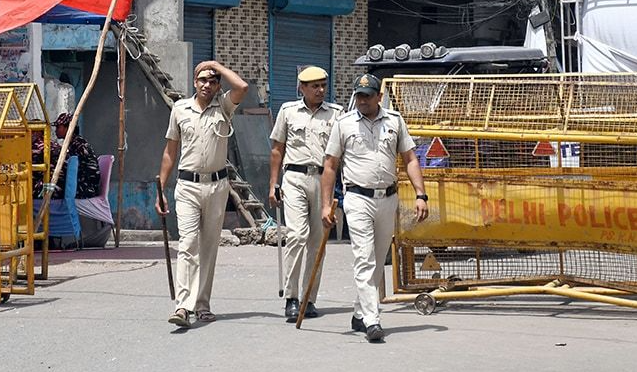
A company of the Rapid Action Force (RAF) and local police personnel have been deployed round the clock at Jantar Mantar, with barricades welded on both sides to prevent unauthorised access. Police say the arrangements are in anticipation of a gathering following the CJP’s warning.
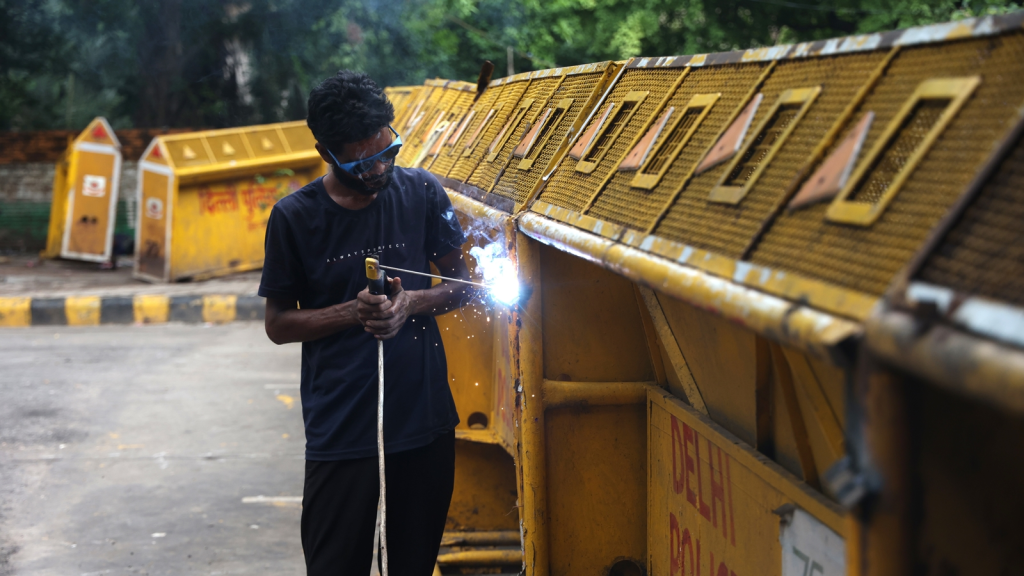
Delhi Police has welded iron barricades at Jantar Mantar and deployed additional forces after the CJP warned of resuming protests over FIRs against demonstrators. Image Credit: IndianExpress
Delhi Police has significantly tightened security at Jantar Mantar, welding iron barricades and deploying additional personnel after the Cockroach Janta Party (CJP) warned it would resume protests if all FIRs against demonstrators are not withdrawn immediately. The protest site, where the CJP earlier staged a 36-day agitation demanding the resignation of Education Minister Dharmendra Pradhan, is now under round-the-clock security cover.
A company of the Rapid Action Force (RAF) has been deployed along with local police personnel, and barricades have been installed and welded together with iron on both sides of the area. When contacted, Delhi Police sources said the security arrangements had been made in anticipation of a gathering at Jantar Mantar.
Why the security was beefed up
The heightened security follows a direct warning from the CJP on Tuesday, when the group threatened to resume its agitation, accusing the Centre of backtracking on its promise to not take legal action against protesters. The CJP has made it clear that if all FIRs lodged against the protesters are not immediately withdrawn, it will return to the streets.
From the police perspective, this creates a clear risk of renewed crowding at Jantar Mantar, especially because the site has already been used for a long-duration protest earlier. When a group signals its intent to return, authorities typically prepare in advance to manage the situation, prevent unauthorised access and maintain order. This story was also covered by The IndianExpress.
That is why barricades are being welded and additional forces are being deployed. In simple terms, the police are preparing for the possibility of a large gathering and trying to control access before the situation escalates. Yeh issue kaafi important hai because it shows how quickly a political warning can turn into a security operation.
What is happening at Jantar Mantar?
At Jantar Mantar, barricades have been installed and welded together with iron at both sides, making it harder for large groups to enter the protest zone without clearance. A company of the RAF, along with local police personnel, has been deployed round the clock to monitor the area.
The RAF is typically used for crowd control and rapid response in sensitive situations. Its presence signals that authorities are treating the potential protest as a high-risk event that could require swift intervention. Local police are also on alert to handle any developments that may arise from the CJP’s call.
Delhi Police sources said the security arrangements had been made in anticipation of a gathering at Jantar Mantar. That phrasing suggests the police are not waiting for the crowd to assemble before acting; they are preparing in advance based on the CJP’s public statements.
Background and context
The CJP’s earlier 36-day protest at Jantar Mantar was one of the most visible student-led agitations in recent months, centred on demands related to exam fairness and the resignation of Education Minister Dharmendra Pradhan. The protest eventually ended after political developments, including the minister’s resignation, but the legal fallout has continued.
The current tension stems from the CJP’s claim that the Centre has not fully honoured its assurance regarding legal action against protesters. The group has said that unless all FIRs are withdrawn immediately, it will resume its agitation. That has put police on high alert, because Jantar Mantar is a symbolic protest space that can quickly draw large crowds.
In Delhi, protest policing has become increasingly complex in recent years. Authorities must balance the right to assemble with security concerns, especially around sensitive locations. When a group with a history of large demonstrations signals a return, the default response is to reinforce security and control access.
Timeline
Earlier: CJP stages a 36-day protest at Jantar Mantar demanding the resignation of Education Minister Dharmendra Pradhan.
After the protest: Political developments follow, but FIRs against protesters remain a point of contention.
Tuesday: CJP warns it will resume agitation if all FIRs are not withdrawn immediately.
Wednesday: Delhi Police welds barricades at Jantar Mantar and deploys RAF and additional personnel.
Current status: Security arrangements are in place in anticipation of a gathering.
Also Read: Delhi High Court Refuses to Stay HPV Vaccination Drive, Seeks Centre’s Reply
Why This Matters
This matters because it shows how protest politics and security planning intersect in India’s capital. When a group threatens to return to Jantar Mantar, the response is not just about managing a crowd; it is about preventing escalation, protecting sensitive zones and maintaining public order.
It also matters because the issue of FIRs against protesters is a major flashpoint. If demonstrators believe the government is not honouring its assurances, trust erodes quickly. That can lead to renewed agitation, even after a previous round of protests has ended.
For Delhi residents, the impact is practical: more police presence, tighter access around Jantar Mantar and the possibility of traffic disruptions if a crowd gathers. In simple Hinglish, jab protest ka signal milta hai, toh security bhi turant tighten hoti hai.
India angle
For Indian readers, this story is directly relevant because Jantar Mantar is one of the most recognised protest sites in the country. From farmers’ movements to student agitations, it has been the stage for many high-profile demonstrations.
The India angle also includes the broader conversation about protest rights and policing. When barricades are welded and RAF is deployed, it raises questions about how authorities balance freedom of assembly with law-and-order concerns. That debate is ongoing across many Indian cities.
There is also the political angle. The CJP’s warning and the police response are part of a larger narrative about how protest movements are handled after they achieve some of their demands. If legal cases remain unresolved, the movement can reignite quickly.
Analysis
My opinion is that the police response is predictable but significant. When a group with a history of large protests signals a return, authorities cannot afford to be caught off guard. Welding barricades and deploying RAF is a way to show readiness and control.
I also think the FIR issue is the real driver here. If the government does not address the legal concerns of the protesters, the cycle of agitation and security tightening is likely to continue. That is a political problem, not just a policing one.
What Next
The immediate next step will be whether the CJP follows through on its threat and attempts to gather at Jantar Mantar. If the group proceeds, the police will likely enforce the barricades strictly and manage the crowd through controlled access points.
If the government decides to withdraw the FIRs, the pressure may ease. If not, the protest could reignite, leading to more confrontations and possibly detentions. The legal and political dimensions will continue to shape the situation.
Longer term, this episode may influence how future protest assurances are structured. If groups feel that promises are not being honoured, they are more likely to return to the streets. That is a lesson for both authorities and protest organisers.
Conclusion
Delhi Police has reinforced security at Jantar Mantar by welding barricades and deploying additional forces after the CJP warned of resuming protests if all FIRs against demonstrators are not withdrawn. The move reflects the authorities’ anticipation of a gathering and their intent to maintain control over the protest site.
This is more than a security story; it is a reminder that unresolved legal issues can reignite protest movements even after political concessions are made. For Delhi, the immediate impact is tighter access and more police presence. For the broader political landscape, the question is whether assurances will be honoured or whether the cycle of agitation will continue.
Written By A. Jack