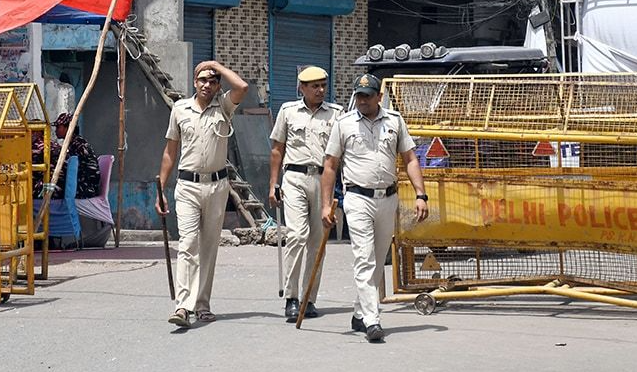
The Aerocity-to-Tughlakabad corridor may unlock value in areas like Chhatarpur, Saket, Neb Sarai and Vasant Kunj. Experts say the real premium will go to homes within walking distance of stations, especially once trains begin running.
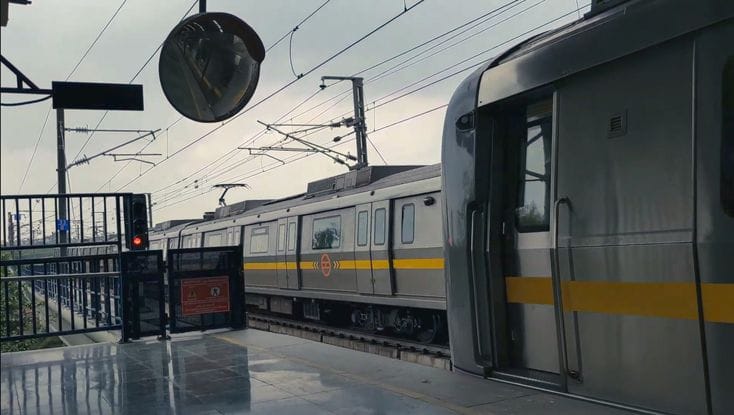
Delhi Metro’s Golden Line is expected to improve connectivity across South Delhi. This image is only for illustrations.
Delhi’s real estate market is preparing for a major shift as the upcoming Golden Line Metro, part of Phase IV, moves closer to becoming operational. Stretching from Aerocity to Tughlakabad, the corridor is expected to improve access across South Delhi’s dense residential and commercial belts and could sharply influence home prices, rents and buyer interest in the coming years.
For decades, South Delhi has been one of the capital’s most desirable housing markets, but poor east-west connectivity, road congestion and airport travel delays have held back some neighbourhoods from reaching their full potential. Now, with metro access set to improve, property consultants believe the corridor could finally remove the “connectivity discount” that has weighed on several mature localities.
Why the Golden Line matters
The Golden Line is important because it connects some of South Delhi’s most active and valuable pockets with Aerocity, the airport ecosystem and major interchange stations. The route passes through Mahipalpur, Vasant Kunj, Kishangarh, Chhatarpur, IGNOU, Saket, Khanpur, Ambedkar Nagar and Tughlakabad, giving residents a cleaner and faster way to move across the city without relying entirely on road traffic. This story was also covered by NDTV.
That kind of connectivity often changes real estate behaviour. In Delhi, metro access is not just a convenience feature; it is a pricing factor. A home close to a station can become more attractive to buyers, tenants and investors because commuting becomes easier and more predictable. Yeh baat kaafi important hai because convenience in a city like Delhi directly translates into value.
Experts say the upcoming line may not create entirely new demand, but rather unlock the value of neighbourhoods that already have strong social infrastructure, schools, hospitals, markets and access to jobs. In simple terms, the metro may not invent demand from scratch, but it may finally let the market price these localities more fairly.
How prices may move
Property consultants expect the strongest price movement around station-adjacent properties. Homes within walking distance of Golden Line metro stations are likely to see the biggest appreciation, while premium localities may rise more slowly because much of their value is already built into current prices.
According to industry estimates, capital values near the corridor could rise 8-12% over the next two to three years, while rentals may increase 5-8%. Some experts believe the total appreciation in select micro-markets could eventually reach 20-25% or more once the line becomes operational and daily commuting patterns adjust.
The pattern is familiar in Indian cities. Prices usually move in stages: first after a project is announced, then again during construction, and most strongly after operations begin. That final phase matters most because real end-users start experiencing the benefit, not just speculators betting on future infrastructure.
Which areas may benefit most
The biggest winners are expected to be relatively affordable and mid-market neighbourhoods where connectivity has been the main weakness. Chhatarpur, Neb Sarai, Saket, Ambedkar Nagar and Sangam Vihar are likely to be among the strongest candidates because they already have housing stock and civic life but have historically suffered from travel inconvenience.
Vasant Kunj and Kishangarh may also benefit because of their proximity to the airport corridor and the broader employment network around Aerocity. These markets already attract working professionals, but better metro access could broaden their appeal to more buyers and tenants.
Lower-priced pockets such as Tughlakabad and Sangam Vihar may take longer to mature, but they could deliver stronger percentage gains over time because the base price is lower. That is how infrastructure-driven real estate often works: the lower the starting point, the greater the percentage upside if demand improves.
Current price picture
The corridor already shows wide price variation. In Vasant Kunj, apartments are currently selling at around Rs 21,000-23,500 per sq ft, while Saket remains one of the costliest residential markets on the route at roughly Rs 27,500-31,500 per sq ft depending on block and property type. Chhatarpur, by contrast, remains relatively affordable at around Rs 12,400-18,000 per sq ft.
The rental market also reflects this split. A typical two-bedroom apartment in Saket rents for nearly Rs 35,000 a month, while larger three-bedroom homes can command around Rs 1 lakh per month. These differences show why the Golden Line may have more room to transform some markets than others.
In premium zones like Saket, some of the metro benefit may already be priced in. But in areas where access has held back demand, the corridor could unlock a fresh wave of buyer interest. That is why experts are watching the sub-1 km radius around station locations so closely.
What experts are saying
Property consultant Chetan Chichra says the Golden Line is likely to remove the “connectivity discount” that has kept several South Delhi neighbourhoods below their true market potential. He points out that places such as Chhatarpur, Neb Sarai, Saket, Ambedkar Nagar and Sangam Vihar already have strong social infrastructure and housing stock, so better metro access could finally let them command higher prices.
Nilesh Garg says the first wave of appreciation will mainly be concentrated within one kilometre of metro stations. He expects homes in Chhatarpur, Neb Sarai, Khanpur and Sangam Vihar to become more attractive to buyers and tenants who currently accept long travel times as the cost of cheaper housing.
Ashok Nehlia adds that homes near operational metro corridors in Delhi already enjoy a 15-20% premium over comparable properties without metro access. He expects a similar pattern along the Golden Line, especially in Chhatarpur, Vasant Kunj, Mehrauli, Sangam Vihar and Tughlakabad once the route becomes operational.
The common thread in these views is clear: daily convenience is the real premium. Simply living in the same neighbourhood may not be enough. Buyers will pay more for homes with good titles, parking, water, approach roads and the ability to walk to the station.
Timeline
Phase IV planning: Golden Line is included as part of Delhi Metro’s expansion plan.
Construction period: Property interest begins to build around station-adjacent markets.
Expected opening later this year: Connectivity improvements begin to affect commuter behaviour.
12-18 months after operations start: Experts expect the strongest price and rental gains.
Next two to three years: Capital values near stations may rise 8-12%, with some micro-markets doing better.
Also Read: Dharmendra Pradhan Resigns After Weeks of Nationwide CJP Protests
Why This Matters
This matters because infrastructure in India often shapes where people can live, work and invest. A metro line can change the economics of a neighbourhood almost as much as a new flyover or expressway, especially in a city where traffic is part of everyday life.
It also matters for middle-class homebuyers who are increasingly looking at value, commute time and rental potential together. If the Golden Line succeeds in improving access, families may be willing to consider neighbourhoods they previously ignored. That could broaden the housing market in South Delhi and reduce pressure on the most expensive pockets.
For tenants, the benefit could be practical rather than speculative. Better metro access means shorter commutes, easier airport trips and better access to jobs across the city. That is a very real quality-of-life upgrade, not just a real-estate story.
India angle
In the Indian housing market, metro connectivity has become one of the strongest drivers of price movement. From Gurugram to Noida and across Delhi NCR, buyers now look at station distance almost as carefully as they look at carpet area. In Hinglish, simple baat yeh hai: metro ho toh value bhi hoti hai.
The Golden Line also matters because South Delhi is a high-profile market. When prices move here, the ripple effect is noticed across the NCR because investors, brokers and developers all read South Delhi as a signal market. If the corridor performs well, it could shape future buying interest in surrounding zones too.
There is also an urban planning angle. India’s cities are increasingly judged by how well they connect homes to jobs, airports and transit nodes. The Golden Line is part of that broader shift toward transit-orientated living, which is becoming a major theme in urban India.
Analysis
My view is that the real story is not just appreciation, but selective appreciation. The biggest gains will not come evenly along the corridor. They will likely cluster around station access, legal clarity and everyday livability. That means the market will reward convenience, not just geography.
I also think buyers should be cautious about overpaying on hype before operations begin. Infrastructure stories often create optimism, but the real premium is usually earned after trains start running and commute times actually fall. That is when the market separates real demand from speculative interest.
What Next
The next step is the opening of the corridor, which will determine how quickly market sentiment turns into actual price growth. Once trains begin running, brokers and buyers will start testing which areas have the strongest live demand rather than just future promise.
In the short term, station-adjacent homes may see the earliest interest from buyers and tenants. Over time, more distant localities could also benefit if connectivity and local infrastructure improve together. The most durable gains will likely go to projects with solid documentation, good access and strong construction quality.
Faridabad could also see an indirect boost through the Tughlakabad interchange. Experts believe South Delhi professionals may look at more affordable homes in areas such as Surajkund, Green Fields and Charmwood Village if the network becomes more integrated and commuting becomes easier.
Conclusion
Delhi’s Golden Line Metro is shaping up to be more than just a transport project. It could become a major real-estate catalyst for South Delhi, especially for neighbourhoods that have long had strong fundamentals but weak connectivity.
The broad expectation is clear: property prices near stations may rise 8-12% over the next few years, while rents may increase 5-8%. But the real gains will belong to homes that combine metro access with strong civic basics. In a city like Delhi, that mix is what turns convenience into long-term value.
Written By A. Jack