Pradhan said he resigned to ensure that the situation at Jantar Mantar and the country over was not “exploited” and students were saved from “legal complexities”. The move is being viewed as a big win for youth protesters who have been demanding accountability in the education system in India.
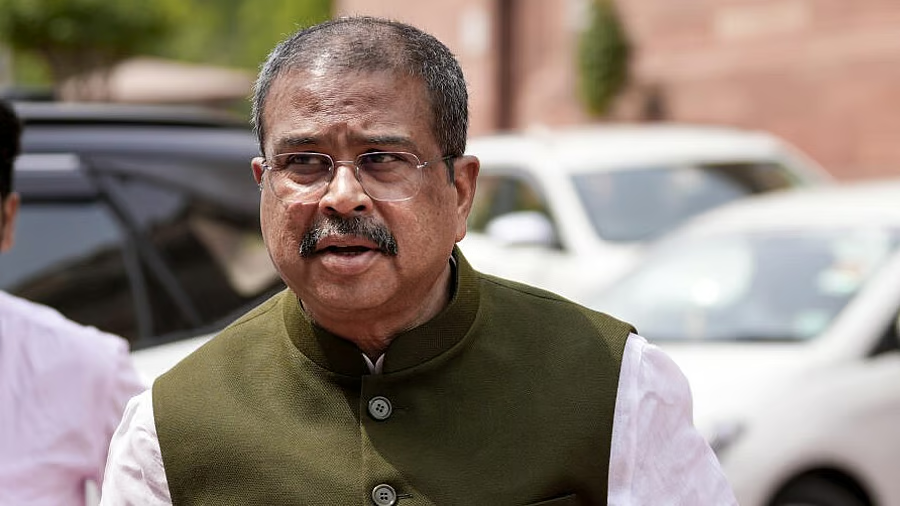
Dharmendra Pradhan’s resignation marks a turning point in the nationwide student protest movement over exam paper leaks and education accountability. Image Credit: Deccan Herald
India’s Education Minister Dharmendra Pradhan resigned on Saturday after weeks of intense protests led by the Cockroach Janta Party over alleged exam paper leaks and testing irregularities. The resignation came as protesters continued demonstrations in New Delhi, including at Jantar Mantar, where police used tear gas to disperse crowds just hours before another round of talks with federal ministers was expected.
Pradhan announced his decision on X, saying he had sent his resignation letter to Prime Minister Narendra Modi because he did not want the unrest to be taken advantage of by “anti-national forces.” He also said he deeply respected the aspirations and expectations of India’s youth and did not want students to get “entangled in legal complexities” instead of focusing on their studies and careers.
What Happened
The resignation is the direct result of a protest wave that grew rapidly after reports of examination paper leaks and irregularities triggered anger among students, parents and education activists. The CJP-led movement spread across cities and became especially visible in Delhi, where the Jantar Mantar protests turned into a national symbol of youth frustration. This story was also covered by Al Jazeera.
According to the reports, Pradhan quit at a moment when police action was intensifying and the political pressure had become too large to ignore. His resignation is being widely interpreted as a response to both public anger and the growing risk that the crisis would continue to destabilize the government’s education agenda.
Pradhan framed the decision as one made in the national interest. In his statement, he said that he wanted to protect the unity of the country and ensure that students were not distracted from building their futures. That language is important because it shows he is presenting the resignation not as a defeat but as a step to reduce tension and restore order.
Why He Stepped Down
Pradhan’s resignation letter, as reported, makes it clear that the NEET-UG controversy was the central issue. He said the government had already taken immediate action by handing the case to the CBI, cancelling the exam and announcing a re-examination date, while also deciding that the exam would move to CBT mode from next year.
He also argued that he had “taken responsibility” from the beginning and never turned away from the problem. That claim is intended to show that he did not resign under pressure alone but as someone who believed the controversy had to be contained before it could do wider damage.
Another key line in his statement was his warning that the issue should not be exploited by “anti-national forces.” That phrase reflects how the government is trying to frame the protests not merely as an administrative dispute but as a matter of national stability. Still, for many protesters, the resignation is being seen as proof that sustained public pressure works.
Reported Statements
Pradhan said, “I deeply respect the aspirations, feelings, and legitimate expectations of the country’s youth,” which is being read as an effort to directly reassure students and parents. He also said he did not want students to be dragged into legal complications when they should be preparing for their careers.
In another line from his letter, he said the situation at Jantar Mantar and across the country could be used by hostile forces and that he had, therefore, submitted his resignation to the Prime Minister. That language suggests he is trying to close the chapter on the immediate political crisis while leaving room for the government to continue its education reform narrative.
Opposition and protest leaders, meanwhile, are likely to portray this as a clear win. Even before the resignation, political voices were demanding that the government take responsibility and apologize to students. The fact that Pradhan has now resigned gives those protests a visible, measurable result.
Background
The crisis began with allegations of paper leaks in major competitive examinations, especially NEET-UG, which triggered outrage across the country. Students argued that their hard work and years of preparation were being undermined by systemic failures, while parents feared that the exam process had become unfair and vulnerable to manipulation.
The Cockroach Janta Party emerged as the public face of this anger, organizing marches, hunger strikes and support rallies in Delhi and other cities. Over time, the protest movement grew beyond a student issue and became a broader political challenge to the Centre’s handling of exam security and education governance.
Pradhan’s resignation is significant because it is being described as the first major concession from the Modi government in this cycle of unrest. It also comes at a politically sensitive time, as public confidence in national competitive exams has been under strain and the government is under pressure to prove that reform is not just promised but delivered.
Timeline
Early June 2026: Student anger grows over reported examination irregularities and paper leaks.
Late June to July 2026: CJP-led protests expand in Delhi and other cities, including marches and hunger strikes.
July 20, 2026: Protests intensify at Jantar Mantar, drawing national attention.
July 24, 2026: Dharmendra Pradhan submits his resignation to Prime Minister Narendra Modi.
July 25, 2026: Reports frame the resignation as a major victory for the student protest movement.
Also Read: Sonam Wangchuk Says He Ended Fast to Protect Protests From Legal Action
Why This Matters
This matters because it directly affects India’s education system and the trust students place in competitive exams. When a Union education minister resigns over paper leak protests, it sends a message that the issue has moved from grievance to national crisis.
It also matters because millions of Indian families invest time, money and emotional energy in exam preparation. If people begin to believe that merit can be compromised by leaks or irregularities, the entire system loses credibility. Yeh issue kaafi important hai because confidence in education is confidence in future opportunity.
From a civic point of view, the resignation shows that sustained protest can still produce change. For young people especially, that is a powerful signal: peaceful but persistent mobilization can force accountability at the highest level.
India Angle
For Indian readers, this is not just a political resignation; it is a story about the future of lakhs of students. In simple Hinglish, seedhi baat yeh hai: agar exam system hi fair na ho, toh youth ka future kaun protect karega?
The resignation will likely be discussed widely in coaching centers, universities and families preparing for competitive exams. It also puts pressure on the government to show that this is not only a damage-control move but also the start of meaningful reform in exam administration.
There is also a broader emotional angle. Young people across India often feel ignored until protests become too loud to dismiss. This resignation will be seen by many as proof that student voices can shape national decisions when they are organized and persistent.
Analysis
My view as an SEO and news writer is that this is one of the biggest education stories of the year because it combines politics, youth anger and exam reform in a single narrative. The search interest around Dharmendra Pradhan’s resignation, CJP protest and exam paper leak is likely to remain high for days, possibly weeks.
The resignation is politically smart for the government because it may help reduce immediate pressure, but it also confirms that the protest movement succeeded in forcing a change at the top. That can embolden student groups and civil society organizations in the future, because they now have a real example of accountability being extracted through public pressure.
At the same time, the real test is not the resignation itself but what follows. If reform in exam conduct does not improve, this move may be remembered as symbolic rather than structural. In other words, the government has bought time, but not necessarily solved the underlying problem.
What Next
The next step will be the formal acceptance of the resignation by the Prime Minister and the appointment of a successor or interim arrangement. That will determine how quickly the government can stabilize the education ministry and resume its reform messaging.
The Centre is also likely to push harder on exam reforms, including CBT mode and tighter anti-leak measures, to signal that it is serious about preventing another crisis. If those measures are delayed or seem cosmetic, public anger could flare up again.
For the protest movement, the resignation is a milestone but not necessarily the finish line. Students and organizers may now shift from demanding one minister’s exit to demanding stronger systemic safeguards, compensation for affected students and a broader clean-up of the exam process.
Conclusion
Dharmendra Pradhan’s resignation marks a major turning point in the nationwide student protests over exam paper leaks and testing irregularities. It is both a political setback for the government and a symbolic victory for the youth-led movement that refused to let the issue fade.
The bigger story, however, is not just about one resignation. It is about whether India’s education system can rebuild trust after weeks of anger, public pressure and institutional embarrassment. That is the real question now, and the answer will shape how students, families and educators view reform going forward.
Written By A. Jack