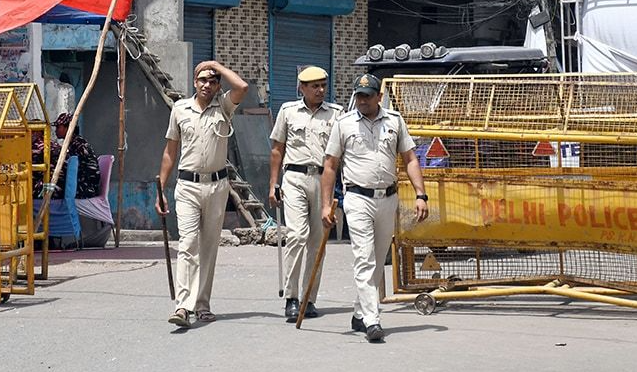
Police sources say notices have been sent to three platforms and that a monitoring team is already reviewing fresh uploads. The development has sparked fresh debate over free speech, satire and government control of online content in India.
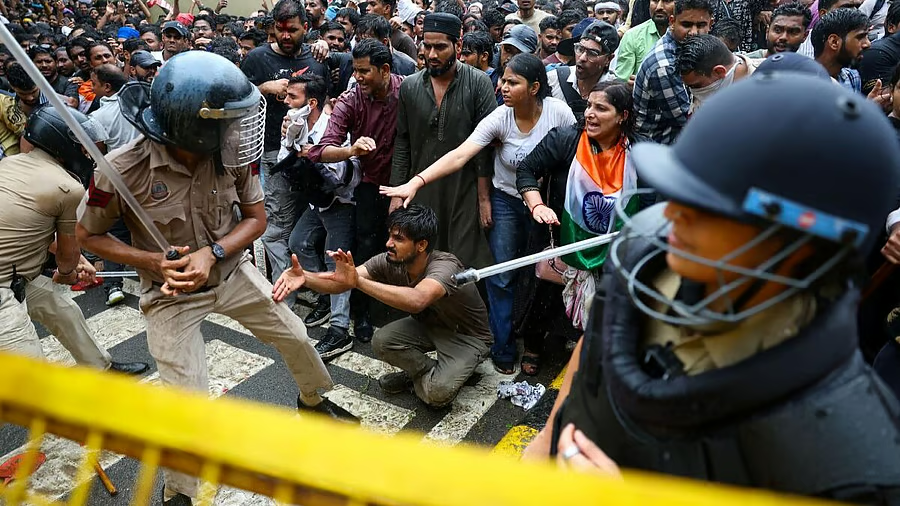
Social media posts and protest graphics targeting Prime Minister Narendra Modi reportedly came under Delhi Police scrutiny after the recent youth movement gained momentum. Image Credit: Deccan Herald
Delhi Police has reportedly told social media platforms to take down posts and videos aimed at Prime Minister Narendra Modi, citing offensive and objectionable content. The reported action comes in the wake of the recent youth agitation that grew into a nationwide movement and ended with the resignation of Education Minister Dharmendra Pradhan.
According to reports, police notices have been issued to three social media platforms directing them to remove posts that included abusive or offensive remarks about the Prime Minister. The move has triggered a fresh debate over how far the state can go in regulating online speech, especially when that speech includes political criticism, satire or protest content.
Why the action started
The reported takedown effort appears to have been triggered by the flood of memes, posters, videos and commentary that targeted PM Modi during and after the youth protests. Police sources quoted in reports said the Delhi Police social media monitoring team first identified the content and then asked the platforms to remove it in line with legal provisions. This story was also covered by The Wire.
The timing matters. The youth movement had already gained national attention, and online anger often travels faster and wider than street protests. Once protests move into the digital space, the response from authorities often becomes more aggressive because social media content is visible, viral and difficult to control once it spreads.
Reports also say police are reviewing fresh uploads and continuing to identify material they consider abusive in nature. That suggests this is not being treated as a one-off complaint, but as an ongoing monitoring exercise. In plain terms, yeh ek active content crackdown jaisa lag raha hai, not just a simple complaint response.
What police sources said
One senior police officer reportedly told a newspaper that multiple posts had been uploaded across different platforms and had already been removed. The officer said notices were issued to three platforms asking them to delete content containing “objectionable language and offensive remarks about the prime minister.”
Another police source quoted by PTI said that after reviewing content uploaded during and after the protest, notices would be issued to remove posts that were abusive in nature. The source added that an exercise to identify such content across platforms was already underway.
What stands out is that the legal basis for the action has not been publicly clarified in the available reports. That is a crucial detail because content removal in India can happen under different legal and administrative routes, but each route raises different questions about due process and transparency.
Background and context
The reported action comes at a politically charged moment. A monthlong agitation by the newly formed Cockroach Janata Party had turned into a nationwide youth movement and eventually forced Dharmendra Pradhan to resign. Much of the anger in that movement was directed not only at the education ministry but also at Prime Minister Narendra Modi, who was often targeted online through memes, satire and protest visuals.
That context is important because political anger on social media is now a normal part of public protest in India. Young users increasingly use digital platforms to express criticism, mock authority and mobilise support. When that criticism becomes too visible or too harsh, authorities often respond by trying to curb it through takedown requests.
There is also a broader digital-rights backdrop here. One report noted that a satirical Facebook post by a Bengal CPI(M) leader was reportedly removed by Meta within minutes after it speculated about the Prime Minister’s use of a teleprompter during a video message. That example shows how quickly content moderation can become a political flashpoint, especially when satire and commentary are involved.
Timeline
During the youth movement: Memes, posters and videos targeting PM Modi spread widely online.
After the protest gains momentum: Delhi Police’s monitoring team reportedly identifies objectionable content.
Soon after: Notices are reportedly issued to three social media platforms.
Current stage: Police are said to be reviewing fresh uploads and continuing takedown efforts.
Also Read: Abhijeet Dipke Reflects on CJP’s Breakthrough Protest Win: “Just The Beginning, Long Way To Go”
Why This Matters
This matters because it sits at the intersection of free speech, protest politics and online censorship. When police ask platforms to remove political content, the public has a right to ask whether the content was genuinely abusive or simply critical and uncomfortable for those in power. Yeh issue kaafi important hai because the line between criticism and objection can easily become blurred.
It also matters because social media is now a key arena for political expression in India. A post, meme or video can shape public opinion faster than a press conference or official statement. If authorities begin aggressively removing political content without a transparent legal framework, it can create a chilling effect on speech.
For journalists, activists and ordinary users, the message is simple: what happens online increasingly has real-world consequences. That makes this not just a tech issue but a democracy issue.
India angle
For Indian readers, the story hits close to home because almost everyone now consumes politics through social media. In simple Hinglish, log अब news sirf TV ya newspaper se nahi, Instagram aur X se bhi samajhte hain. That means content takedowns can shape what millions of people see, read and debate every day.
The Indian angle is also about trust. If takedown requests are seen as politically selective, people may begin to doubt whether online moderation is about law and order or about silencing criticism. That suspicion can spread quickly in a country where political debate is already highly polarised.
At the same time, India has a real problem with abusive content, coordinated trolling and misinformation. So the question is not whether moderation is needed, but whether it is being done fairly, openly and according to clear rules. That balance is the real challenge.
Analysis
My view as a news and SEO writer is that this story is likely to attract strong search interest because it touches PM Modi, Delhi Police, social media posts and censorship concerns in one package. The strongest reader hook is the uncertainty: police say objectionable content is being removed, but the legal route and exact standard remain unclear.
That uncertainty is what makes the story sensitive. If the posts were genuinely defamatory or threatening, a takedown would be expected. But if they were mainly satire, political criticism or harsh opinion, then the public debate shifts toward free speech and state overreach. That is why clear legal reasoning matters so much here.
I also think the wider political environment cannot be ignored. The youth movement had already created a wave of anger against the Centre, and once that anger moved online, it became easier for authorities to treat the digital space as a risk zone. The result is a classic modern conflict: state control versus viral dissent.
What Next
The next step will likely depend on whether social media companies comply with the notices and how much content they remove. If they act quickly, the issue may fade from public view, but the free-speech debate will continue beneath the surface. If they resist or delay, the story could grow into a larger confrontation over online governance.
There is also the possibility of legal or public-interest scrutiny if users feel their posts were removed unfairly. In India, such disputes often lead to calls for transparency, especially when the content involves satire or political criticism. That could push the conversation toward how takedown decisions are made and who oversees them.
For the government, the bigger question is whether content moderation is being used to maintain order or to manage political embarrassment. That question is likely to remain active if more posts disappear from platforms without clear explanations.
Conclusion
Delhi Police’s reported request to remove posts targeting PM Modi has added a new digital dimension to the recent protest wave. What began as a youth movement over exam-related anger is now also a debate about free speech, satire and the power of the state to shape online discourse.
The story is important because it reflects a much bigger reality in India today: political battles no longer stop at the protest site or the Parliament gate. They continue on social media, where takedowns, memes and moderation decisions can become as consequential as speeches or resignations.
Written By A. Jack