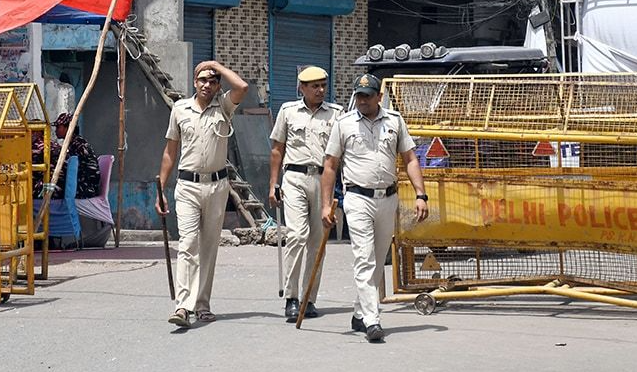
A 21-year-old man was allegedly abducted, assaulted and killed by a group of youths in Central Delhi’s Anand Parbat area, police said on Saturday. One accused has been arrested and a juvenile has been apprehended, as investigators probe what appears to be an earlier dispute that escalated into a brutal attack.
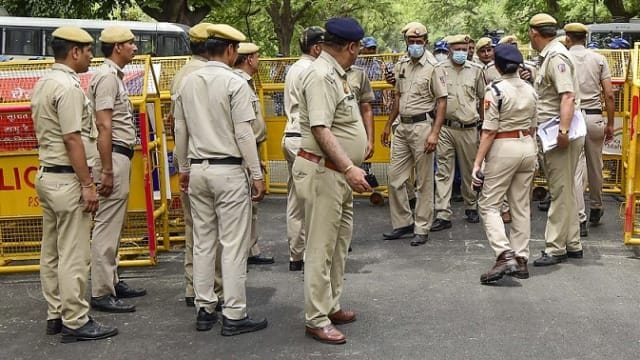
Police investigation underway near Ramjas Park in Anand Parbat, where a 21-year-old man was found dead after an alleged group attack in Delhi.
A shocking crime in Central Delhi’s Anand Parbat has once again raised concerns over youth violence and street-level revenge attacks in the capital. Police said a 21-year-old man was abducted, assaulted, and killed allegedly by a group of young men in the area near Ramjas Park on Thursday. One accused, identified as Virat alias Gattu, 22, has been arrested, while a minor has also been apprehended in connection with the case.
The case came to light after a PCR call reported an assault near Ramjas Park. When police reached the spot, they found an unidentified man lying unconscious near the boundary wall of the park, close to a garbage dump in a forested stretch. He was later declared dead at the hospital. The incident has triggered a murder investigation, and the police are now trying to piece together how a local dispute turned into a fatal attack. Yeh case kaafi serious hai because it reflects how quickly group violence can turn deadly in a crowded urban area.
What Happened
According to police, the emergency call received at Anand Parbat police station said three youths passing through the area were intercepted by a group of around 10 persons. The caller reported that the trio was attacked and that one of them was forcibly taken away. That detail is important because it suggests the attack may not have been a random assault but a targeted act involving multiple offenders. The Indian Express has covered the full story.
When officers arrived, they found the victim unconscious with visible injuries on the left side of his chest and on his head. He was rushed to the hospital, where doctors declared him dead. Later, the identity of the deceased was established using a SIM card recovered from a mobile phone found at the scene. Police then registered a case and began collecting witness statements and evidence.
The victim’s friend later gave a statement to investigators and alleged that seven persons attacked them after an earlier dispute. According to that account, the assailants dragged the victim into a forested area and attacked him with a knife and bricks while the others managed to escape. Police are still verifying this version, but it provides a possible motive and sequence of violence.
How the Investigation Is Unfolding
Police said the arrested accused has been identified as Virat alias Gattu, a resident of Baljeet Nagar. Along with him, a juvenile has been apprehended. In cases involving group violence, such arrests often mark only the first stage of the investigation because the police still need to identify everyone involved, their roles, and the exact timeline of the attack.
The use of a SIM card to identify the dead man also shows how investigators are relying on forensic and digital clues when there is no immediate identification. In congested Delhi neighborhoods, where assaults can happen in lanes, parks, and semi-isolated stretches, CCTV footage, mobile evidence, and witness statements become crucial. The police are likely checking whether the attack was linked to an ongoing rivalry, a local quarrel, or a retaliatory dispute.
Officials have not yet publicly disclosed the nature of the earlier dispute, but the friend’s statement suggests this was not a sudden street robbery. It appears more like a personal conflict that escalated into a coordinated attack. That distinction matters because it changes how the crime is understood: not just as violence, but as organized retaliation.
Background
Delhi has often witnessed incidents where group assaults, especially among young men, spiral into homicide. In many cases, what begins as a small fight or local altercation escalates because multiple people join in, weapons are introduced, and the conflict becomes harder to control. Anand Parbat, like many densely populated parts of central and west Delhi, has mixed residential and industrial stretches where such incidents can go unnoticed until the aftermath.
The stretch near Ramjas Park and the forested area described by police may have offered a relatively isolated spot for the attackers to continue the assault. That kind of location often makes emergency response more difficult because victims can be dragged away from the main road or visible area. In this case, the fact that the victim was found close to a garbage dump in a forested stretch suggests the assailants may have tried to conceal the attack or move the victim away from public view.
Timeline
Thursday: A PCR call reported an assault near Ramjas Park in Anand Parbat.
Soon after: Police found an unconscious man near the boundary wall of the park.
Hospital response: The victim was declared dead after being taken for treatment.
Later: His identity was confirmed through a SIM card recovered from a phone at the scene.
Investigation: A friend’s statement pointed to a dispute and a group assault.
Saturday: Police arrested one accused and apprehended a juvenile.
Also Read: Delhi Tenant Stages Fake Shooting to Extort Money from Landlord, Police Say
Why This Matters
This matters because it shows how quickly local disputes can become fatal when group violence and weapons are involved. A 21-year-old man losing his life in what appears to be a retaliatory attack is not just a crime story; it is a warning about the breakdown of conflict resolution in urban communities. It also highlights the vulnerability of young people in neighborhood disputes where anger, peer pressure, and retaliation can create deadly outcomes.
For residents of Delhi, the case is a reminder that safety concerns are not limited to high-profile areas or major crimes. Even ordinary public spaces like parks, lanes, and boundary stretches can become dangerous when violence escalates. Police response, public vigilance, and community intervention all matter in preventing such tragedies. Yeh issue kaafi important hai because a city’s safety is often measured by how well it protects young lives in everyday places.
India Angle
For Indian readers, this case connects to a larger pattern seen across cities: youth violence, gang-like group attacks, and revenge-driven crimes are increasingly making headlines. In many Indian neighborhoods, disputes over personal grudges, local dominance, or old arguments can escalate into serious offenses. That reality makes this story widely relatable and deeply concerning.
There is also a family and social angle. A young man dying after an alleged group attack means a family is now dealing with sudden loss, legal procedures, and long-term trauma. In India, where families often live closely within local communities, such incidents create fear well beyond the immediate victim’s circle. Simple words mein, yeh sirf police case nahi hai—it is a social alarm bell for urban neighborhoods.
Analysis
My view is that the most troubling aspect here is the apparent normalization of group violence among young offenders. When seven or ten people gather to attack one person, it suggests a level of planning or collective aggression that is deeply worrying. The fact that a juvenile is involved makes the issue even more serious because it points to the spread of violent behavior across age groups.
What’s Next?
The next step will be a deeper investigation into the earlier dispute and the roles of the other suspected attackers. Police will likely examine CCTV footage, call records, and witness statements to build a complete sequence of events. They will also need to determine who wielded the weapons, who dragged the victim away, and whether the attack was pre-planned.
If more names emerge, additional arrests are likely. The juvenile case will follow a separate legal process under juvenile justice provisions. The family of the deceased may also push for stronger action and a clearer explanation of why the attack was not prevented. In the coming days, the case may reveal whether this was a spontaneous brawl or a targeted revenge killing. Either way, the outcome could shape how police and local authorities respond to similar group violence in the city.
Conclusion
The Anand Parbat killing is a grim example of how a local dispute can turn into a fatal assault in a matter of minutes. A 21-year-old man was allegedly abducted, attacked and killed by a group of youths, and police have already arrested one accused and apprehended a minor as the investigation moves forward.
What makes the case especially disturbing is the setting: a busy part of Central Delhi, an apparently open public area, and a group attack severe enough to leave one person dead. As the probe continues, the incident stands as a harsh reminder that youth violence and retaliatory crime remain serious concerns in Indian cities.
Written By A. Jack