Only 97.4 lakh of Delhi’s 1.45 crore electors had digitised enumeration forms at the close of the SIR phase; excluded voters can file Form 6 during claims and objections from August 24 to September 23.
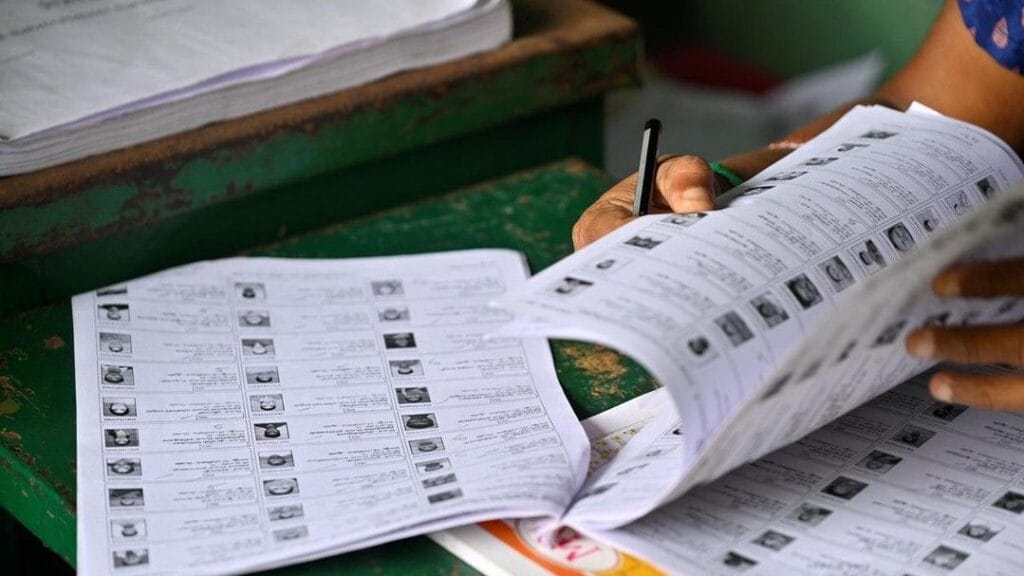
This image is only for illustrations.
The window to submit enumeration forms under Delhi’s Special Intensive Revision (SIR) of electoral rolls has closed, with only about 67% of the Capital’s 1.45 crore registered electors covered in the digitised database.
Official data shows that forms for around 97.4 lakh voters were digitised by the end of the enumeration phase. Their names are expected to appear in the draft electoral roll scheduled for publication on August 24, 2026.
However, the remaining 47.7 lakh voters—roughly one in every three Delhi electors—have been marked “uncollectable” under the Absent, Shifted, Dead, Duplicate and Others (ASDDO) categories. Their names will not appear in the draft roll unless they successfully submit claims and supporting documentation in the next phase.
The final electoral roll is scheduled to be published on October 27, 2026.
What the Delhi SIR Data Shows
Delhi began the Special Intensive Revision exercise with 14,510,299 registered voters. Of these, 9,747,879 enumeration forms had been digitised and verified by the end of the exercise, according to figures from the Delhi Chief Electoral Officer’s office. This story was also covered by The Hindu.
That leaves 4,762,420 electors outside the digitised list at this stage. While some reports round the number to 47.7 lakh, the larger point remains striking: nearly 33% of the existing electorate is at risk of exclusion from the draft voter list.
| Delhi SIR status | Number of voters | Share of electorate |
|---|---|---|
| Total electors at start of exercise | 1.45 crore | 100% |
| Forms digitised and verified | About 97.4 lakh | About 67% |
| Marked ASDDO / uncollectable | About 47.7 lakh | About 33% |
| Draft roll publication | August 24, 2026 | — |
| Claims and objections period | Aug. 24–Sept. 23, 2026 | — |
| Final electoral roll | October 27, 2026 | — |
The ASDDO classification includes voters marked ‘Absent’, ‘Shifted’, ‘Dead’, ‘Duplicate’ and ‘Others’. These voters are not necessarily permanently removed from the electoral roll. They will have an opportunity to re-establish eligibility during the claims and objections period.
Why 47.7 Lakh Voters Are in ASDDO
The SIR process involves Booth Level Officers (BLOs) carrying out house-to-house verification and digitising enumeration forms. If a voter’s form could not be collected, verified or mapped during the exercise, the entry could be placed in one of the ASDDO categories.
The available data suggests that a majority of the voters in this list have been marked as “Shifted”, meaning officials could not verify them at the recorded address. Nearly 10 lakh entries have reportedly been marked as “Duplicate”, while around two to three lakh have been placed in the “Others” category.
The categorisation may include people who have genuinely moved out of Delhi, voters who shifted within the city without updating their address, deceased persons whose names remained on rolls, duplicate entries, or electors who were temporarily unavailable when BLOs visited.
But it may also include voters who were not reached because of logistical gaps, delayed submission, unavailable BLO contact information, difficulties in online submission, travel, work schedules, or confusion about the required process.
On Tuesday, a day after the enumeration phase ended, BLOs were still processing forms submitted online in the final hours. Some voters also complained that they could not submit their forms or were asked to apply as new voters despite holding valid voter ID cards.
That makes the claims and objections phase crucial. It is the period in which voters who believe their exclusion is incorrect can seek inclusion in the draft roll.
What Happens on August 24
The draft electoral roll will be published on August 24. Voters should check whether their names, addresses, age details and polling station information have been correctly included.
If a person’s name is missing from the draft roll, they will need to submit Form 6 along with a declaration and required documents during the claims and objections period, which runs from August 24 to September 23.
The exclusion from the draft roll does not automatically mean that a voter has permanently lost the right to vote. The Election Commission process provides a mechanism to make claims, file objections and seek corrections before the final roll is published.
However, the burden shifts to the voter. Instead of relying on the existing entry in the old roll, those left out must proactively complete the next-stage process before the deadline.
Statements and Official Position
The Delhi CEO’s office has indicated that only digitised enumeration forms will be reflected in the August 24 draft electoral roll.
Officials have also said voters who did not submit enumeration forms can file Form 6 during the claims and objections phase. This period will run for a month, from August 24 to September 23.
An election official’s position, as reflected in reports, is that the ASDDO list is part of an ongoing verification process rather than a final deletion list. A separate list of voters placed in ASDDO categories is likely to be released, allowing those electors to establish their eligibility.
However, civic groups and voters have raised concerns around accessibility and communication. Reports from the final day showed confusion over missing BLO details, late online submissions and conflicting instructions given to some electors.
What Is the Special Intensive Revision?
The Special Intensive Revision, or SIR, is a comprehensive voter-roll verification exercise aimed at ensuring electoral rolls are accurate, updated and free from duplicate, shifted or deceased entries.
Unlike a routine annual revision, an intensive exercise requires deeper field verification. BLOs visit registered addresses, distribute and collect enumeration forms, verify details and digitise records. The purpose is to ensure that people eligible to vote remain listed, while ineligible or duplicate entries are removed.
In theory, a clean electoral roll improves election integrity. It helps prevent impersonation, duplicate voting and inclusion of dead or shifted voters.
But the process has to balance accuracy with inclusion. If genuine voters are accidentally classified as absent, shifted or uncollectable, then a revision exercise designed to protect elections can end up disenfranchising eligible citizens.
That is why the draft-roll and claims stage is not a technical formality. It is a critical democratic safeguard.
Timeline
June 30, 2026: Delhi’s Special Intensive Revision exercise begins, with 1.45 crore electors on the existing rolls.
June 30–August 17: Booth Level Officers distribute, collect, verify and digitise enumeration forms across Delhi.
August 17, 2026: The Enumeration phase closes; around 97.4 lakh forms are digitised, while about 47.7 lakh voters are classified as uncollectable under ASDDO categories.
August 18–19: BLOs continue processing final-hour online forms; voters report issues related to form submission and BLO details.
August 24, 2026: The Draft electoral roll is scheduled to be published.
August 24–September 23: The Claims and objections window opens; excluded voters can submit Form 6, declarations and supporting documents.
October 22, 2026: Deadline reportedly set for new voter registration applications.
October 27, 2026: The Final electoral roll is scheduled for publication.
Why This Matters
Yeh issue kaafi important hai because voter lists determine who can participate in elections. If a name is absent from the final roll, that person may be unable to vote.
Scale of possible exclusion: About 47.7 lakh voters, or nearly one-third of Delhi’s electorate, are currently outside the draft roll process.
Burden on voters: Those marked ASDDO now need to check the draft list and submit Form 6 if their names are missing.
Impact on migrants and tenants: Delhi has a large floating population of renters, workers, students and migrants. Such groups are more likely to face “shifted” classifications if address records are not updated.
Election fairness: An accurate voter roll strengthens democracy, but accidental omissions can affect representation and public confidence.
Administrative challenge: BLOs must process a large number of claims in a short period while ensuring that genuine voters are not excluded because of paperwork or communication gaps.
The central issue is not whether voter lists should be cleaned—they should. The issue is whether eligible citizens get a realistic, accessible and fair chance to remain on them.
India Angle
Delhi’s SIR experience matters beyond the Capital. India’s large cities have highly mobile populations. People move for jobs, education, marriage, rental housing and work assignments. Many retain old voter registrations even after shifting, while others struggle to update addresses because of documentation barriers.
The same challenges are visible in Mumbai, Bengaluru, Pune, Hyderabad, Gurugram, Noida and other major urban centres.
For India, the Delhi process raises broader questions:
Can voter verification keep pace with urban migration?
Are BLOs adequately staffed and trained for large-scale house-to-house exercises?
Do voters have clear online and offline routes to correct their records?
Are deadlines widely communicated in multiple languages?
Can election authorities distinguish genuinely shifted voters from those temporarily unavailable?
A voter-roll exercise needs accuracy, but it must also be inclusive. “Naam list mein hai ya nahi” should not become a last-minute surprise for citizens close to an election.
Analysis
The data is striking: around one in three voters from the existing Delhi electoral roll are currently not reflected in the digitised set. Even if many entries are genuinely outdated, the scale demands careful scrutiny.
A large number of “shifted” voters may be expected in a city as mobile as Delhi. But when the list includes tens of lakhs of people, even a small error rate can leave a very large number of legitimate voters outside the draft roll.
The Election Commission and Delhi CEO’s office should make the next phase easy to navigate. Public dashboards, searchable ASDDO lists, clear BLO contact details, multilingual guidance and simplified Form 6 support can reduce confusion.
In my view as a news writer, the key accountability question is this: how many of the 47.7 lakh will successfully return to the final roll by October 27? That number will reveal whether the SIR process functioned as a genuine verification exercise or created a barrier for voters.
What Next
The next steps are time-bound and important:
Check the draft roll: Every Delhi voter should verify their name when the draft roll is published on August 24.
File Form 6 if excluded: Voters missing from the draft roll should submit Form 6, a declaration and supporting documents between August 24 and September 23.
Track ASDDO list: Electors should check whether they have been marked absent, shifted, dead, duplicate or other, and seek correction where necessary.
Use online and offline channels: Forms may be submitted online or through district election offices, according to official guidance.
Watch verification status: BLOs may conduct follow-up checks or issue notices during the claims period.
Final roll on October 27: The final list will determine the electorate for upcoming elections, making this the last key date for inclusion.
Conclusion
The closure of Delhi’s SIR enumeration phase marks the beginning of a more important stage for nearly 47.7 lakh voters whose names are set to be absent from the August 24 draft electoral roll.
While 97.4 lakh forms have been digitised, the large ASDDO count shows how difficult it is to maintain accurate voter rolls in a highly mobile megacity.
The good news is that exclusion from the draft roll is not final. Voters have a month—from August 24 to September 23—to file claims and seek inclusion through Form 6.
Lekin voters ko proactive rehna hoga. Draft list check karna, missing name par Form 6 submit karna, aur deadline se pehle documents upload karna essential hoga. The final roll on October 27 will determine who remains on Delhi’s electoral register—and who risks being left out.
Written By A. Jack