Waterlogged stretches near New Delhi Railway Station, Munirka, Noida and Ghaziabad made the morning commute difficult. The weather system is also part of a larger monsoon spell affecting much of North India.
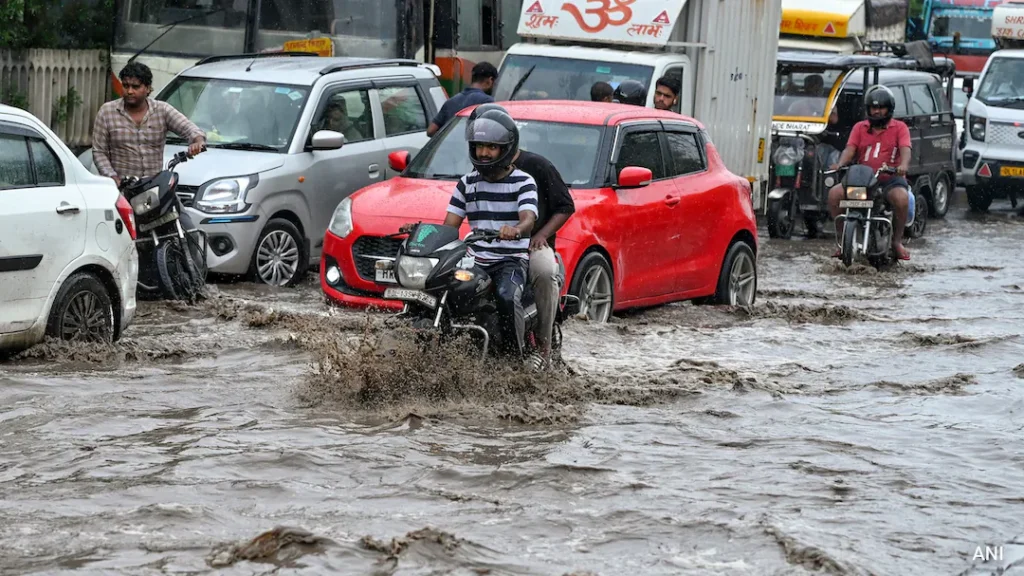
Heavy rainfall causes waterlogging and traffic disruption in Delhi-NCR as commuters navigate flooded streets during the morning rush. Image Credit: NDTV
Delhi-NCR Rain Alert: Delhi-NCR woke up to a wet and difficult Thursday as incessant heavy rainfall triggered widespread waterlogging and traffic disruption in the capital region. Several areas, including New Delhi Railway Station, Munirka, Noida and Ghaziabad, reported water accumulation that slowed movement and affected the morning rush hour. The India Meteorological Department (IMD) placed the capital under an Orange Alert, signalling the likelihood of heavy rain continuing through the day.
The impact was immediate and visible. Roads became slower, traffic stretched longer and daily travel turned stressful for thousands of residents. Yeh situation kaafi important hai because Delhi’s rain problem is not just about weather—it directly affects mobility, productivity and city life.
What Happened
The heavy rainfall that hit Delhi-NCR on Thursday morning was part of a broader monsoon spell affecting North India. The downpour led to waterlogging in several parts of the region, disrupting the flow of traffic and making it harder for commuters to reach offices, railway stations and other key destinations on time. This story was also covered by NDTV.
In Delhi itself, slight to moderate waterlogging was reported in some stretches, including around New Delhi Railway Station and Munirka. In Noida and Ghaziabad, the morning commute was also slowed as rainwater collected on roads and low-lying stretches. These are the kinds of problems that Delhi residents know all too well: one spell of rain can quickly expose drainage weaknesses and traffic bottlenecks.
The IMD’s Orange Alert means the city should expect heavy rain conditions that may continue for several hours. This is not the highest warning category, but it is serious enough to prompt caution. It suggests that more rain could fall through most of the day, keeping road conditions difficult and increasing the possibility of fresh waterlogging in vulnerable areas.
Why the Rain Is So Intense
The rainfall across Delhi-NCR is part of the active monsoon system currently influencing large parts of North India. According to IMD, fairly widespread to widespread rainfall is likely over Haryana, Chandigarh, Delhi and West Uttar Pradesh until July 10. A fresh spell of rain is also expected to continue over Northeast Uttar Pradesh till July 13, while East Rajasthan is likely to see similar activity on July 9.
That larger weather pattern is important because Delhi does not experience rain in isolation. When the monsoon intensifies across the northern belt, the capital often gets caught in the same system. This is why rain in one region often comes with commuter chaos in another. The monsoon has regional momentum, and Delhi is now facing one of those active phases.
On Wednesday, North India saw a significant monsoon spell that brought some relief from the heat. That cooler weather can feel welcome after weeks of sweltering temperatures, but it also means urban drainage systems are tested suddenly and heavily. When the rain comes fast and hard, roads that were already stressed start flooding. That is exactly what happened on Thursday morning.
Official Response and Broader Weather Context
The IMD has kept a close watch on conditions across North India. While the current focus is Delhi-NCR, the weather system has also affected other states and prompted broader national attention. Union Home Minister Amit Shah reportedly spoke with the chief ministers of Kerala, Maharashtra, Gujarat and Jammu and Kashmir to review the impact of heavy rains in their states and assured them of the Centre’s support.
Those calls came after serious weather-related incidents were reported elsewhere in the country, including debris collapse in Kerala’s Wayanad, flash floods in Jammu’s Doda and major disruptions in Maharashtra and Gujarat. That wider context matters because Delhi’s weather is part of a much larger monsoon story unfolding across India. The capital may be dealing with waterlogging today, but the monsoon’s impact is being felt nationwide.
For Delhi residents, the immediate concern is more local: how long the rain will continue and how badly traffic will be affected. But for officials, the situation is a reminder that urban flooding remains a recurring challenge. Even when rain brings temporary relief from heat, it also exposes the city’s weak spots.
Background and Context
Delhi has long struggled with the dual challenge of monsoon relief and monsoon disruption. After months of heat, rain is usually welcomed. But the same rainfall that cools the city also tends to create waterlogging, traffic jams and delays in public transport. This is especially true in low-lying areas and places where drainage systems cannot cope with a sudden downpour.
Every year, the same pattern repeats in some form. The city receives rain, roads fill up with water, people post videos of traffic jams, and civic agencies begin pumping or clearing drains. Yet the problem continues because the issue is not only rainfall — it is also how the city handles runoff, road design and drain maintenance. That is why Delhi rain stories often become civic stories too.
The current rain spell is also part of a broader monsoon refresh across North India. For some people, especially after intense summer heat, the rain is a relief. But in a city as dense and vehicle-heavy as Delhi-NCR, heavy rain can quickly become a logistical headache. That tension is at the heart of the current situation.
Timeline
Wednesday: North India sees a significant monsoon spell, bringing relief from the heat.
Thursday morning: Heavy rainfall begins in Delhi-NCR, triggering waterlogging and traffic disruption.
Early morning commute: Waterlogging is reported near New Delhi Railway Station, Munirka, Noida and Ghaziabad.
Thursday: IMD issues an Orange Alert for Delhi, warning of continued heavy rain through most of the day.
July 10 and beyond: Widespread rain is forecast across Haryana, Chandigarh, Delhi and West Uttar Pradesh.
July 13: Rain activity is expected to continue in Northeast Uttar Pradesh.
Also Read: Mumbai Monsoon Horror: 1,100 Trees Collapse in a Week as Rain and Wind Kill 3 People
Why This Matters
This matters because rain in Delhi-NCR affects millions of people in a very direct way. Waterlogging does not just mean wet roads. It means delayed buses, slower cab rides, missed trains, longer office commutes and extra stress for everyone trying to move around the city. Yeh issue kaafi important hai because the impact shows up in everyday life within minutes.
It also matters because repeated waterlogging raises questions about infrastructure readiness. If even moderate heavy rain causes key stretches to flood, then the city’s drainage system is clearly under pressure. That affects public trust, especially when residents see the same locations flooding year after year.
For businesses, the ripple effect is real. Office arrivals are delayed, deliveries slow down and customer movement drops. For students and workers, the challenge is simpler but just as frustrating: getting from one place to another becomes a struggle. So this is not just a weather update — it is a city management issue.
India Angle
For Indian readers, Delhi’s rain and waterlogging story is highly relatable because similar scenes are familiar in many metro cities. In Hinglish, seedhi baat yeh hai: jab tez baarish hoti hai, toh city ka travel system sabse pehle test hota hai. Delhi’s experience echoes what people also see in Mumbai, Gurugram, Bengaluru and other urban centres where drainage capacity is always under pressure.
The India angle also includes the wider monsoon picture. Heavy rain across North India, flash floods in Jammu, and rain-related emergencies in other states show how connected weather and public safety are right now. That makes Delhi’s update important beyond local headlines. It is part of a national monsoon cycle that is shaping how people travel, work and prepare.
At a practical level, this is a reminder that Indian cities need better stormwater planning, faster drainage clearance and stronger weather communication. As monsoon patterns become more intense and less predictable, urban resilience will matter more than ever.
Analysis
My opinion is that the real story here is not just the rain itself, but the recurring weakness it reveals. Waterlogging in key transport points like railway station areas and busy commercial pockets suggests that drainage and road planning are still not fully aligned with the city’s climate reality. The rain is natural; the disruption is partly man-made.
I also think the IMD’s alert levels are helpful because they give people a reason to plan ahead. When the forecast is clear, commuters can leave earlier, avoid flooded areas and be more cautious on the roads. That kind of early warning may seem basic, but in a city like Delhi, it can reduce stress and even prevent accidents.
The broader lesson is that monsoon management needs both forecasting and infrastructure. Delhi has the forecasting part today. The infrastructure part remains the harder challenge.
What Next
The next few hours will be important as the IMD’s Orange Alert remains in force and rain is expected to continue through most of the day. Commuters should expect more slow-moving traffic, possible fresh waterlogging and delays on major routes. If rainfall remains intense, civic teams may need to respond quickly to pump out water and keep roads passable.
Weather conditions are also likely to stay active over the next several days across North India. That means Delhi residents should prepare for a stretch of unstable weather rather than a single isolated rain event. The forecast suggests the monsoon system will remain influential through July 10 and beyond in nearby regions.
For the city, the longer-term question is whether this rainfall spell will bring only disruption or also much-needed recharge to the water cycle and heat relief. Most likely, it will do both. But for now, the focus remains on safe movement, drainage response and staying alert.
Conclusion
Delhi-NCR’s heavy morning rain has once again shown how quickly the monsoon can turn the capital’s roads into bottlenecks. With waterlogging reported in key areas and an Orange Alert in place, the city is bracing for continued rainfall and possible further disruption. While the rain has brought relief from the heat, it has also exposed the familiar weak points in urban drainage and traffic flow. For residents, the message is simple: stay cautious, plan ahead and expect the weather to remain a major factor through the day.
Written By A. Jack