CCTV footage reportedly shows the toddler being slapped, ears pulled and kicked; father files complaint after noticing bruises and behavioural changes, triggering a POCSO, JJ Act and BNS case in northeast Delhi’s Jaffrabad/Maujpur.

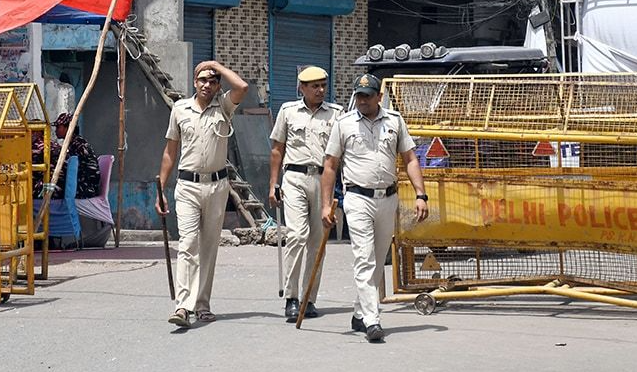
This image is only for illustrations.
A three-and-a-half-year-old boy was allegedly physically and sexually assaulted at a private playschool in northeast Delhi’s Jaffrabad/Maujpur area, with CCTV footage purportedly showing him being tied to a chair, slapped, having his ears pulled and being kicked by a teacher and a support staff member, police said.
The Delhi Police on Sunday, August 30, 2026, arrested a female attendant (ayah) of the day care and playschool two days after the child’s father—a 33-year-old advocate—filed a complaint alleging that his son had been physically assaulted and sexually harassed at the facility.
A case has been registered against four people—the school director, the principal, a teacher and the attendant—under Sections 115(2) and 126(2) of the Bharatiya Nyaya Sanhita (BNS), Sections 75 and 82 of the Juvenile Justice (Care and Protection of Children) Act, 2015, and Section 12 of the Protection of Children from Sexual Offences (POCSO) Act, 2012. This story was also covered by The Hindu.
Efforts are underway to arrest the remaining three accused, and the Directorate of Education (DoE) has ordered an inquiry into the incident as police review CCTV footage, medical documents and other evidence.
What Happened
According to police and media reports, the sequence of events unfolded as follows:
Early–mid August 2026: The child, aged about 3½ years, is enrolled in a private playschool/day care in northeast Delhi (reported as Jaffrabad and Maujpur in different accounts).
Parents notice changes: After returning from school, the boy becomes unusually quiet, shows behavioural changes and appears fearful, especially about going to the toilet.
Bruises observed: The parents notice bruises and swelling on the child’s body, including alleged injuries to his ears.
Medical consultation: Concerned, the parents take the child to a doctor, who documents injuries and advises further action.
Request for CCTV: The family approaches the school for an explanation and asks to see CCTV footage of the classroom for August 16–18.
Footage received: On or around August 25, the parents receive access to the CCTV recordings.
Alleged abuse captured: The footage reportedly shows the child being tied to a chair for hours, slapped, having his ears pulled, being kicked off the chair (causing him to fall), and being denied food. Some reports also allege inappropriate touching and sexual harassment.
Police complaint: The father files a formal complaint with the Jafrabad police station.
Police action: On August 29, police visit the school, seize the CCTV DVR, and register an FIR. On August 30, the attendant is arrested.
The alleged abuse is said to have occurred over multiple days, not as a single isolated incident, according to the family’s account and preliminary media reports.
Why and How This Happened
While the full motive and context will emerge only after investigation, several factors commonly seen in such cases may be relevant:
Power imbalance: Very young children are dependent on adults and often cannot articulate abuse clearly, making them vulnerable.
Lack of supervision: If classrooms or day-care areas are not adequately monitored, misconduct can go unchecked.
Stress and misconduct by staff: Personal stress, poor training or a culture of using physical punishment can lead to abusive behaviour.
Institutional failure: If management ignores warning signs or fails to vet staff properly, the risk of abuse increases.
Delayed detection: Parents may initially attribute behavioural changes to normal adjustment issues, allowing abuse to continue.
In this case, it was the combination of visible injuries, behavioural changes and access to CCTV that enabled the family to build a strong complaint.
Quotes and Official Statements
Senior police officer: “Appropriate legal action will be taken after reviewing the CCTV footage and other evidence.”
Police account: “A case was registered against the staff member, the school director, the principal and a teacher… Efforts are under way to arrest the other three accused.
Father’s complaint (as reported): The child was tied to a chair, slapped, kicked and denied food; there are also allegations of sexual harassment.
Directorate of Education: The DoE has ordered an inquiry into the incident at the playschool.
These statements indicate that authorities are treating the case seriously and that institutional accountability is also under scrutiny.
POCSO, JJ Act and BNS Provisions
The case has been registered under multiple laws designed to protect children:
POCSO Act, Section 12: Punishment for sexual harassment of a child. This covers non-penetrative sexual assault and other forms of sexual harassment.
Juvenile Justice (Care and Protection of Children) Act, 2015:
Section 75: Punishment for cruelty to a child, including physical assault and mental abuse by someone in charge of care.
Section 82: Punishment for corporal punishment in any form inflicted upon a child.
Bharatiya Nyaya Sanhita (BNS):
Section 115(2): Voluntarily causing hurt.
Section 126(2): Wrongful restraint.
Section 3(5): Common intention (for acts done in furtherance of a common plan).
Together, these provisions allow investigators to address physical assault, sexual harassment, illegal restraint and institutional negligence in a single case framework.
Timeline of the Case
August 16–18, 2026: Alleged abuse occurs; CCTV footage later shows the child being tied to a chair, slapped, kicked and denied food.
Mid–late August: Parents notice bruises, behavioural changes and fear of the toilet; the child becomes unusually quiet after school.
Around August 25: Parents receive CCTV access/footage for August 16–18 and are shocked by what they see.
August 28–29: Father files a formal complaint; police visit the school, seize the CCTV DVR and register an FIR under POCSO, JJ Act and BNS.
August 30 (Sunday): Female attendant (ayah) is arrested; case registered against director, principal, teacher and attendant.
August 30–31: The Directorate of Education orders an inquiry; efforts continue to arrest the remaining three accused.
Also Read: Delhi Father Kills Schizophrenic Son: Lured to Shipping Container on Pretext of Doctor Visit
Why This Matters
Yeh issue kaafi important hai because it strikes at the heart of parental trust in early childhood institutions.
Child safety: The alleged victim is only 3½ years old—too young to defend himself or fully explain what happened.
Institutional accountability: The case targets not just the direct abuser but also the director, principal and teacher, signalling that management can be held responsible for systemic failures.
CCTV as evidence: The footage played a crucial role; without it, the case might have relied only on circumstantial evidence and medical reports.
Legal framework: The use of POCSO, the JJ Act and BNS shows that such crimes are being treated with the seriousness they deserve.
Parental vigilance: The case underlines the importance of watching for behavioural changes, bruises and sudden fears in young children.
For society, this is a wake-up call about how easily abuse can happen in closed spaces—and how crucial it is to have transparency, monitoring and swift action.
India Angle
India has a robust legal framework for child protection, but implementation remains uneven.
Key elements:
POCSO Act (2012): A special law to address sexual offences against children, with stringent punishment and child-friendly procedures.
JJ Act (2015): Provides for the care, protection and rehabilitation of children and punishes cruelty and corporal punishment by carers.
BNS (2023): Replaces the IPC and includes provisions for hurt, wrongful restraint and common intention.
Education department oversight: The Directorate of Education can enquire into school misconduct and recommend action, including cancellation of recognition.
Yet, on the ground:
Many play schools and day-care centres operate with minimal regulation.
Staff vetting, background checks and training are often inadequate.
Parents may hesitate to question “reputed” institutions until something goes seriously wrong.
Yeh case dikhta hai ki sirf kanoon kaafi nahi hai; strict enforcement, regular inspections aur parental awareness bhi zaroori hai.
Analysis
This incident is disturbing not just because of the alleged acts, but because of what they suggest about the system:
Multiple days of abuse: If the footage covers August 16–18, this was not a one-time outburst but repeated misconduct.
Multiple accused: The FIR names the director, principal, teacher and attendant, implying possible complicity, negligence or failure to act.
Access to CCTV: The fact that parents had to insist and then were shocked by the footage raises questions about routine monitoring.
In my view, this is not just about punishing one attendant. It is about:
Ensuring playschools have mandatory CCTV with periodic review by an independent committee or parent representatives.
Requiring background checks and child-safety training for all staff.
Making it easier for parents to report concerns without fear of retaliation or dismissal.
Holding management accountable when patterns of abuse emerge.
The law is strong; the gap is in everyday enforcement and culture.
What Next
The case will now move through investigative and regulatory channels.
Likely developments:
Arrests of remaining accused: Police are working to apprehend the teacher, principal and director as the investigation progresses.
Evidence analysis: CCTV footage, DVR, medical reports, witness statements and school records will be examined in detail.
POCSO trial: As a special court case, the proceedings will be child-sensitive, with in-camera trials and protections for the victim’s identity.
Education department inquiry: The DoE may recommend penalties, including suspension or cancellation of the school’s recognition, depending on findings.
Civil action: The family may also pursue civil remedies for compensation and damages.
For parents and institutions, practical steps include:
For parents:
Watch for sudden behavioural changes, fear of school, and unexplained bruises.
Talk gently to the child; avoid leading questions.
Request CCTV access if concerned; escalate to police if needed.
Seek medical documentation early.
For schools/day-care centres:
Install and maintain CCTV in classrooms and common areas.
Conduct background checks and reference verification for staff.
Provide regular child-safety and anti-corporal-punishment training.
Set up clear grievance mechanisms for parents and staff.
Conclusion
A three-and-a-half-year-old boy was allegedly tied to a chair, slapped, kicked and sexually harassed at a private playschool in northeast Delhi, with CCTV footage reportedly capturing the abuse over multiple days.
The Delhi Police have arrested one attendant and registered a case under POCSO, the Juvenile Justice Act and the Bharatiya Nyaya Sanhita against the attendant, a teacher, the principal and the school director.
The Directorate of Education has ordered an inquiry, and efforts are underway to arrest the remaining accused as investigators review footage, medical evidence and school records.
This case is a stark reminder that child safety cannot be left to trust alone. It demands systems—CCTV, training, background checks, inspections—and a culture where parents feel empowered to speak up and authorities act swiftly.
Written By A. Jack