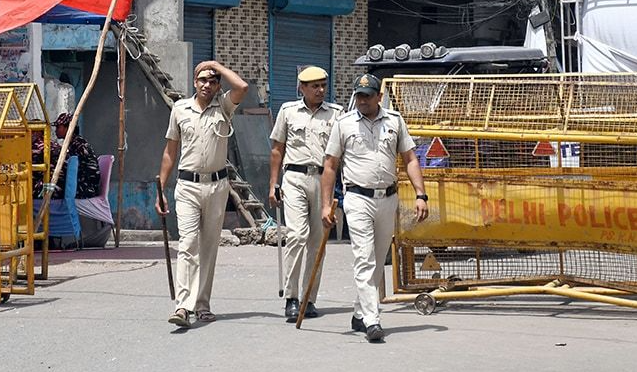
The AI-enabled system matched live CCTV footage with police databases and dossier records from across district units. However, authorities have not yet clarified the concerns raised over alleged harassment of protesters.
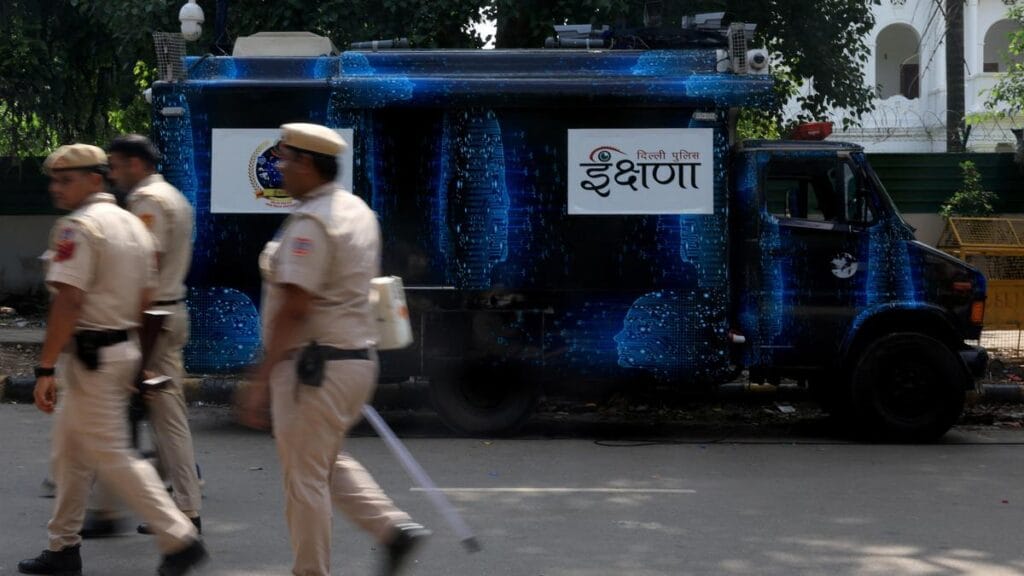
Delhi Police personnel monitoring Jantar Mantar protests. Imahe Credit: The Hindu
Delhi Police has reportedly identified 2,873 people with criminal records who were present at the Jantar Mantar protests, according to official sources. The identification was done using facial recognition systems installed at and around the protest venue, with the findings now set to be included in the investigation into the July 20 violence.
The development is significant because it shows how rapidly surveillance technology is becoming central to crowd monitoring in India’s capital. Jantar Mantar has long been a symbolic protest space, but the use of facial recognition there raises serious questions about public assembly, privacy and how authorities distinguish between lawful protest and potential security risk.
How the system worked
According to the official sources, the AI-enabled facial recognition setup compared live CCTV feeds with existing criminal databases and dossier records maintained by different district police units and other law enforcement agencies. In practical terms, that means people present at the protest site were scanned in real time and matched against stored records.
Such systems are usually designed to help police flag individuals who may already be on record for prior offences or who are otherwise being monitored. In a protest context, authorities often justify this by saying they are trying to prevent violence, track repeat offenders and identify those who may have played a role in escalation. This story was also covered by The Hindu.
But this also changes the atmosphere of a public demonstration. When participants know they may be identified through AI surveillance, the protest space itself can begin to feel less like a civic forum and more like a monitored zone. That is one reason this story matters so much. Yeh issue kaafi important hai because it sits right at the intersection of technology, policing and democratic rights.
Why police used facial recognition
Police sources said the exercise was aimed at assessing the nature of the people present at the Jantar Mantar protests. The findings, they said, will be used in the investigation into the violence that broke out on July 20.
That suggests the police are trying to separate ordinary protesters from people they believe may have prior criminal involvement or a history of disturbance. From a law-and-order perspective, this is understandable. If a protest turns violent, police generally want to know who was present and whether anyone had a record of prior offences.
However, the lack of detailed public explanation is what makes the issue sensitive. There has been no clear clarification on the allegations of “harassment” of protesters by police, and that silence leaves room for concern. If facial recognition is used broadly, without transparent safeguards, it can easily spill into overreach.
Background and context
Jantar Mantar has for years been one of Delhi’s best-known protest sites. Students, workers, activists and political groups have used it as a place to voice dissent because of its symbolic importance and central location. That long history makes it especially sensitive when surveillance tools are introduced there.
In India, the use of AI-powered policing is expanding quickly, but the rules around it are still developing. Facial recognition may help law enforcement during serious incidents, yet it also raises concerns about privacy, error rates, and the possibility of misidentification. A single mismatch in a crowded protest can affect an innocent person.
The July 20 violence also provides the immediate backdrop. Once protests turn tense or violent, police scrutiny becomes much sharper, and surveillance tools are often rolled out more aggressively. This is not unusual, but it does intensify the debate over whether the state is focusing on genuine law-and-order risks or casting too wide a net.
Timeline
July 20: Violence breaks out at or around the Jantar Mantar protest site.
After the incident: Delhi Police begin reviewing CCTV footage and protest-site data.
Monday: Official sources say 2,873 people with criminal records were identified using facial recognition.
Current stage: The findings are being included in the investigation, while questions remain over alleged harassment of protesters.
Also Read: Assam Drops Cases Against CJP Protesters After Bihar, Assures No Further Action in NEET-UG Agitation
Why This Matters
This matters because facial recognition in protest spaces is not just a technical issue; it is a civil liberties issue. If the state can identify thousands of people at a demonstration, then the line between public safety and mass surveillance becomes thinner. That can have a chilling effect on the right to assembly.
It also matters because technology can create a false sense of certainty. AI systems may be powerful, but they are not infallible. If databases are incomplete, outdated or inaccurate, then the risk of wrongful identification increases. That can lead to unnecessary questioning, detentions or reputational damage.
For ordinary citizens, the concern is simple: if you attend a protest peacefully, should your face be scanned and stored just because you were there? In a democracy, that is a serious question, not a minor procedural detail.
India angle
For Indian readers, this story connects directly to the growing use of surveillance in public spaces. From metro stations to protest sites, AI-based monitoring is increasingly part of how cities are being policed. Delhi, in particular, has become a testing ground for high-tech law enforcement.
In Hinglish, seedhi baat yeh hai: technology useful bhi ho sakti hai aur risky bhi. If facial recognition helps police prevent violence, many people may support it. But if it is used without clear limits, then it can make peaceful protesters feel watched and targeted.
The India angle is also about transparency. Citizens are still asking basic questions about who stores the data, how long it is kept, who can access it and what happens if the system makes a mistake. Until those questions are answered clearly, trust will remain limited.
Analysis
My view is that the police may have a legitimate investigative reason to review protest footage, especially after violence. But the scale here is what makes the story sensitive. Identifying 2,873 people is not a small administrative step; it suggests a broad surveillance sweep that will naturally raise concerns among civil rights advocates.
I also think the unanswered harassment question is important. If police are using advanced tools to assess protest attendees, then they need to explain the safeguards just as clearly as they explain the benefits. Otherwise, the public will assume the technology is being used first and justified later.
What Next
The next step will likely be the use of the facial recognition findings in the formal investigation into the July 20 violence. Police may question individuals flagged by the system, verify identities through other records and examine whether any of them were linked to the unrest.
At the same time, civil liberties groups or concerned citizens may push for more transparency about how the system was used, what data was matched and whether any innocent protesters were wrongly flagged. If that happens, the debate could expand from a law-and-order story into a broader privacy and rights issue.
There is also the possibility that this case becomes a reference point for future protest policing in India. If authorities view the exercise as successful, more protest sites may see similar surveillance. If concerns about overreach grow louder, pressure may build for stronger rules and oversight.
Conclusion
Delhi Police’s reported use of facial recognition at the Jantar Mantar protests marks a major moment in the way public gatherings are monitored in India. Identifying 2,873 people with criminal records may help investigators look into the July 20 violence, but it also raises deep questions about privacy, protest rights and the limits of AI surveillance.
The story matters because it is not only about one protest or one police operation. It is about the future of public dissent in a digital age, where cameras, databases and algorithms increasingly shape who is watched and how. That is a conversation Delhi — and India — will likely have to keep having.
Written By A. Jack