Safdarjung recorded 59.2 mm of rain in 24 hours by 8:30 am and another 57.3 mm by 5:30 pm, while commuters faced flooded roads, traffic jams and delays across Delhi-NCR.
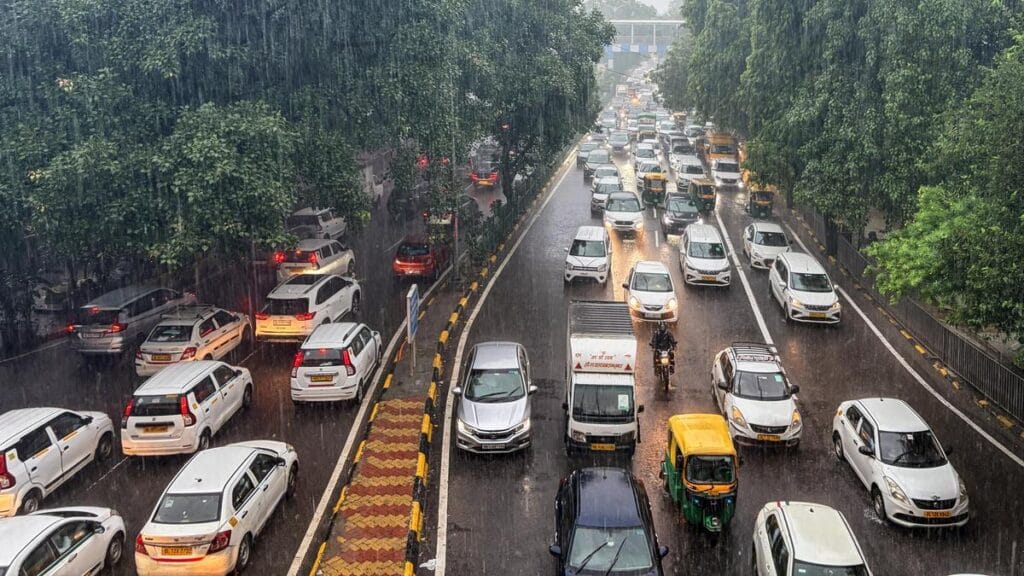
Commuters navigate waterlogged roads in Delhi after heavy monsoon rain disrupted traffic across the national capital. Image Credit: The Hindu
Delhi experienced a sharp spell of monsoon rain on Friday, leaving roads waterlogged and traffic movement severely affected across several parts of the city. The India Meteorological Department forecast more light to moderate rainfall through August 10, raising concerns about additional waterlogging and disruption over the weekend.
Safdarjung, Delhi’s representative weather station, recorded 59.2 mm of rainfall in the 24 hours ending at 8:30 am on Friday. The station recorded another 57.3 mm between 8:30 am and 5:30 pm, indicating that the capital remained under persistent rainfall for much of the day.
Rain-related disruption was reported on major corridors, including Mehrauli-Badarpur Road, ITO, Wazirabad Road, Patel Road, Rohtak Road, Shankar Road, the Kirti Nagar stretch, the Delhi-Jaipur Highway, Peeragarhi and Shaheen Bagh. Waterlogging was also reported in areas such as Dakshinpuri, Okhla, Sangam Vihar, Sainik Farms and parts of Mehrauli-Badarpur Road.
Rainfall figures across Delhi
The rain was not uniform across the city. Several observatories recorded substantial rainfall, while other areas received lower totals.
According to weather data:
Safdarjung: 59.2 mm by 8:30 am; another 57.3 mm reported later in the day.
Lodhi Road: 60.4 mm by 8:30 am.
Ridge: Approximately 57 mm.
Ayanagar: 26.2 mm.
Palam: 16.9 mm.
The variation shows how localised intense rain can affect different parts of the city in different ways. One neighbourhood may experience severe waterlogging while another sees only moderate showers. This story was also covered by The Hindu.
The IMD’s city forecast described Delhi as likely to experience cloudy skies and moderate rain on Saturday, followed by lighter rain or drizzle on Sunday and Monday.
Why Delhi faced waterlogging
The immediate cause of the waterlogging was the volume and intensity of rainfall over a short period. When rain falls faster than drains can carry it away, water accumulates on roads, underpasses and low-lying neighbourhoods.
Delhi’s drainage network also faces several structural challenges:
Blocked or silted drains.
Plastic and solid waste obstructing water flow.
Encroachment near drainage channels.
Uneven road surfaces and low-lying stretches.
Construction debris blocking storm-water outlets.
Limited drainage capacity in densely populated areas.
Weak coordination among civic agencies.
Urbanisation has reduced the city’s ability to absorb rainwater naturally. Concrete roads, parking areas and built-up land prevent water from entering the soil, forcing more runoff into drainage systems.
The problem becomes worse when heavy rain coincides with peak office hours. Vehicles move slowly, stalled cars occupy lanes and emergency services struggle to reach flooded locations.
Yeh issue kaafi important hai because Delhi’s monsoon problem is not only about rainfall. It is also about drainage, planning, maintenance and emergency response.
Areas affected by traffic disruption
Traffic congestion was reported on several major roads. Mehrauli-Badarpur Road, ITO, Wazirabad Road, Patel Road, Rohtak Road, Shankar Road and the Delhi-Jaipur Highway experienced slow movement.
Several commuters reported long delays, while public transport and cab services were affected in waterlogged areas. Vehicles breaking down in deep water further reduced road capacity.
Weather forecast for the weekend
The IMD has forecast light to moderate rainfall over Delhi until August 10. The city is expected to remain generally cloudy, with occasional spells of rain.
The official city forecast indicated:
August 8: Generally cloudy skies with moderate rain.
August 9: Cloudy conditions with light rain or drizzle.
August 10: Cloudy skies with light rain or drizzle.
The weather office also warned of the possibility of heavy rain at isolated places during some periods. Residents should therefore not assume that lighter forecasts eliminate the risk of sudden intense showers.
The weekend rainfall could again affect traffic, outdoor events, construction work and low-lying areas. Commuters may need to plan longer travel times and check updates before leaving home.
Civic response and public safety
Civic agencies received complaints related to waterlogging, fallen trees and traffic obstruction. Teams were deployed to clear roads, pump out standing water and respond to emergencies.
During intense rain, residents are advised to:
Avoid underpasses and roads with deep water.
Do not attempt to drive through flooded stretches.
Keep children away from open drains and electrical installations.
Check traffic and weather updates before travelling.
Carry medicines and drinking water if a long commute is expected.
Use public transport routes that are less affected by waterlogging.
Report blocked drains and fallen trees to civic authorities.
People living in low-lying homes should move important documents, medicines and electronic equipment to higher locations if water begins entering their premises.
Motorists must be particularly careful around submerged roads. Water can hide potholes, open manholes and damaged road surfaces. It can also cause vehicles to lose control or stall in moving traffic.
Background and context
Delhi receives much of its annual rainfall during the southwest monsoon. The city regularly experiences waterlogging when intense rain overwhelms its drainage network.
The problem is not confined to one civic body. Delhi has multiple agencies responsible for roads, drains, transport, flood control and public infrastructure. Coordination among the Municipal Corporation of Delhi, the Public Works Department, the Delhi government, traffic police and other agencies is crucial during extreme weather.
Previous monsoon seasons have shown that rainfall of moderate duration can still create serious disruption when drains are blocked or roads are poorly designed. Short, intense spells are especially difficult to manage because water accumulates rapidly.
Climate change has also increased concerns about rainfall variability. While total seasonal rainfall may not rise uniformly, extreme short-duration events can become more frequent or intense. This makes old drainage assumptions less reliable.
Timeline
Friday morning: Heavy rain begins across Delhi; Safdarjung records 59.2 mm in the 24 hours ending at 8:30 am.
Morning and afternoon: Waterlogging reported in low-lying areas; traffic slows on major routes.
By 5:30 pm: Safdarjung records another 57.3 mm of rain after the morning observation.
Friday evening: Traffic congestion, fallen-tree complaints and flooded roads reported across the city.
Saturday to Monday: IMD forecasts light to moderate rain, with isolated heavy spells possible.
August 10: Light rain or drizzle remains possible according to the city forecast.
Also Read: Delhi Construction Ban: NAREDCO Urges CM Rekha Gupta to Reconsider Winter Curbs
Why This Matters
This matters because waterlogging disrupts more than daily travel. It can affect emergency services, school attendance, office operations, hospital access and small businesses.
For workers and students, long traffic jams can result in missed examinations, appointments and shifts. For delivery workers, drivers and street vendors, flooded roads can directly reduce income.
It also matters from a public-health perspective. Stagnant water can become contaminated and increase the risk of mosquito breeding. Flooded streets may contain sewage, chemicals and waste, creating hazards for pedestrians and children.
Hospitals and emergency services face special challenges when roads are flooded. Ambulances can lose valuable time, while patients may struggle to reach medical facilities.
The rain may provide relief from heat and humidity, but heavy precipitation without drainage capacity turns a weather event into a civic crisis. In simple Hinglish, baarish zaroori hai, lekin waterlogging ko normal nahi maana ja sakta.
India angle
For Indian readers, Delhi’s rain disruption is part of a larger urban challenge. Cities such as Mumbai, Bengaluru, Hyderabad, Chennai and Kolkata also experience flooding after intense monsoon showers.
Rapid construction, shrinking wetlands, unplanned growth and inadequate storm-water systems have increased the vulnerability of Indian cities. Drain cleaning before the monsoon is useful, but cities also need long-term planning.
India’s urban authorities must upgrade drainage systems based on current rainfall patterns rather than historical averages alone. They also need better flood mapping, real-time alerts, permeable surfaces and stronger enforcement against encroachment on natural drainage channels.
Delhi’s experience can offer lessons for other cities. A coordinated emergency system, clear public warnings and transparent reporting of drainage work can reduce the impact of heavy rain.
Analysis
The IMD provided a forecast of continued rain, which gives civic agencies time to prepare. The focus should now be on preventive action rather than only clearing water after roads are flooded.
Civic bodies should identify chronic waterlogging points and publish action plans for each location. Residents also deserve information about which roads are closed, where pumping operations are underway and how long restoration may take.
The city should also examine why some roads flood repeatedly. If the cause is a blocked drain, the solution is maintenance. If the cause is poor road design or low elevation, permanent engineering changes may be required.
Heavy rainfall cannot be prevented, but the damage and disruption can be reduced through better planning and faster response.
What Next
The immediate next step will be monitoring rainfall through the weekend and clearing water from affected roads. Civic teams are expected to remain on alert for fresh waterlogging, fallen trees and traffic disruption.
The traffic police may issue advisories for routes affected by flooding. Commuters should check conditions before leaving, especially during morning and evening travel periods.
The IMD will continue updating its forecasts and warnings. Residents should rely on official advisories rather than unverified social media messages.
Longer term, Delhi will need a detailed review of the rain-related disruption. The review should examine drainage capacity, desilting work, road maintenance, pumping infrastructure and coordination among agencies.
The city should also invest in rainwater harvesting, wetland protection and permeable public spaces. These measures can help reduce surface runoff and recharge groundwater.
Conclusion
Heavy rainfall disrupted life across Delhi on Friday, causing waterlogging, traffic jams and delays on major roads. Safdarjung recorded 59.2 mm of rain by 8:30 am and another 57.3 mm by 5:30 pm, while the IMD forecast more rain through August 10.
The weekend weather may bring some relief from summer heat, but residents should remain cautious because additional showers could worsen waterlogging in vulnerable areas.
For Delhi, the larger lesson is clear: rainfall is a natural event, but severe urban disruption is often linked to drainage and planning failures. Better maintenance, faster civic response and long-term climate-resilient infrastructure are essential if the capital is to cope with increasingly unpredictable monsoon conditions.
Written By A. Jack