The Delhi government has given nod to a fresh round of renaming of several Metro stations and public landmarks in the capital including Rohini West, Dwarka Metro Station and Britannia Chowk. The decision was taken at a meeting of the State Names Authority presided by Chief Minister Rekha Gupta, which aims at bringing public places in tune with local identity, landmarks and eminent personalities.
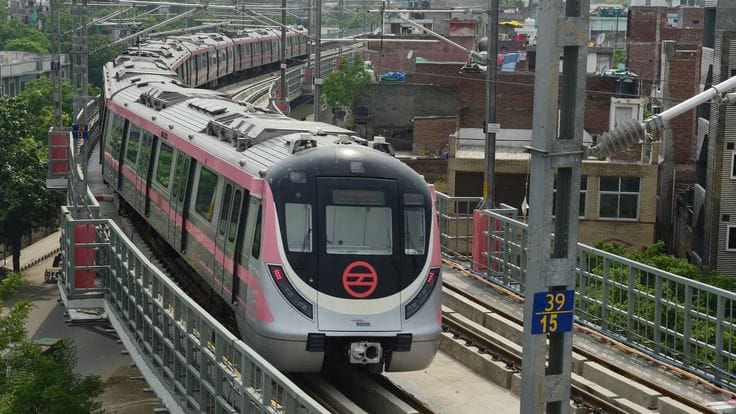
The Delhi government approves the renaming of key Metro stations and civic landmarks, including Rohini West, Dwarka, and Britannia Chowk.
Delhi has once again seen a significant round of place renaming, with the city government approving new names for several Metro stations and public locations in a move that could affect commuters across the capital. The decisions were taken at a meeting of the State Names Authority chaired by Chief Minister Rekha Gupta on Wednesday, and they cover locations in Rohini, Dwarka, Shakurpur, Begampur, and Jwalapuri.
Among the most notable changes, Rohini West Metro Station will now be renamed Dr. Baba Saheb Ambedkar Hospital Metro Station, while Dwarka Metro Station will become Dwarka-Kakrola Metro Station. Britannia Chowk in Shakurpur will also get a new identity as Ashwini Chopra (Minna) Chowk. The renaming drive reflects Delhi’s continuing effort to connect civic spaces with local history, geography, and public memory. Yeh issue kaafi important hai because station names are not just signboards—they shape how people navigate and identify the city.
What Has Changed
The government’s approved list includes both transport hubs and civic infrastructure. The full set of changes announced so far is as follows:
Rohini West Metro Station → Dr Baba Saheb Ambedkar Hospital Metro Station
Rohini East Metro Station → Rohini Metro Station
Dwarka Metro Station → Dwarka-Kakrola Metro Station
Britannia Chowk, Shakurpur → Ashwini Chopra (Minna) Chowk
Begampur sports complex → Atal Khel Parisar
Under-construction hospital in Jwalapuri → Baba Ramdevji Maharaj Hospital
These changes span several areas of the capital and include road junctions, sports infrastructure, hospitals, and Metro-related landmarks. The government says the aim is not only symbolic but also practical, especially where names can help passengers identify places more clearly. For example, the new name for Rohini West Metro Station is meant to reflect its proximity to Dr. Baba Saheb Ambedkar Hospital, which may make wayfinding easier for commuters and visitors.
Why the Government Says It Made the Change
According to officials, the renaming exercise is intended to link public places with local identity, neighborhood associations, and prominent personalities. In a city as layered and diverse as Delhi, names often carry political, cultural, and historical significance. The government appears to be using that logic to argue that the new names are more rooted in local realities. NDTV has covered the full story.
The renaming of Rohini West to Dr. Baba Saheb Ambedkar Hospital Metro Station is particularly notable because it serves both recognition and utility. One of the stated purposes is that commuters will be able to better understand the station’s connection to the nearby hospital. That practical logic matters in a city where Metro passengers rely heavily on clear station naming.
Likewise, the change from Dwarka Metro Station to Dwarka-Kakrola Metro Station seems aimed at making the location more precise. Station names that reflect nearby neighborhoods can reduce confusion, especially in growing urban zones where multiple landmarks exist in close proximity. For residents and daily commuters, this can make travel easier and more intuitive.
The Names Behind the Names
The new names are also politically and culturally meaningful. Britannia Chowk in Shakurpur will now be known as Ashwini Chopra (Minna) Chowk. Ashwini Chopra was a journalist and former MP from Karnal, and the move appears intended to honor a public figure with media and political significance.
The Begampur sports complex has been renamed Atal Khel Parisar after former Prime Minister Atal Bihari Vajpayee, and the government has also approved a statue of Vajpayee at the complex. This fits a familiar pattern in Indian public policy, where sports or civic venues are renamed after widely respected national leaders.
The hospital in Jwalapuri will be named Baba Ramdevji Maharaj Hospital, adding a spiritual and cultural dimension to the renaming list. Together, these decisions suggest that the Delhi government wants public infrastructure to reflect both local geography and nationally recognized personalities.
Timeline of the Decision
Wednesday: State Names Authority meeting held under Chief Minister Rekha Gupta.
During the meeting: Several Metro stations and civic places were approved for renaming.
After approval: The government publicly announced the new names.
Next phase: The changes will need to be reflected in official signage, maps, commuter information, and administrative records.
Background and Context
Renaming public places is not new in Delhi or across India. Cities often revise names to better reflect local identity, heritage, or political priorities. In some cases, a name change is meant to restore cultural or historical recognition. In others, it is done to improve clarity for users or to align with newer civic realities.
Delhi, in particular, has seen frequent debates over names because the city is both a historical capital and a modern administrative center. That makes every renaming decision carry more weight than it might in a smaller city. A station name may affect travel directions, digital maps, taxi bookings, announcements, and even how outsiders perceive the locality.
The current set of changes also reflects a broader administrative trend of linking infrastructure with prominent public figures. From Dr. Baba Saheb Ambedkar to Atal Bihari Vajpayee and Baba Ramdevji Maharaj, the names signal a mix of historical honor, political symbolism, and civic identity. In simple words, yeh sirf naam badalne ka kaam nahi hai — yeh city ke identity map ko update karne jaisa hai.
Why This Matters
This matters because renaming has a direct impact on daily life, especially for Metro users, hospital visitors, and local residents. A new name can make navigation easier, but it can also create short-term confusion if maps, apps, and signage are not updated quickly. For commuters, that transition period is always important.
It also matters because place names shape memory. When a Metro station or chowk is renamed, the city is essentially deciding what it wants to remember and who it wants to honor. That makes such decisions both administrative and symbolic. Yeh issue kaafi important hai because Delhi’s public spaces are part of the country’s visible historical and cultural narrative.
India Angle
The India angle here is strong because public naming in India often goes beyond convenience. It frequently reflects identity, politics, community recognition, and historical legacy. Delhi, as the national capital, becomes a stage where such decisions are closely watched not only by locals but also by the wider country.
For Indian commuters, especially in a city as large as Delhi, station names are not abstract labels. They are practical tools used every day by office-goers, students, patients, and tourists. In Hinglish, the seedhi baat yeh hai: a name change ka matlab sirf a board change nahi hota; travel habits bhi change hote hain. That makes the announcement relevant far beyond municipal circles.
Analysis
My view is that the government has chosen a politically safe but administratively meaningful route. Renaming a Metro station after a nearby hospital is defensible on functional grounds, while honoring national figures like Ambedkar and Vajpayee adds symbolic weight. At the same time, any renaming exercise must be handled carefully because the public often remembers old names for years. If official communication is weak, confusion can spread across maps, apps, transport announcements, and local conversations.
What Next
The next step will be implementation. That means updating Metro signboards, station announcements, route maps, digital navigation systems, and civic records. If the process is handled well, commuters should gradually adapt to the new names without much trouble.
There may also be public reactions from residents, historians, transport users, and local political groups, especially where older names carry long usage value. Some people may welcome the changes as overdue recognition, while others may worry about convenience and continuity. Over time, the real test will be whether the new names become natural in daily use or remain official labels that people continue to avoid in conversation.
Conclusion
Delhi’s latest renaming drive marks another significant update to the capital’s public geography, with changes affecting Metro stations, chowks, a sports complex, and a hospital site. The government says the move is about identity, clarity, and honoring notable figures while also helping commuters connect places more easily.
Whether the public quickly adopts these new names will depend on how clearly they are communicated and how smoothly they are integrated into everyday travel. For now, one thing is clear: Delhi’s map is changing again, and the names on it now tell a slightly different story about the city’s past, present, and future.
Written By A. Jack