A fresh controversy has erupted after Doordarshan News anchor Ashok Shrivastav allegedly called a Delhi Class 12 student “Pakistani”, while responding to his complaint against the marking process of the CBSE. The anchor later deleted the post and apologised after it emerged the student, Vedant Srivastava, was an Indian student raising a genuine exam grievance.
A social media controversy has sparked debate after a senior Doordarshan anchor reacted to a Delhi student’s CBSE complaint by wrongly calling him Pakistani.
A controversy involving Doordarshan News anchor Ashok Shrivastav and Delhi student Vedant Srivastava has triggered outrage online after the journalist reportedly called the teenager “Pakistani” while reacting to his CBSE complaint on X. The incident began when Vedant posted about a possible mix-up in his CBSE Physics answer sheet and raised concerns about the board’s evaluation process.
What should have remained a student grievance over exam marking quickly escalated into a public embarrassment. Shrivastav, seeing the region listed on Vedant’s X profile as “South Asia,” appears to have assumed the account belonged to someone from Pakistan and responded with a sarcastic Hindi remark questioning whether “Pakistanis also appeared for CBSE exams.” Later, after realizing the mistake, he deleted the post and apologized. Yeh matter kaafi important hai because it shows how quickly social media assumptions can turn into reputational harm.
What Happened
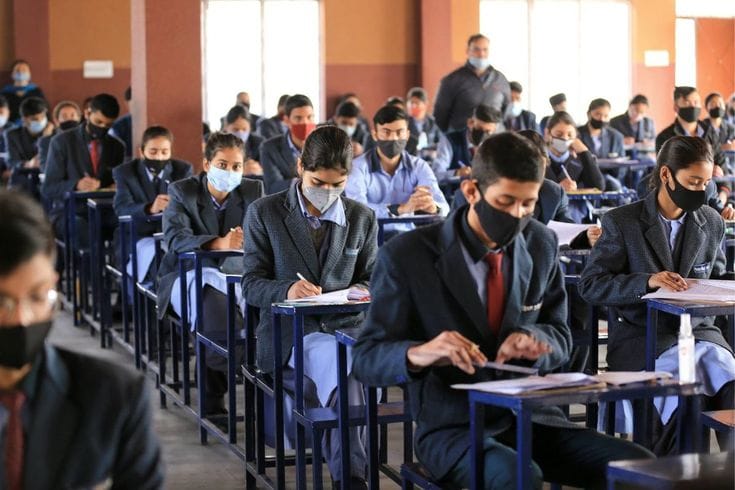
Vedant Srivastava, a Class 12 student from Delhi, had recently received unexpectedly low marks in Physics. As part of the CBSE re-evaluation process, he applied for photocopies of his answer sheets. When the copies arrived, he discovered that the Physics answer sheet uploaded by the board was not his.
That discovery was serious enough on its own, especially in a year when students have been openly questioning CBSE’s new On-Screen Marking system. Vedant then created an X account to share his complaint publicly. His post was part of a larger wave of frustration among students who believed the board’s digital marking process had gone wrong in multiple cases. The Wire has covered the full story.
Shrivastav then viewed the profile and focused on the location field, which reportedly showed “South Asia.” Based on that, he inferred that the account belonged to a Pakistani user. He reacted publicly in Hindi with a sarcastic line: “Did Pakistanis also appear for CBSE exams?!!” The post quickly drew criticism because it not only jumped to a false conclusion but also mocked a student who was raising a legitimate concern.
After the error became clear, Shrivastav deleted the post and issued a clarification. He apologized to Vedant and his family for the mistake. At the same time, he also suggested that the location of the account showing outside India remained unclear, which kept the matter from fully disappearing even after the apology.
Why the Issue Escalated
The controversy escalated because it sat at the intersection of three sensitive issues: a student exam grievance, a public broadcaster’s senior journalist, and social media identity assumptions. Each of those on its own can create discussion. Together, they create a storm.
Vedant’s complaint came amid mounting criticism of CBSE’s On-Screen Marking system, which was introduced this year for Class 12 evaluations. Students have alleged incorrect marking, blurred scans, unchecked answers, and page-wise marks not matching the final totals. The result has been a sharp drop in trust, especially after the pass rate fell to 85.2%, the lowest since 2019.
The re-evaluation portal itself also reportedly faced repeated crashes during submissions and payments. While CBSE and the education ministry defended the system as more objective, the public mood among students was clearly different. In such an atmosphere, a student who finds the wrong answer sheet attached to his file is already under stress. When a senior journalist publicly mislabels him based on a profile field, the situation becomes more damaging and more emotional.
The CBSE Backdrop
This controversy cannot be separated from the wider CBSE marking debate. The On-Screen Marking system was introduced to modernize evaluation, but students have complained that digital processing is not always more accurate in practice. In theory, scanning and page-wise assessment should reduce human error. In reality, if the scan is blurred, incomplete, or attached to the wrong file, the system can create fresh problems.
The fee reduction for re-evaluation also shows how much pressure CBSE came under. Scanned copy charges were reduced from Rs 700 to Rs 100 per subject after criticism from students and parents. That indicates the scale of dissatisfaction was not minor. It was large enough to force the board into making adjustments.
In that context, Vedant’s case has become symbolic. It is not just one student’s problem. It reflects broader fears that digital reform in education may not always be delivering the reliability students expect. The public reaction to his complaint, therefore, was never going to be limited to just one tweet.
Timeline
CBSE result period: Students begin raising complaints about marking errors and on-screen evaluation.
May 23: Vedant applies for photocopies of his answer sheets after receiving low Physics marks.
After copies arrive: He discovers the uploaded Physics sheet is not his.
He posts on X: Vedant, sharing his grievance publicly.
Shrivastav reacts: The Doordarshan anchor misreads the profile location and calls him Pakistani.
Backlash follows: Social media users criticize the post.
Later: Shrivastav deletes the post and apologizes to Vedant and his family.
Why This Matters
This matters because it is not just a social media slip. It is a public example of how quickly a false assumption can damage someone’s dignity. Vedant was not posting political content or trying to provoke a controversy. He was trying to address what he believed was a genuine exam error. To be mistaken for a Pakistani user and mocked in response is a serious misjudgment.
It also matters because senior journalists, especially those associated with state media, carry public trust. Their words can shape opinion immediately. When that trust is used carelessly, the impact goes beyond one mistake. Yeh issue kaafi important hai because it raises the question of how public figures should verify before reacting.
India Angle
The India angle here is very direct. This is about an Indian student in Delhi, Indian exam policy, and an Indian broadcaster reacting to a domestic grievance with a nationality-based insult. That combination makes the matter deeply relevant to Indian audiences.
In Hinglish, seedhi baat yeh hai: student apni problem solve karna chahta tha, aur us par ulta foreign label chipka diya gaya. For many Indian families, education is already stressful enough without added public humiliation. The incident also touches a larger national concern—how education systems, media, and social media all intersect in shaping public confidence.
Analysis
My view is that the biggest problem here was not only the wrong assumption but also the speed of the public reaction. Social media rewards quick replies, but quick replies are often the least responsible. In this case, a simple verification step could have prevented a needless controversy. The deeper lesson is that institutions and public figures alike need to treat student grievances seriously, especially when education policy is already under fire. When the system is being questioned, mocking a complainant only adds fuel to the fire.
What Next
The next step is likely to be public attention on whether CBSE addresses Vedant’s complaint properly and whether the wrong answer sheet issue leads to any corrective action. If the student’s grievance is genuine, the board may face further scrutiny over evaluation accuracy.
Separately, the controversy may prompt renewed discussion about journalist conduct on social media and whether public broadcasters should have stricter guidelines for online commentary. There may also be more students coming forward with similar concerns about the marking system, especially if Vedant’s case gains traction. For now, the apology may cool the immediate anger, but the broader debate over CBSE evaluation quality is far from over.
Conclusion
The Doordarshan anchor controversy has turned a student’s CBSE grievance into a much larger public debate about media responsibility, exam fairness, and online assumptions. Vedant Srivastava raised a legitimate concern over a possible answer-sheet mix-up, but instead of receiving measured attention, he was wrongly branded as Pakistani by a senior journalist.
That mistake was later apologized for, but the damage to tone and trust had already been done. The episode is a reminder that in the age of instant reactions, verification matters more than ever. For students, parents, and the wider public, the real issue remains unchanged: CBSE must ensure that its marking process is accurate, transparent, and trustworthy.
Written By A. Jack