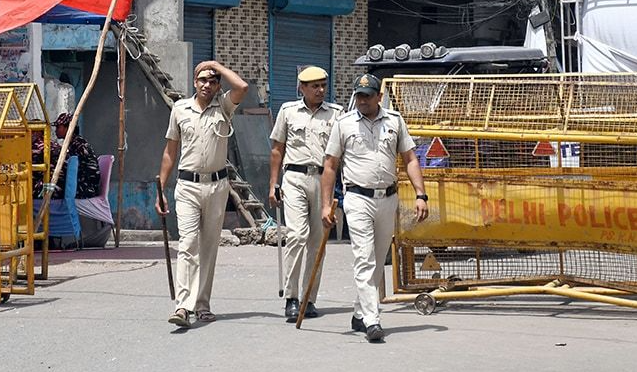
A head constable Amit posted at the Traffic Unit in Singhu Border was brought dead to the hospital. Later, police arrested two accused and seized the car used in hit-and-run.
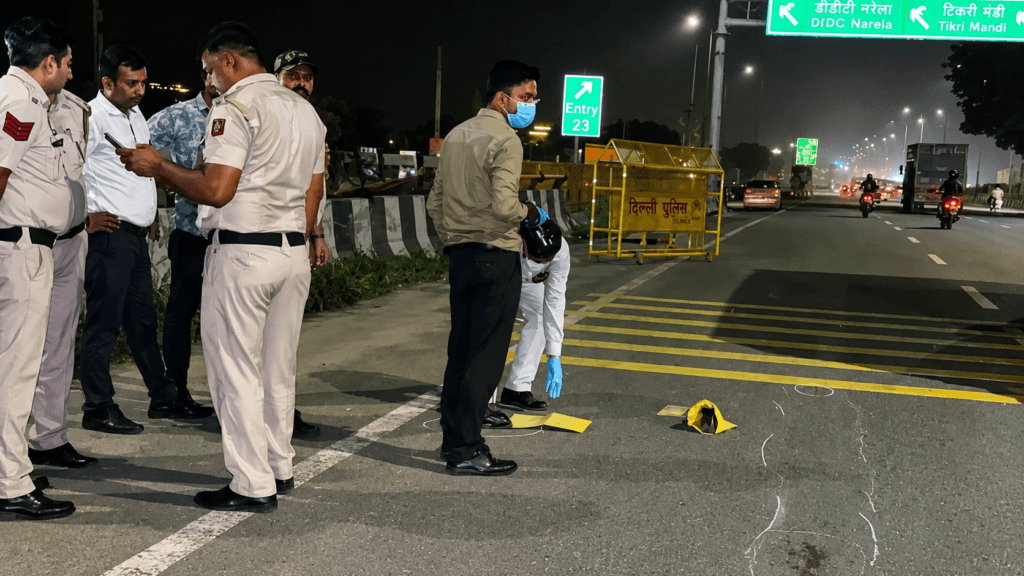
Delhi Traffic Police Head Constable Amit was killed in a hit-and-run incident at the Singhu border. Image Credit: NDTV
In a shocking hit-and-run incident in outer north Delhi, a traffic police head constable lost his life after being struck by a speeding car while he was performing duty near Singhu border. The incident took place around 6 pm on Wednesday, when Head Constable Amit was installing a speed monitoring machine near a traffic booth.
According to Delhi Police, the accused vehicle fled the spot after the collision, but the driver and another person were arrested within hours. Amit, who was a resident of Sonipat in Haryana, was rushed to a hospital by his colleagues, where doctors declared him brought dead on arrival. This is not just a traffic accident; it is a painful reminder of how vulnerable frontline police personnel can be while working on busy roads. Yeh incident kaafi disturbing hai because the officer died while trying to enforce road safety.
What Happened and How
The sequence of events, as described by police, suggests that Amit was engaged in a routine but important traffic enforcement task when the accident occurred. He was installing a speed monitoring device near the traffic booth at the Singhu border, a location known for heavy vehicle movement and frequent commuter traffic. At around 6 pm, a speeding car reportedly hit him and did not stop after the crash.
The immediate aftermath was handled by fellow officers, who quickly moved Amit to a hospital. Unfortunately, the medical team declared him dead on arrival. In a statement, Delhi Police confirmed the death and expressed condolences, noting that Head Constable Amit is survived by his wife and two children. That detail makes the tragedy even more heartbreaking because it is not only a loss to the department but also a devastating family tragedy. This story was also covered by NDTV.
Police later said the accused — identified as Kuldeep alias Karan and Neeraj — were arrested within hours. The vehicle, a Maruti Suzuki Baleno, was also seized. Investigators examined CCTV footage, technical data and forensic evidence to trace the vehicle’s movements before and after the incident. That rapid response is important because hit-and-run cases can otherwise become difficult to solve if the car is moved or hidden.
Police Response and Legal Action
Delhi Police registered a case under sections 281 and 106(1) of the Bharatiya Nyaya Sanhita. These sections deal with rash driving and causing death by negligence. The use of these charges indicates that police are treating the case as both a road safety violation and a criminal offence with fatal consequences.
The arrest of the accused within hours is a significant development. In hit-and-run cases, speed of investigation matters because evidence can disappear quickly. CCTV footage, vehicle tracking and forensic analysis often become the backbone of the case. In this incident, police appear to have moved swiftly, which may help in establishing the sequence of events clearly in court.
A police statement described the death as a matter of deep regret. That language reflects the seriousness of the loss and the recognition that Amit was killed while doing his official duty. Such cases also tend to prompt internal reviews about officer safety, especially at high-traffic checkpoints and roadside enforcement points.
Background and Context
The Singhu border is a major traffic point in outer north Delhi and often sees dense vehicle movement, especially by private cars, commercial vehicles and interstate traffic. That makes it a sensitive location for traffic police, who regularly monitor speed, lane discipline and compliance. Installing a speed monitoring machine there would have been part of a larger effort to check reckless driving and improve road discipline.
Traffic police officers often work in high-risk environments where they are exposed to moving vehicles, impatient drivers and unpredictable road conditions. Unlike office-based government jobs, this kind of field enforcement requires them to stand close to traffic flow and often at odd hours. That danger is sometimes underestimated by the public.
This incident also comes at a time when road safety remains one of India’s biggest public concerns. Speeding, negligence and hit-and-run incidents continue to claim lives across cities and highways. Even with stronger laws and better surveillance, enforcement on the ground still depends heavily on human officers. That is why the death of a traffic policeman in the line of duty strikes such a deep chord. Yeh issue kaafi important hai because it raises questions not only about crime but also about the safety of those trying to prevent crime.
Timeline
Around 6 pm, Wednesday: Head Constable Amit was installing a speed-monitoring machine near the Singhu border.
Immediately after collision: A speeding car hit him and fled the scene.
Soon after: Colleagues rushed him to a hospital.
Hospital arrival: Doctors declared him brought dead.
Within hours: Police arrested the accused and seized the vehicle.
Following investigation: CCTV, technical and forensic evidence was examined.
Also Read: Schoolgirl Killed After Bus Hits E-Rickshaw Near Majlis Park Metro Station in Northwest Delhi
Why This Matters
This matters because it highlights the risks faced by police personnel in everyday traffic enforcement. We often think of policing as arrests, checkpoints and paperwork, but a huge part of it happens on dangerous roads, under pressure and in fast-moving traffic. When an officer dies while setting up a safety device, it becomes painfully clear that enforcement itself can be life-threatening.
It also matters because hit-and-run cases deeply damage public trust. Drivers who flee after causing death are not just avoiding responsibility; they are showing total disregard for human life. In a country where road accidents already take a heavy toll, this kind of conduct reinforces the need for stronger accountability. Yeh matter sirf ek accident ka nahi hai — it is about whether people respect the law and the lives of others.
There is also a broader social impact. Families of police officers live with the fear that a routine duty can turn fatal. That affects morale in the force and raises the need for better protective measures, more road safety infrastructure and stronger legal deterrence. Every such incident becomes a call for safer working conditions for frontline workers.
India Angle
For Indian readers, this story has strong relevance because road safety is a daily issue in almost every city. Whether it is Delhi, Gurugram, Noida or other urban centres, speeding remains a major cause of accidents. In Hinglish, seedhi baat yeh hai: jab traffic police khud safe nahi hain, toh aam public ki safety ka andaaza lagana aur bhi serious ho jaata hai.
The case also reflects the challenge of enforcing road rules in crowded urban spaces. India’s roads are busy, chaotic and often poorly disciplined. Traffic police are expected to manage speed, lane violations and congestion, but they often do so with limited safety cover. This incident is a reminder that infrastructure around enforcement officers matters just as much as the laws they enforce.
The family dimension also resonates strongly in India. Amit leaves behind a wife and two children, which makes the tragedy personal and painful. Public reaction to such stories is usually intense because people recognise the sacrifice behind uniformed service. When a police officer dies on duty, it is not only a departmental loss; it is a loss felt by the community too.
Analysis
My opinion is that the most important part of this case is not just the arrest but the context of the death. Amit was not walking casually near the road; he was working to improve road compliance. That makes the incident especially cruel. It also suggests that traffic enforcement officers need greater roadside protection, especially during device installation, lane checks and late-day operations.
I also think the prompt arrest of the accused will matter in public perception. In hit-and-run cases, quick action by police can reassure people that road crimes are taken seriously. But long-term accountability depends on the legal process, not just the arrest. The evidence must clearly establish who was driving, how the collision happened and whether negligence or rashness can be proven beyond doubt.
From an editorial point of view, the human angle is strong. The loss of a father and husband while on duty always draws empathy. But the story should also be read as a road safety warning. If this can happen to a traffic policeman at a busy border point, it can happen to anyone standing near traffic. That is what makes it more than just one unfortunate incident.
What Next
The next steps will likely include formal questioning of the accused, forensic inspection of the seized Baleno car and a deeper review of CCTV footage from the Singhu border area. Police may also reconstruct the vehicle’s route before and after the crash to establish intent and sequence. That evidence will be crucial in building the prosecution case.
The department may also review safety procedures for traffic police officers stationed at busy roadsides. This could include better reflective gear, safer work zones, support from barricades or additional deployment during equipment installation. Such changes would be practical and necessary if the force wanted to reduce risk going forward.
Public attention will probably stay on the case for some time, especially if more details emerge about the accused and the exact circumstances of the crash. If the investigation is strong, the case could become an example of how hit-and-run crimes are handled swiftly. If not, it may add to broader concerns about road discipline and officer safety.
Conclusion
The death of Head Constable Amit at Singhu border is a tragic reminder of how dangerous traffic enforcement can be and how devastating reckless driving can become in a split second. He lost his life while carrying out duty, and his family has been left with an irreparable loss. With the accused arrested and the vehicle seized, police have moved quickly, but the larger lesson is about safety, responsibility and respect for life on India’s roads. This is a painful story, but also an important one, because it shows why road discipline and protection for frontline officers must be treated as urgent priorities.
Written By A. Jack